

A forklift purchase should begin with the load and the job—not with a price list. This 8-step guide shows what to confirm, which truck and attachment pages to compare, and what information helps ForkFocus prepare an accurate proposal.

Define the Job Before Choosing a Forklift
The fastest way to avoid a wrong truck is to describe the work in numbers. The following 8 inputs determine capacity, mast, chassis, tires and attachment requirements.
This official ForkFocus vehicle video shows the truck as part of a complete material-handling solution.
Choose the Forklift Type From the Actual Movement
Use the operating problem to shortlist the truck. Each product name below opens the corresponding ForkFocus product page.
| Work requirement | Product to compare | Confirm before ordering |
|---|---|---|
| General loading and outdoor transport | 1.5–3.5T diesel forklift | Ventilation, ground, mast and emissions rules |
| Indoor work and frequent cycles | 4-wheel electric forklift | Battery, charger, shifts and travel distance |
| Tight turns with lighter loads | 3-wheel electric forklift | Turning radius, floor and load stability |
| High racks and narrow aisles | Stand-on reach truck | Aisle width, rack height and floor flatness |
| Uneven yards or construction sites | Rough-terrain forklift | Gradient, traction, ground clearance and tires |
| Heavy industrial loads | 5–10T heavy-duty diesel forklift | Load center, attachments and site bearing capacity |
| Short horizontal pallet movement | 2–3T hand pallet truck | Pallet entry, floor and travel frequency |
For a wider comparison, browse the complete ForkFocus forklift range.
NEXT STEP 03Match the power system to the duty cycle →Select Power by Hours, Shifts and Infrastructure
| Power | Usually suitable when | Buyer must check |
|---|---|---|
| Diesel | Outdoor work, long hours and fast refuelling | Ventilation, noise, emissions and fuel access |
| LPG | Mixed indoor/outdoor work with quick refuelling | Cylinder supply, ventilation and fuel cost |
| Lead-acid electric | Predictable indoor shifts with battery-change time | Battery room, charger and maintenance |
| Lithium electric | Multi-shift work with opportunity charging | Local voltage, charger, temperature and duty cycle |
A power choice should be calculated from daily hours and available infrastructure—not from a universal claim that 1 technology is always best.
NEXT STEP 04Verify capacity and physical fit →Verify Capacity, Mast and Site Fit as 1 System
If the load is long, high, unstable or near the truck limit, request a residual-capacity review before ordering. This is safer than assuming the rated capacity remains unchanged.
NEXT STEP 05Match the attachment to the cargo →Select the Attachment by Cargo and Industry Problem
A forklift attachment must match the cargo, packaging surface, opening range, hydraulic system and truck capacity. Use the load problem—not product appearance—to choose the category.
Use the application, load and truck data to identify the correct attachment category.
5 cargo details required for clamp selection
Attachment selection must consider cargo dimensions, packaging, hydraulics and residual capacity together.
Plan Spare Parts Before Downtime Starts
Correct forklift parts depend on the exact machine version. A model name alone may not identify the connector, controller, engine or production change.
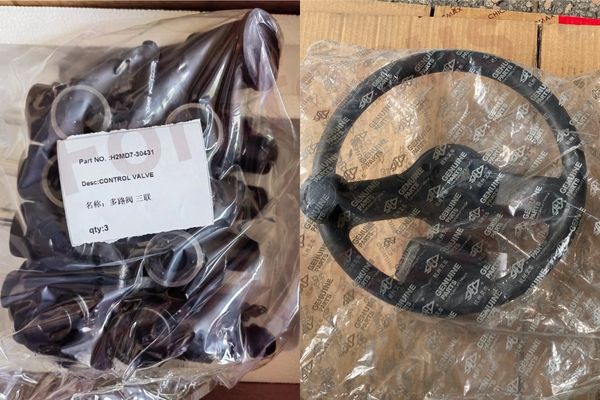
Use a photo-to-part identification process when the number is unknown. For planned stock, compare genuine, OEM and reliable replacement options according to risk and lifecycle cost.
NEXT STEP 07Reduce supply and shipping risk →Control Supply, Compatibility and Shipping Risk
| Risk | Control before shipment | Buyer result |
|---|---|---|
| Wrong truck configuration | Application review and written specification | Fewer selection changes |
| Wrong attachment | Truck + load + hydraulic matching | Correct installation and function |
| Wrong spare part | Model, serial, number and photo verification | Less repeat freight and downtime |
| Fragmented orders | Consolidated shipping plan | 1 coordinated shipment and document set |
| Unclear quality level | Written genuine/OEM/aftermarket classification | Transparent comparison |
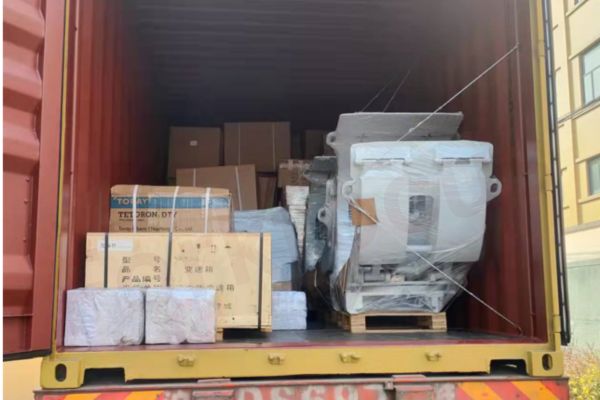
The purpose of coordination is simple: the truck, mast, attachment, parts and shipment must agree with 1 another before they leave China.
NEXT STEP 08Prepare 1 complete enquiry →Prepare 1 Complete Enquiry for a Faster Quote
| Buying item | Send these details |
|---|---|
| Complete forklift | Load weight and size; lift height; aisle; clearance; floor; hours; power preference |
| Attachment | Truck model/capacity; carriage; hydraulics; cargo size/weight; packaging; handling action |
| Spare parts | Brand; model; serial no.; part no.; photos; markings; quantity; urgency |
A complete enquiry allows ForkFocus to compare the right products first, explain trade-offs clearly and reduce the number of clarification emails.
In Conclusion
A smart forklift purchase follows 3 decisions: select the truck for the job, match the attachment to the cargo, and plan the parts that protect uptime. When those decisions are coordinated, buyers reduce mismatch, damage and avoidable downtime.
Reduce procurement risk with a defined configuration and inspection record
Wrong equipment, unclear inclusions and missing parts support are reduced when the quotation, configured truck, inspection evidence and shipment preparation refer to the same order scope.
- Application
- Load, route, lift, duty, environment and attachment.
- Configuration
- Truck, mast, power, tyres, hydraulics and options.
- Commercial scope
- Included equipment, documentation, packing and ready-to-ship definition.
- Inspection
- Visible checks tied to the quoted configuration.
- Lifecycle
- Parts identification, maintenance planning and issue evidence.
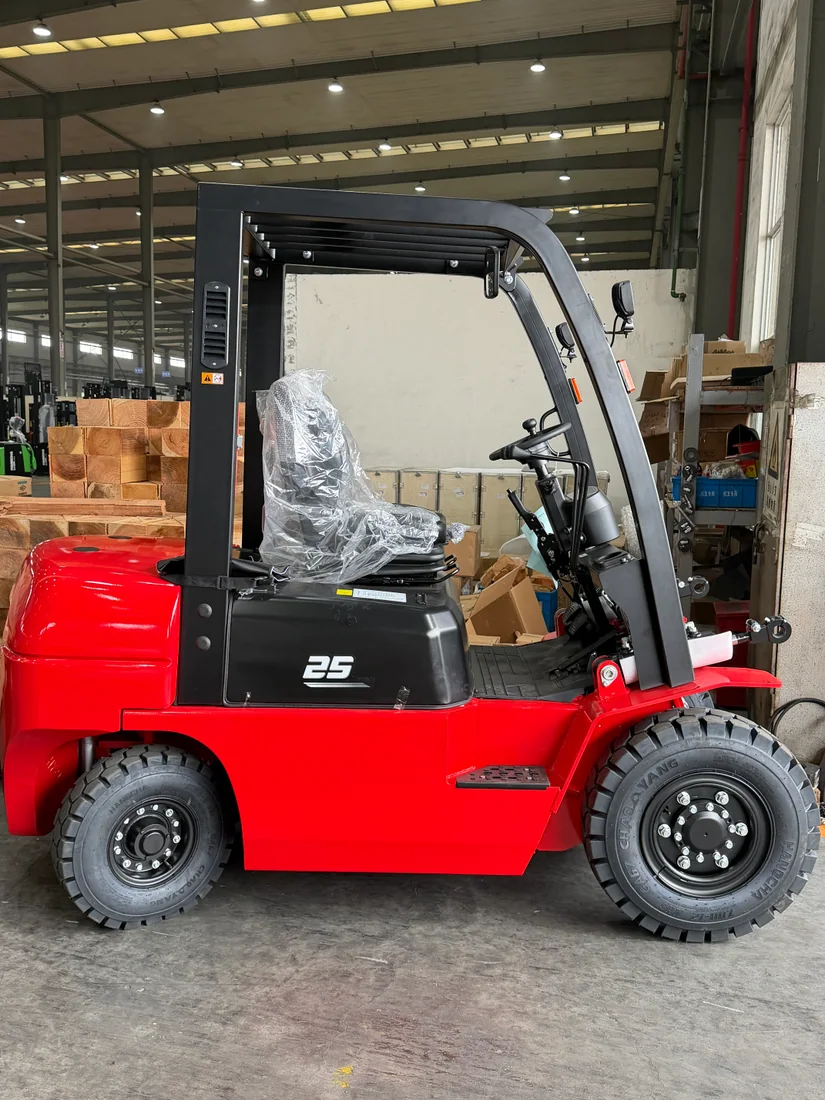
ForkFocus solution path
A complete material-handling solution links the working problem to equipment, verification and support rather than treating each item separately.
Warranty, compliance and commercial responsibility remain order-specific.
Request a quotation that identifies the configuration, included documents, inspection evidence, packing scope and parts route.