
Forklift Block and Brick Handling with a Block Clamp
The block pack must be defined before either truck or clamp is selected. Confirm maximum pack weight, dimensions, packaging or strapping, permissible contact faces, opening range, stacking height and yard route. The final system then matches a block clamp, counterbalance forklift, mast, tyres, hydraulic circuit and verified working-point capacity.
For outdoor dusty yards, an IC counterbalance forklift may suit the duty after surface and ventilation checks. Clean indoor routes may also support an electric forklift. The load interface remains a verified block clamp, not standard forks.
This ForkFocus video shows a block clamp completing a handling cycle. It helps the buyer see clamp approach, contact and load movement; pack strength, clamp force, hydraulic settings and working-point capacity still require load-specific verification.
Define the masonry pack before choosing the clamp
Pack integrity, surface condition, weight, dimensions, clamp contact, stacking height, dusty ground and duty cycle can change the clamp, truck, tyres, mast, hydraulics and working-point capacity.
Load pack
Maximum weight, length, width and height; unit pattern; voids; strapping; palletless or palletised state.
Contact condition
Block surface, edge strength, moisture, dust and the faces where clamping is permitted.
Clamp geometry
Opening range, arm length, pad area, frame width, weight, centre of gravity and effective thickness.
Site and truck
Stacking height, route clearance, ground, gradients, dust, cooling, power and tyre requirement.
Hydraulic control
Required movements, truck pressure and flow, attachment limits, valve sections and mast hose routing.
Capacity evidence
Applicable truck load chart at the actual mast, lift height, load centre and attachment geometry.
Move from pack contact to a verified working point
Pack strength and contact faces decide the clamp geometry; the route and lift point then decide the truck, mast, tyres and capacity evidence.
Pack definition
Record unit pattern, voids, strapping, weight and every pack width.
Contact rule
Identify permitted faces, surface condition and acceptable edge or face damage.
Clamp package
Confirm opening range, arm and pad geometry, weight, centre of gravity and hydraulics.
Yard truck
Match chassis, mast, tyres, cooling and power to ground, gradient, dust and duty.
Working point
Use the exact mast, lift height, actual load centre and attachment geometry in the capacity check.
Wear control
Define pad, hose, joint, tyre and cooling inspection before the order is released.
Block retention changes the truck requirement
Pad area, force, attachment mass and the yard route interact. Increasing one margin can reduce visibility, clearance or residual capacity elsewhere.
More contact area
Can distribute force more evenly, but larger arms add mass, visibility obstruction and forward offset.
More truck reserve
Can protect the working margin, but may increase turning space, ground loading and acquisition cost.
Higher clamp force
May improve retention only within the verified load/contact design; excessive force can crumble or mark blocks.
Block-clamp specifications that fail in the yard
- Selecting by nominal truck tonnage without the attachment moment
- Assuming one pressure setting suits packed and unpacked masonry
- Ignoring the widest clamp position at doorways and stack approaches
- Treating dusty-yard tyre and cooling needs as minor options
Routes for side-clamped masonry packs
Use a block clamp only where the pack supports verified side contact; choose the truck route from the actual surface, ventilation and duty.
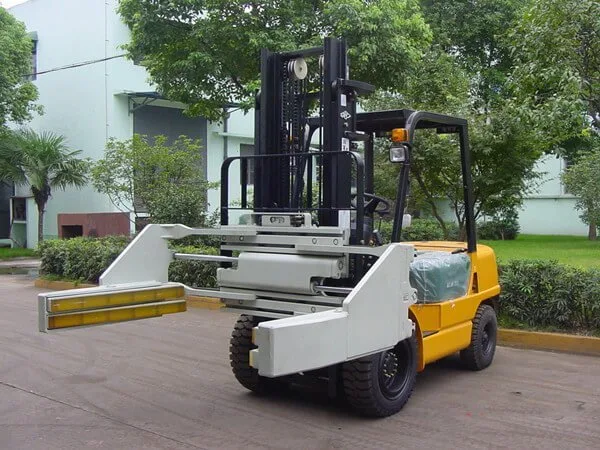
Block clamp
Why this direction may fit: Use when the pack can be retained through verified side contact and the opening range covers every pack width.
Choose another route when: Use forks, a different clamp or a purpose-built interface when pack strength, contact faces or geometry do not support side clamping.
Check before quotation: Pack drawing, contact restriction, opening range, attachment data, carriage and hydraulic limits.
View Block clamp
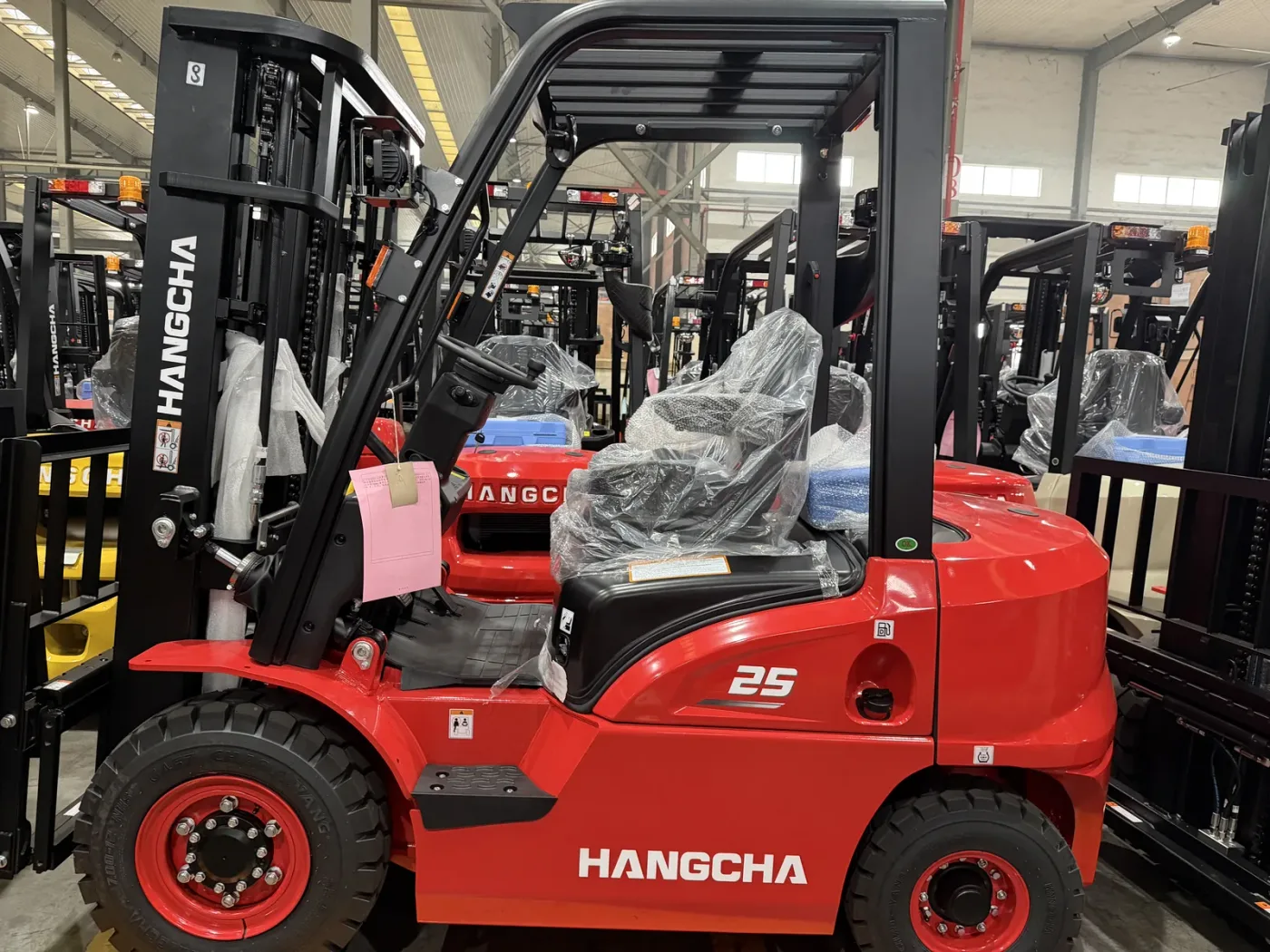
IC counterbalance forklift
Why this direction may fit: May fit ventilated yards with dust, longer travel, rapid refuelling and suitable maintained ground.
Choose another route when: Review electric or specialist terrain equipment when emissions, charging, soft ground or route constraints change the duty.
Check before quotation: Load, route, grade, tyre, cooling, mast, attachment and exact working-point chart.
View IC counterbalance forklift
Plan pad wear, hoses and dusty-yard inspection
Record pad material and condition limits, pivot and slide lubrication, hose protection, dust cleaning, tyre wear and cooling checks against the agreed pack and route.
- Replaceable contact-pad specification and inspection limit
- Hose, fitting and moving-joint inspection points
- Tyre, brake and cooling items for the verified yard duty
Plan replacement pads, hoses, seals and dusty-yard inspection before commissioning through the ForkFocus parts and lifecycle route. Review the relevant ForkFocus lifecycle support.
Evidence required for the clamp-and-truck release
TECHNICAL CAPACITY CONFIRMATION REQUIRED — verify the exact truck, mast, lift height, load centre, clamp weight, horizontal centre of gravity, effective thickness, hydraulic limits and pack-retention requirement before release.
Send Your Block Pack Details
Provide the following data so the quotation can state the truck, mast, power, tyre, attachment, capacity-verification and support scope without guessing.
Send these details to ForkFocus
If the truck type is not yet fixed, use the Forklift Selection Advisor for a preliminary direction, then return with the exact mast, load chart and attachment configuration.
- Pack photographs and material description
- Maximum/minimum pack dimensions and weight
- Packaging, strapping and allowable contact faces
- Opening range and required movements
- Stack height, route, surface and gradients
- Cycles per hour, shifts and ambient conditions
- Current truck identity, carriage, mast and load chart
- Required inspection, pads, hoses and service parts
Questions that close the Technical configuration review
Can unpackaged blocks use the same settings as strapped packs?
Not automatically. Pack integrity, contact faces, moisture and allowable damage can change the required pad and force-control method.
Does a larger nominal forklift solve the attachment capacity question?
No. The exact mast, lift height, actual load centre and block-clamp geometry still govern the working point.
What pack evidence is needed before quotation?
Send maximum and minimum pack dimensions and weight, photographs of the contact faces, strapping details, stack height and the complete yard route.