
Multiple-Pallet Handler Forklift Configuration
Moving two or more pallets per cycle changes the complete truck envelope. Confirm pallet count, dimensions, entry openings, spacing, combined weight, centre of gravity, outside span, doorway, trailer, rack and aisle limits before a multiple-pallet handler is proposed. Throughput improvement remains conditional on cycle balance, visibility, hydraulics and retained truck capacity.
The ForkFocus multi-fork pallet handler shows the attachment function, but a multiple-pallet handler can combine pallets only when the load and route envelope pass. An IC counterbalance forklift may suit a ventilated dock or yard route, but still needs verified carriage, hydraulics, mast and working-point capacity.
This ForkFocus video shows a single-double pallet handler changing fork arrangement for one or two pallets. It helps the buyer understand the attachment movement and pickup pattern; pallet dimensions, combined load, aisle width, hydraulics and working-point capacity still require exact verification.
Prove the pallet pattern before claiming more throughput
Moving more pallets per cycle changes total load, load centre, outside width, doorway and trailer clearance, fork spacing, visibility, hydraulic functions and residual capacity.
Pallet pattern
Count per cycle, pallet dimensions, fork openings, spacing and load distribution.
Combined load
Total mass, centre of gravity, stability and any unequal pallet weights.
Outside envelope
Attachment width in each mode, door, trailer, rack, dock plate, aisle and turning room.
Cycle and visibility
Hourly target, approach, placement tolerance, operator view and traffic interaction.
Hydraulics and duty
Required independent movements, pressure, flow, hoses and cycles per hour.
Truck capacity
Attachment weight, forward offset, lift height, mast and load chart at the combined load centre.
Connect combined pallet span to the complete route
The handler may reduce trips only when pickup and receiving points accept the widest mode and the truck retains visibility, hydraulic response and capacity.
Pallet map
Record count, openings, dimensions, spacing and weight for every pallet in the cycle.
Combined envelope
Calculate outside span and check doors, trailers, racks, dock plates and turns.
Flow study
Time pickup, travel, placement, return and receiving capacity instead of assuming a percentage gain.
Handler functions
Confirm fork-group modes, valve functions, controls, weight and centre of gravity.
Truck package
Match mast, power, tyres, cooling, visibility and route to the combined duty.
Capacity proof
Use the exact truck chart at combined load centre and required lift height.
More pallets per trip can create a wider bottleneck
A combined cycle may save travel while increasing approach time, outside width, trailer and doorway conflicts, operator visibility demand and truck moment.
More pallets per trip
Can reduce trips only if loading and receiving points keep pace and the route accepts the wider envelope.
Convertible fork groups
Add flexibility but require more hydraulic/control definition and operator discipline.
Larger truck reserve
May support the combined moment while increasing turning space and dock-floor demand.
Throughput assumptions that fail outside the pickup point
- Quoting a productivity percentage without a timed flow study
- Checking single-pallet weight instead of combined load
- Measuring a door without the widest attachment mode
- Ignoring unequal pallet weights and visibility
Routes for repeat multi-pallet patterns
Use the handler only where pallet dimensions and receiving points repeat; use the IC route only for a ventilated dock or yard duty that supports the combined load.
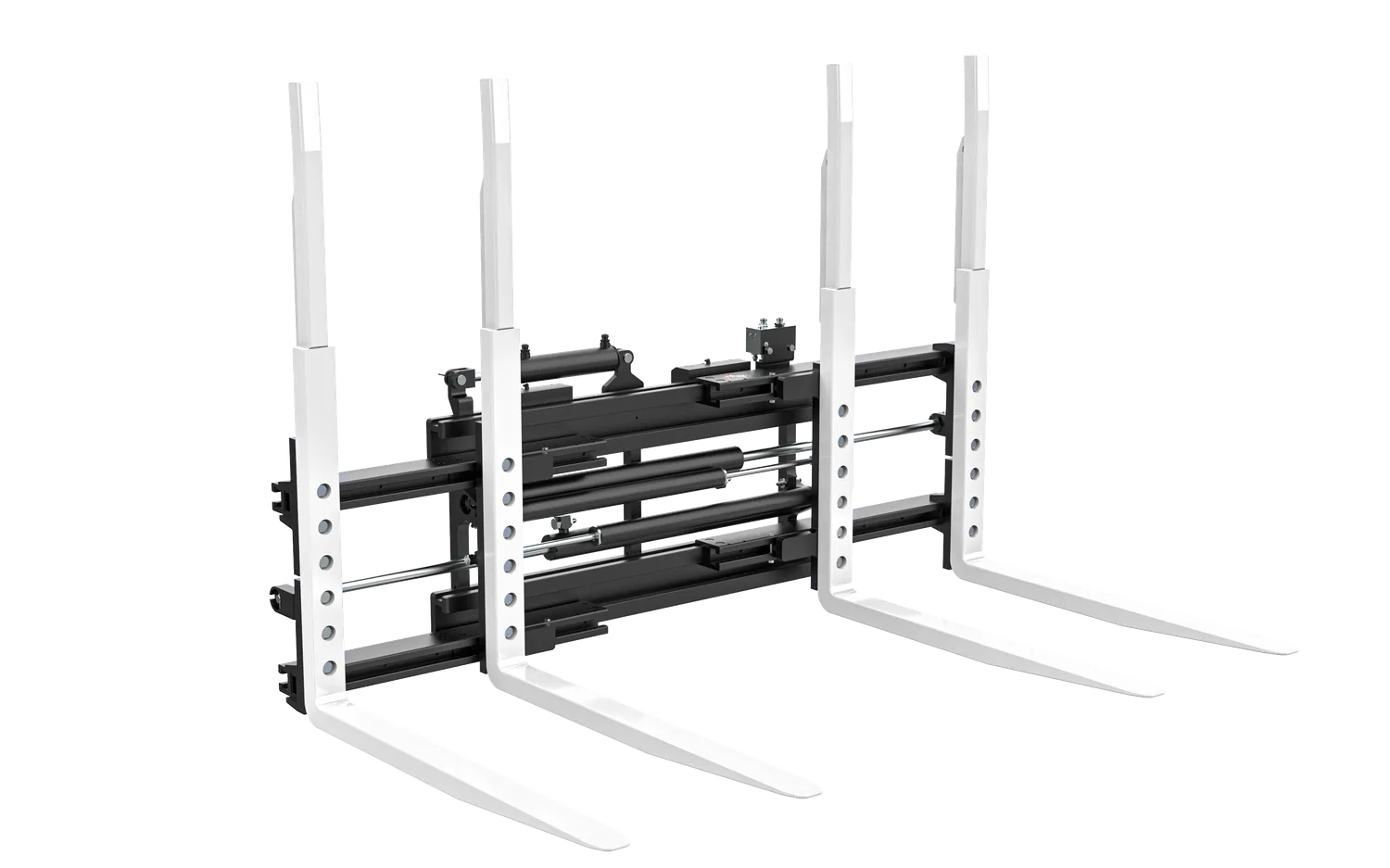
Multi-fork pallet handler
Why this direction may fit: May fit repeat pallet patterns where both pickup and receiving points accept the combined span and the truck retains capacity.
Choose another route when: Use standard forks or another handler when pallets vary, visibility is inadequate, or doors, trailers and racks cannot accept the widest mode.
Check before quotation: Pallet drawings, count, spacing, combined load, handler modes, hydraulics and route envelope.
View Multi-fork pallet handler
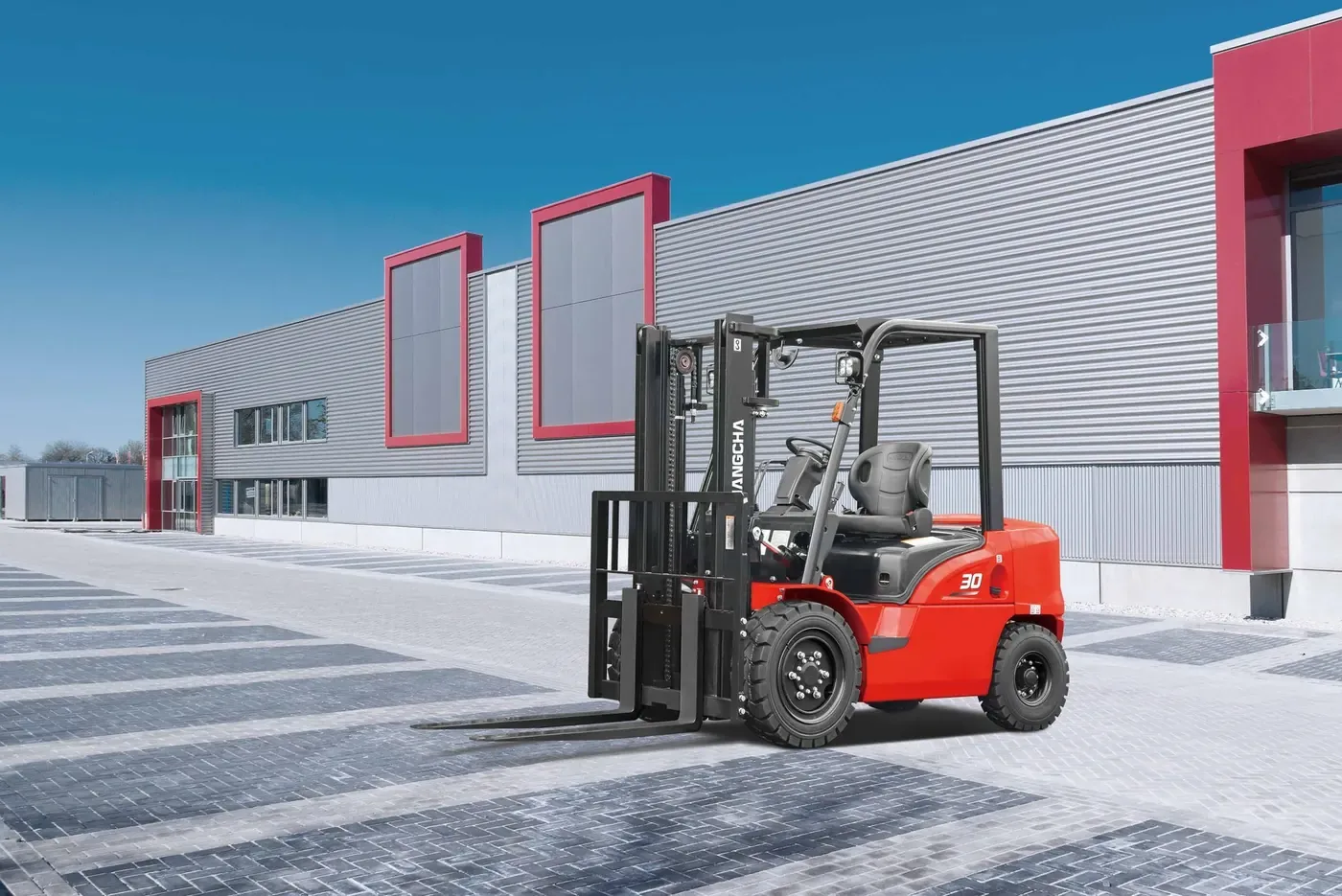
IC counterbalance forklift
Why this direction may fit: May fit high-cycle dock and yard movement where ventilation, refuelling and the site route support IC operation.
Choose another route when: Review electric or a different truck when indoor emission limits, charging economics, aisle or floor requirements change the decision.
Check before quotation: Combined load, mast, load chart, tyres, route, cooling, hydraulics and shift duty.
View IC counterbalance forklift
Inspect fork groups, synchronisation and high-cycle wear
Record fork locking, cylinders, synchronising components, wear pads, hoses and carriage checks at the expected cycles per shift. Productivity planning should include inspection and changeover time.
- Fork-group position and locking inspection
- Cylinder, wear-pad and synchronisation checks
- High-cycle hose, tyre, brake and cooling plan
Keep fork heels, locks, guides, synchronisation components, cylinders and hoses in the planned inspection and parts scope. Review the relevant ForkFocus lifecycle support.
Evidence required to approve the combined cycle
Confirm the handler drawing, fork-group positions, attachment mass and centre of gravity, exact truck chart, doorway/trailer/rack envelope and a realistic cycle study. Nominal pallet count does not prove productivity.
Send Your Pallet Pattern and Cycle Data
Provide the following data so the quotation can state the truck, mast, power, tyre, attachment, capacity-verification and support scope without guessing.
Send these details to ForkFocus
If the truck type is not yet fixed, use the Forklift Selection Advisor for a preliminary direction, then return with the exact mast, load chart and attachment configuration.
- Pallet count, dimensions and fork openings
- Weight of each pallet and combined maximum
- Required fork-group positions and spacing
- Door, trailer, rack, dock and aisle dimensions
- Hourly pallet target and current cycle
- Truck, carriage, mast and load chart
- Hydraulic functions and control preference
- Shift pattern, inspection and wear parts
Questions that close the Throughput configuration review
Does moving two pallets always double productivity?
No. Pickup alignment, receiving capacity, route width, traffic and placement time can limit or erase the travel saving.
Which weight enters the capacity review?
Use the maximum combined pallet load and its actual centre of gravity together with the handler mass and forward geometry.
What width should be measured at the doorway?
Measure the widest attachment mode with the applicable pallet pattern, not only the truck or a single pallet.