
Forklift tire selection guide
Tyres are part of the forklift configuration, not an isolated accessory choice. Pneumatic, solid and polyurethane options suit different floors, yards, speeds, comfort needs, puncture risks and truck types. The correct tyre must also remain within the approved size, load rating and manufacturer configuration for the truck.
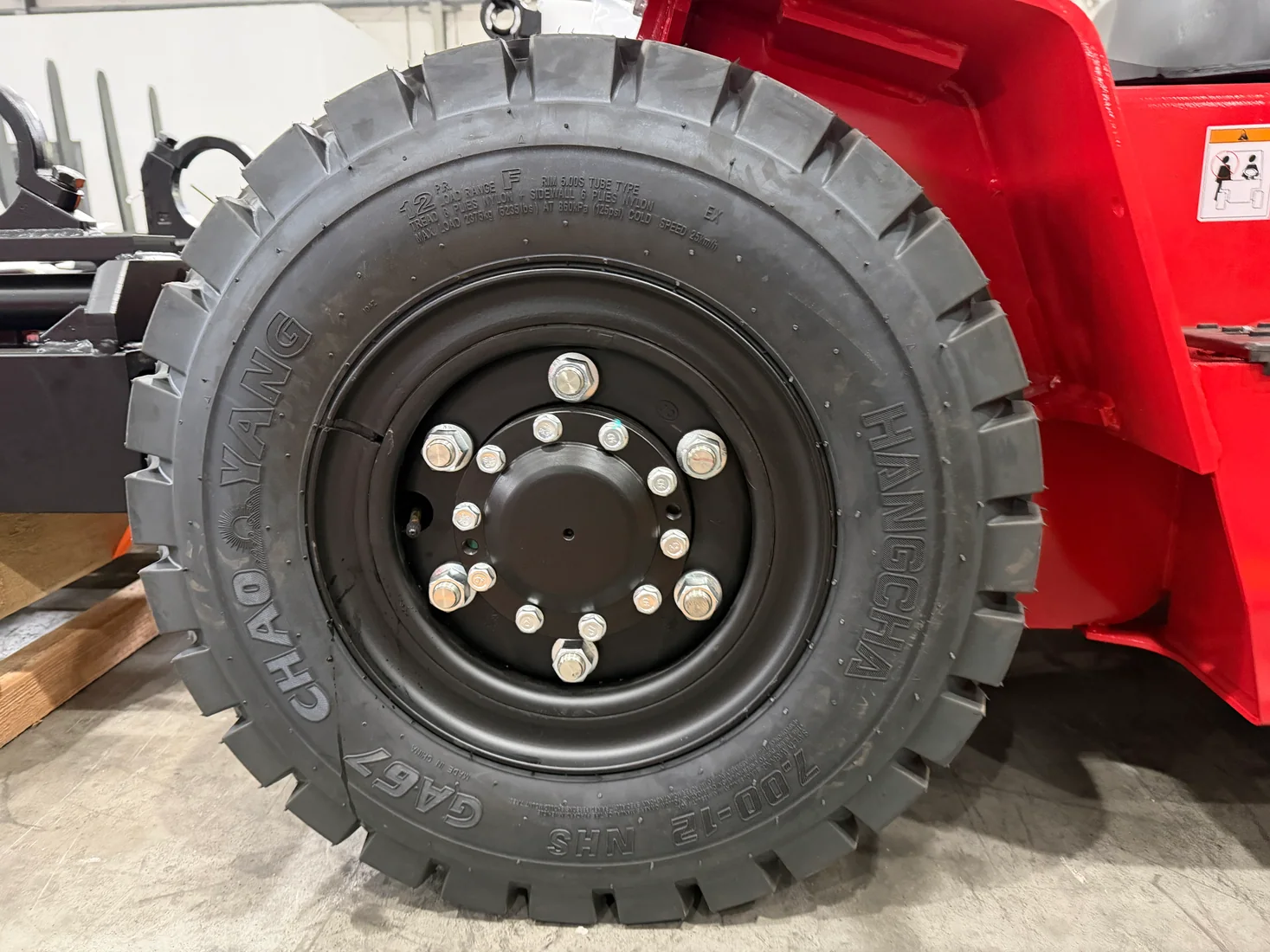
Tyre selection begins with the complete route
Choose a tyre type that fits the floor and duty without creating avoidable downtime or instability.
Tyre construction should follow the truck type, surface and duty.
Match tyre construction to the surface and duty
Use pneumatic tyres when ride comfort, uneven paved surfaces and traction matter and puncture risk can be managed. Use solid tyres when puncture resistance and uptime are more important than cushioning. Polyurethane is common on suitable indoor warehouse equipment where rolling resistance, cleanliness and compact wheel design matter.
Match tyre construction to surface and operating risk
Choose a tyre type that fits the floor and duty without creating avoidable downtime or instability.
| Decision factor | Pneumatic | Solid | Polyurethane |
|---|---|---|---|
| Typical environment | Indoor/outdoor paved work; rougher travel depending on truck | Debris-prone yards and operations prioritising puncture resistance | Smooth indoor floors and warehouse equipment |
| Ride comfort | Generally better cushioning | Firmer ride; design-specific aperture options exist | Low cushioning; floor quality matters |
| Puncture risk | Air-filled versions can puncture | No air loss from puncture | No pneumatic puncture, but damage/wear still possible |
| Traction | Tread and compound can suit varied surfaces | Tread/compound selected for duty | Best on suitable clean floors |
| Speed and heat | Pressure and duty must be controlled | Heat build-up and duty rating matter | Heat and load limits remain product-specific |
| Truck compatibility | Approved size, rim and load rating required | Same; conversion is not automatic | Common on purpose-built warehouse wheels |
Record the surface, heat and travel conditions
Tyre construction must be checked against the complete route, axle load, speed, heat and downtime consequence.
Surface
Describe smooth concrete, yard, asphalt, broken pavement, metal debris, joints, ramps and wet areas.
Load and speed
Heavy loads, long travel and speed build heat. Confirm tyre load rating and duty.
Comfort and vibration
Operator exposure, fragile loads and floor impact can favour greater cushioning.
Cleanliness
Food, pharma and clean warehouses may require non-marking or cleanliness-focused compounds, subject to availability.
Puncture and downtime
Quantify debris risk and the operational cost of tyre damage; do not choose solid tyres by habit alone.
Approved configuration
Tyre size, rim, drive/steer position, compound and truck approval must match.
Choose by puncture, marking and traction risk
The final recommendation can change when the load, route, duty or site constraints change.
Choose pneumatic when…
Cushioning, traction and uneven paved travel matter and pressure/repair management is acceptable.
Choose solid when…
Puncture resistance and uptime dominate on debris-prone routes, and the truck, rim, duty and comfort requirements support the tyre.
Choose polyurethane when…
The equipment works mainly on smooth indoor floors and the manufacturer specifies polyurethane wheels for that truck type.
Tyres and rough-ground equipment in context
Each image has a defined buyer purpose. Captions state what the image does—and does not—verify.
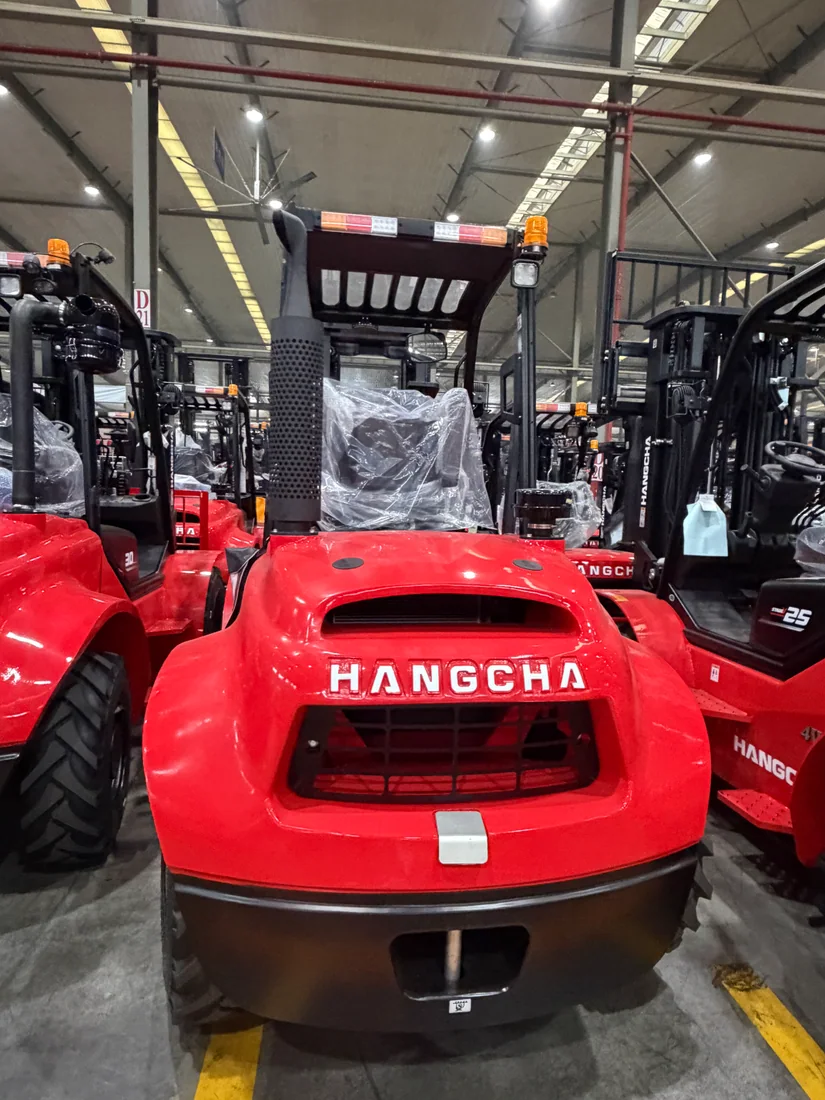
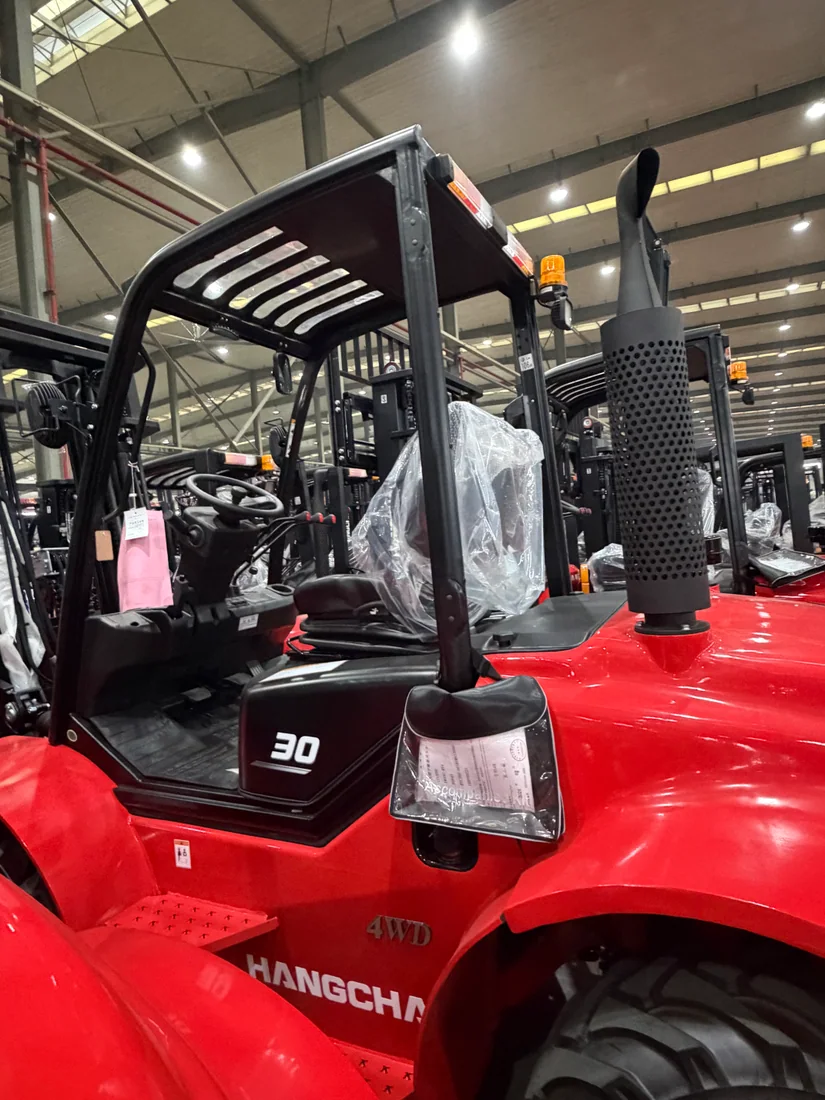
Watch a 4WD rough-terrain forklift on the ground
This landscape ForkFocus PDI video provides real traction and surface context. Use it to understand why tyre choice cannot be separated from ground condition, drive system, gradient and clearance.
Checks before ordering a tyre configuration
The approved truck, rim and axle position control the final tyre fitment.
Carry the tyre decision into the truck quotation
Include the surface and route in the forklift requirement.
Questions about forklift tyres and ground conditions
Practical guidance for procurement and equipment teams.
Can I replace pneumatic tyres with solid tyres on the same rim?
Do not assume compatibility. Confirm tyre size, rim profile, truck approval, clearances, load rating and duty with the applicable supplier data.
Are solid tyres maintenance-free?
No. They avoid air-pressure maintenance and puncture deflation, but still require inspection for wear, damage, heat, bonding and correct fitment.
When are non-marking tyres needed?
They may be requested for cleanliness-sensitive indoor work. Confirm floor marking requirements, compound availability, traction, wear and static-control needs.
Do rough-terrain forklifts only need aggressive tyres?
No. The complete design includes drive system, ground clearance, stability, gradeability and site limits as well as tyres.
Match the tyre to the complete route
Send floor, yard, load, travel, speed and puncture-risk details with the forklift requirement.