


The Load Center determines whether or not the forklift is on the verge of tipping. The forklift load is the center of the measurement of the total length of the forklift from front to back. Measure the load, divided by two. For example:
Load weight= 1500 kg
Truck measurement (front to back)= 1,000mm long
1,000mm divided by two is 500mm. The load center is 500mm.
Of course, this changes depending on the length of your load.
The height of your forklift also has a contributing effect to stable and safe lifting operations. In general, bear in mind that the size, position, and weight distribution of the load affect the whole dynamic of your forklift’s lifting capacity. Knowing these things can help avoid overloading, property damage, injury, or worse, death.
We talked further in this blog: Do You Really Understand Forklift Load Center?

Forklift capacity depends on load geometry and working height
A simple rated-capacity number cannot describe every load. The load centre, mast, lift height and attachment change the available capacity.
- Rated basis
- Truck capacity, stated load centre, mast and reference height.
- Actual load
- Weight, dimensions and horizontal centre of gravity.
- Height
- Required fork elevation and applicable chart point.
- Attachment
- Mass and forward centre-of-gravity change.
- Evidence
- Use the exact model and mast load chart; do not transfer curves.
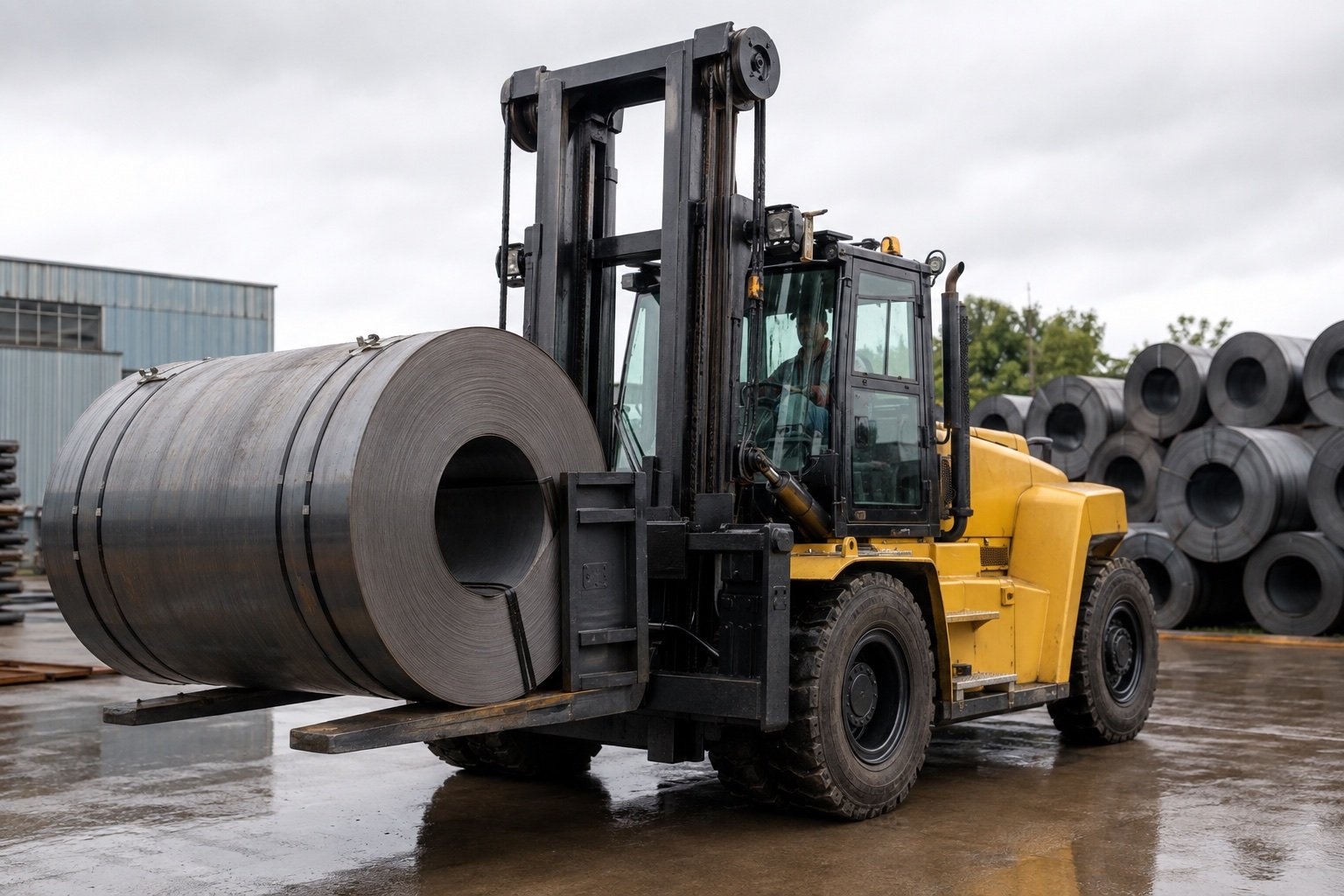
Heavy-duty forklift example
The correct capacity class must be verified against the exact working point rather than a general subtraction formula.
TECHNICAL CAPACITY CONFIRMATION REQUIRED when the exact load chart is unavailable.
Use the exact truck and mast load chart at the actual lift height and load centre; do not rely on a general subtraction.