
Paper roll handling with a forklift and paper roll clamp
Define the heaviest roll and the full opening range required by the minimum and maximum roll diameters. These two inputs decide the correct clamp size and rated load. Forklift rated capacity or tonnage is a separate installation and fit input: it helps identify the truck class, but the truck must still retain enough capacity after clamp weight, geometry and the actual load centre are included. Hydraulic functions, carriage interface, lift height, aisle space and paper-damage control complete the configuration.
This solution covers a counterbalance forklift fitted with a paper roll clamp attachment for clamping, lifting and rotating paper rolls. It is not a general forklift-capacity page.
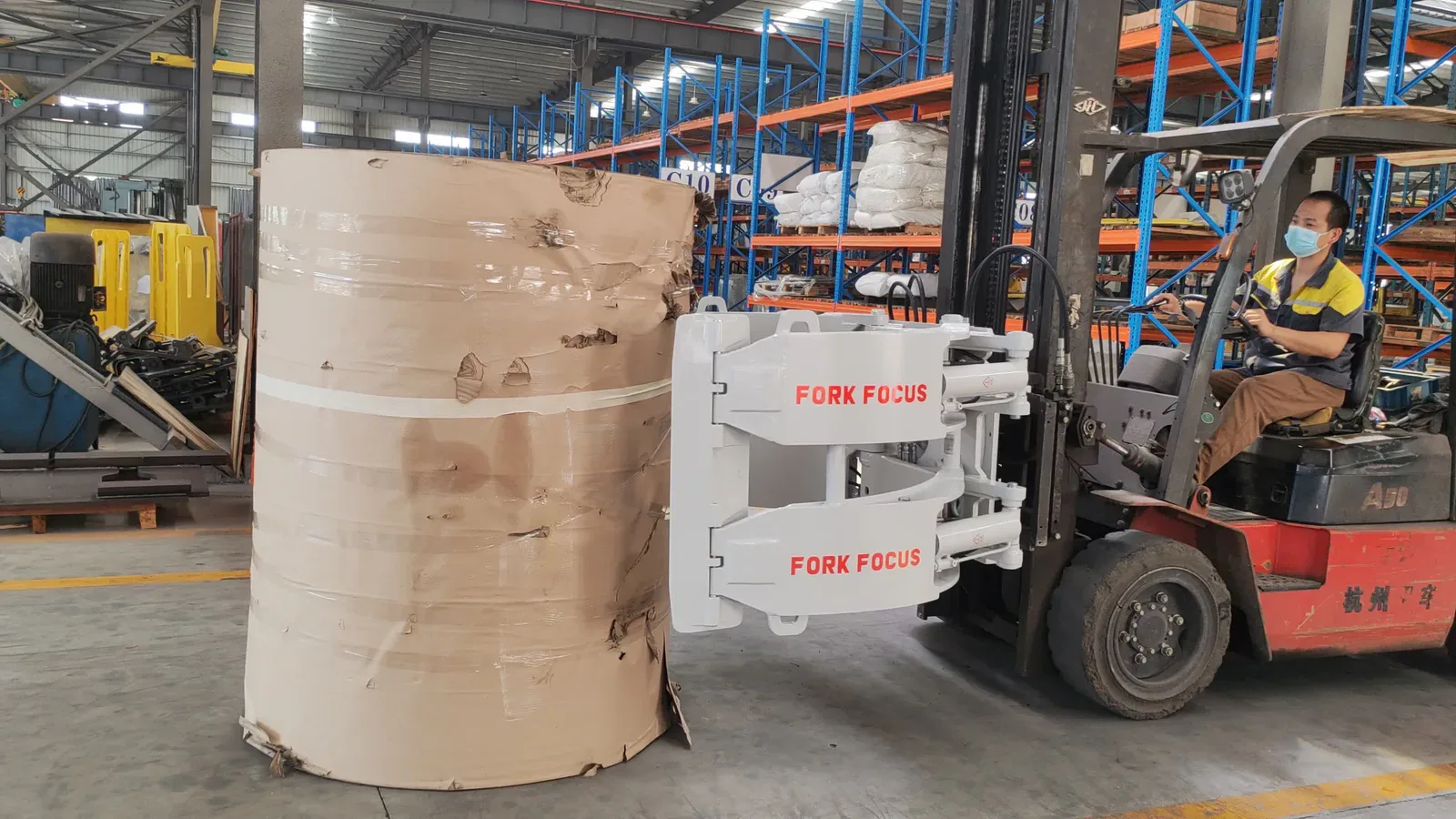
See a paper roll clamp working through a handling cycle
This ForkFocus landscape video shows a paper roll clamp controlling a large roll in operation. The demonstrated unit is application evidence; the customer’s roll range, load, truck capacity and hydraulic specification still require separate confirmation.
Paper-roll data that determines the truck and clamp
How should a forklift and paper roll clamp be configured for paper roll handling?
Correct clamp
Cargo weight sets the required clamp rated load; minimum and maximum roll diameter set the required opening range
Correct truck fit
Forklift rated capacity or tonnage is the first installation reference; carriage, hydraulics and working-point capacity complete the fit check
Roll envelope
Maximum weight, minimum and maximum diameter, width and core condition
Handling cycle
Pick orientation, stacking height, rotation, travel and rolls per shift
Truck working point
Capacity at the required lift height and actual load centre—not rated capacity alone
Attachment interface
Clamp rated load, opening range, weight, effective thickness, centre of gravity and carriage
Hydraulics
Clamp and rotation functions, pressure/flow compatibility, valves, hoses and routing
Damage control
Contact-pad condition, clamping-force control, roll surface and operator method
Forklift hydraulic pressure and paper roll clamp pressure must be matched
A 2.5-ton rating describes nominal lifting capacity; it does not establish the hydraulic conditions available to the clamp. Brand, model and hydraulic-system design can change both pressure and flow.
Typical pressure reference—not a universal specification
In ForkFocus’s experience, some international-brand 2.5-ton IC forklifts may work at roughly 200 bar, while many Chinese forklifts in the same nominal capacity range are commonly around the high-180-bar level, such as approximately 188 bar. These are practical reference values, not model-specific specifications.
Protect the clamp at the attachment circuit
If truck pressure is higher than the clamp circuit should normally receive, evaluate an appropriate pressure-reducing or pressure-regulating valve on the attachment branch. This protects the clamp without unnecessarily reducing the truck’s main hydraulic capability.
Pressure changes force; flow changes speed
Pressure primarily affects hydraulic force, clamp force and loading on cylinders, seals and valves. Flow primarily affects opening, closing and rotation speed. Low flow may make the clamp slow; excessive flow may make movement too fast or difficult to control, depending on the circuit.
Clamp force must suit the paper
Roll weight, paper type, diameter, pad geometry, friction and hydraulic pressure all affect the required clamp force. Too little force can permit slipping; too much can increase paper damage and component loading. More pressure is not automatically better.
Configuration changes that affect roll control and truck capacity
Opening range, rotation and attachment geometry influence both paper protection and the capacity remaining on the truck.
Clamp range vs geometry
A wider opening range can increase attachment size and may move the roll farther forward.
Truck size vs aisle
More truck capacity may add counterweight and turning space; verify the route, not only the lifting point.
Rotation vs residual capacity
Rotation may be essential to the process, but the rotating clamp is still part of the attachment mass and geometry.
Paper-roll selection errors that cause damage or capacity loss
Remove these gaps before the clamp and forklift are quoted as a coordinated configuration.
- Selecting the clamp only by roll weight
- Using truck nameplate capacity as the post-attachment capacity
- Omitting minimum roll diameter or maximum lift height
- Assuming clamp pressure and hydraulic function count are universal
Forklift directions to compare after the roll and clamp are defined
These are representative truck families, not final model approvals. The roll, clamp and working-point data decide whether either route can retain the required capacity and hydraulic performance.
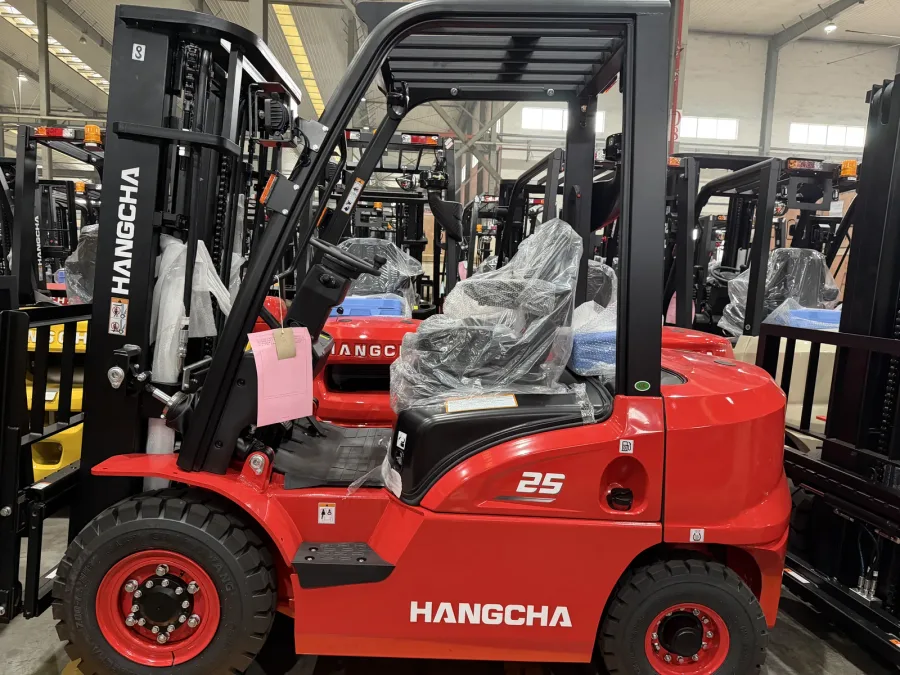
Mixed indoor–outdoor duty and rapid refuelling
X Series IC counterbalance forklifts · 1.5–3.8 t range
Why this direction may fit: This direction may fit clamp-equipped factory or yard work when ventilation, fuel access and IC maintenance support suit the site.
Choose another route when: Choose another powertrain when local-emission limits, indoor air quality or noise make IC operation unsuitable.
Check before quotation: Confirm actual load, load centre, lift height, truck available capacity Q, clamp rated load, weight, HCG, ET, opening range, pressure, flow and required functions.
View X Series IC counterbalance forklifts · 1.5–3.8 t range
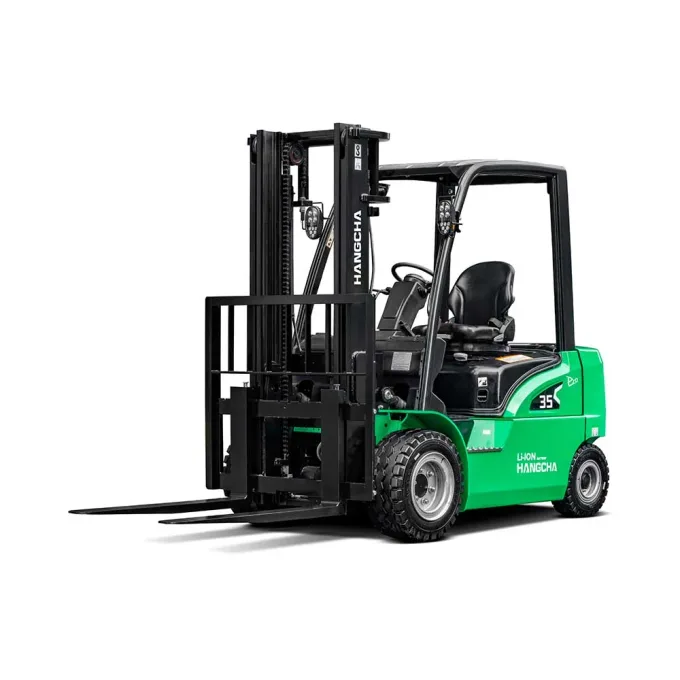
Cleaner indoor handling and planned charging windows
XC Series lithium counterbalance forklifts · 1.5–3.8 t range
Why this direction may fit: This direction may fit mills and converting plants that need lower local emissions and can provide charging windows for the required duty.
Choose another route when: Choose another power strategy when shift energy, charger supply, temperature or route conditions cannot support the required utilisation.
Check before quotation: Confirm actual load, load centre, lift height, truck available capacity Q, clamp rated load, weight, HCG, ET, opening range, pressure, flow and rotation duty.
View XC Series lithium counterbalance forklifts · 1.5–3.8 t range
Complete the paper-roll handling specification
Check the truck, clamp, hydraulics, working-point capacity, attachment route and RFQ evidence as one paper-roll handling package.
Data required for a paper-roll handling proposal
Provide the roll envelope, handling sequence and truck data needed to match the clamp and forklift.
Send the roll range and truck data for a matched clamp configuration
ForkFocus can review the paper roll, clamp geometry, hydraulics and truck capacity together.