

A practical buying guide to making sure your clamp is right for the roll, fits the forklift and performs reliably in daily operation.
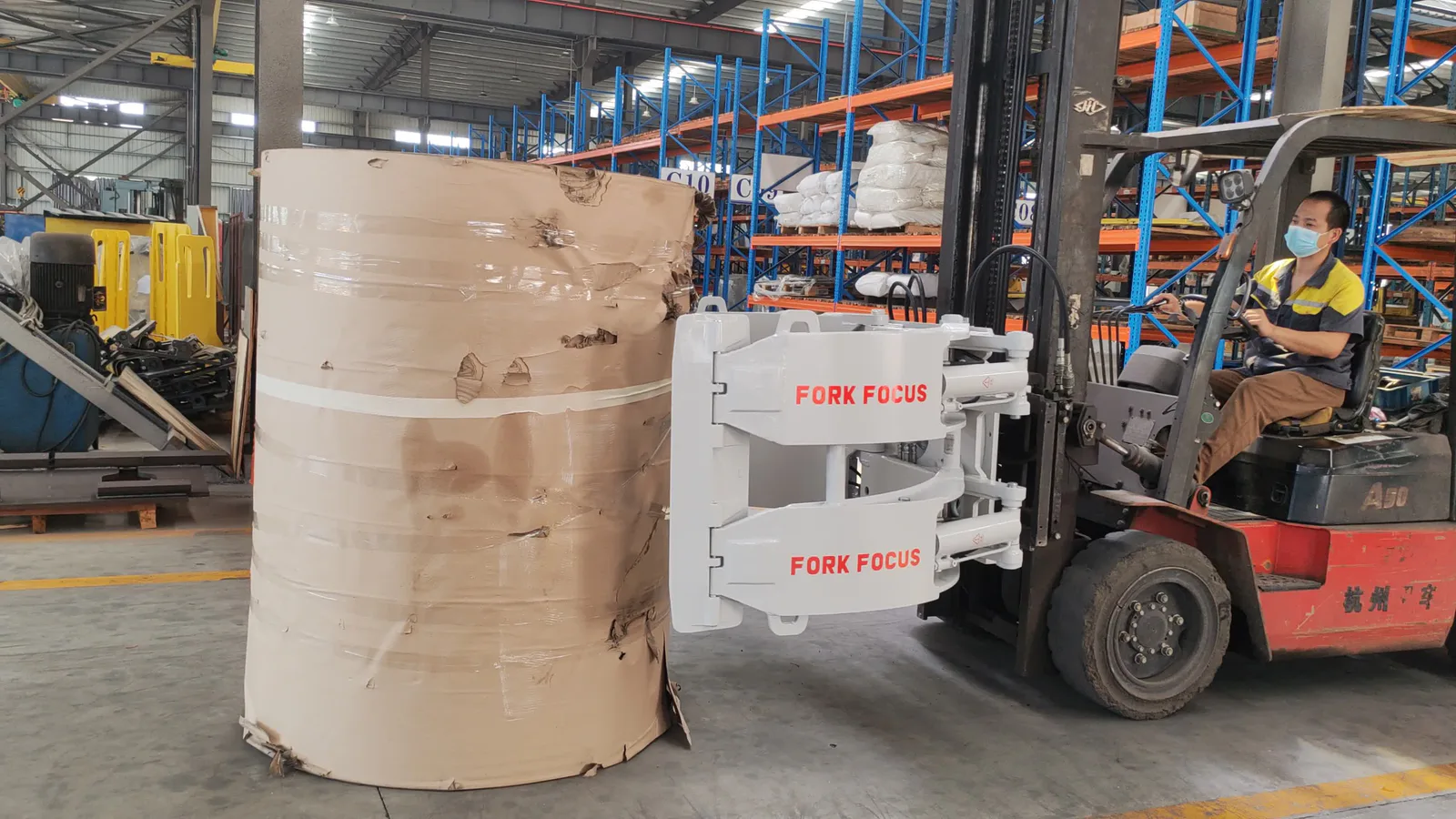
Buying a forklift attachment such as a paper roll clamp should be straightforward. In practice, many problems only become visible after the attachment arrives:
- The clamp fits the general capacity requirement but not the actual roll.
- The mounting interface does not match the forklift.
- The clamping force damages the roll or fails to hold it securely.
- The attachment reduces the forklift’s usable capacity more than expected.
- Wear parts and technical support are difficult to obtain later.
The lowest quotation cannot protect a buyer from these risks. The better purchasing question is:
Will this paper roll clamp be right for our rolls, fit our forklift correctly and remain supportable after delivery?
This guide explains the five checks that matter most.
1. Start With the Roll—Not the Clamp Catalogue
Paper rolls that look similar can require different attachment configurations. Roll weight and diameter matter, but they are not the complete application.
The supplier should also understand:
- Minimum and maximum roll diameter
- Roll width and maximum weight
- Paper grade and surface sensitivity
- Core condition
- Whether rolls are wrapped or unwrapped
- Outter packing material decides the clamp pate material
- Vertical, horizontal or mixed handling
- Required rotation
- Number of handling cycles per shift
Why does this matter? Because the correct arm geometry, contact-pad design, opening range and pressure setting all depend on the roll being handled.
A clamp selected only by forklift tonnage may open wide enough but still apply pressure in the wrong area. It may hold one roll size correctly and perform poorly on another. This is why the attachment should be selected around both the load and the truck. Buyers comparing different options can also review our complete forklift attachment list.
What a responsible supplier should do
Ask for roll information and application photographs before recommending a model. If the buyer handles several roll sizes, the full range—not only the largest roll—should be reviewed.
The result for the buyer
A clamp chosen for the actual rolls and handling process, rather than a generic attachment that merely appears suitable.
2. Make Sure It Will Fit the Forklift Before Production
A correct paper roll clamp can still become the wrong purchase if it cannot be installed or operated correctly on the intended forklift.
Forklifts differ in carriage class, mounting dimensions, hydraulic functions, pressure, flow and hose connections. These differences are easy to overlook when the quotation is based only on truck capacity.
To complete an initial compatibility review, the buyer normally only needs to send:
- The forklift model or a clear nameplate photograph
- A front photograph of the carriage
- Photographs of the existing hydraulic connections
- The required clamp and rotation functions
The supplier should then identify any additional information needed. Where a standard configuration cannot meet the application, a customized forklift attachment may be the better solution.
What a responsible supplier should do
Confirm the mounting interface, hydraulic requirements and included installation components before releasing the attachment to production. The quotation should make clear whether hoses, fittings, valves, controls and mounting components are included.
The result for the buyer
Fewer surprises during installation and a lower risk of emergency modification after the clamp has arrived.
3. Control Clamping Force to Protect the Roll
For paper roll handling, more pressure is not automatically better.
Excessive clamping force can deform a roll, damage its edge, mark the paper or affect the core. Insufficient force can allow the roll to slip, particularly during lifting, travel or rotation.
The correct pressure depends on the roll weight, diameter, surface, contact-pad design and operating conditions. This is why a universal pressure setting is rarely the best answer for every application.
What a responsible supplier should do
- Match the clamp configuration to the roll range.
- Set and verify the hydraulic pressure for the approved application.
- Use an appropriate contact-pad profile and surface.
- Check clamp movement, pressure retention and visible leakage before shipment.
- Provide pressure-control options where the application requires them.
The result for the buyer
Reliable roll retention with a lower risk of crushed rolls, edge damage, surface marking or load slippage.
4. Check the Complete Forklift-and-Clamp Capacity
Installing a paper roll clamp changes the forklift’s load geometry.
The clamp adds weight and moves the roll farther forward. As a result, the forklift’s residual capacity may be lower than the capacity shown on its original nameplate. The effect becomes more important with heavier rolls and greater lift heights.
This risk cannot be resolved by confirming only that the clamp fits the carriage.
What a responsible supplier should do
Provide the attachment weight, effective thickness and other relevant technical data before order confirmation. The intended roll weight, load center and lift height should be reviewed as part of the complete application.
Final residual capacity and any required truck data-plate changes should be confirmed by the forklift manufacturer or another qualified authority in accordance with applicable requirements.
The result for the buyer
Capacity risks are identified before production—not after the clamp has already been delivered.
5. Buy for Uptime, Not Only for Delivery
A paper roll clamp works in a demanding environment. It repeatedly clamps, lifts and rotates heavy loads, often over multiple shifts.
The most expensive problems may appear months after delivery:
- Hydraulic leakage
- Loss of clamping pressure
- Uneven arm movement
- Excessive wear at pins and bushings
- Damaged hoses or contact pads
- Difficulty identifying replacement parts
For a rental fleet, these failures reduce utilization. For a warehouse or paper operation, they can interrupt an essential handling process.
What a responsible supplier should do
Check hydraulic functions and pressure retention before shipment, retain the attachment configuration by serial number and provide access to application-relevant wear parts.
A recommended spare-parts package may include seal kits, hoses, fittings, wear components, pins, bushings and pressure-control parts, depending on the attachment design.
The result for the buyer
Faster parts identification, simpler maintenance and a clearer path back to service when wear or damage occurs.
Correct Operation Still Matters
Even a correctly selected clamp can damage a roll if it is used incorrectly.
The clamp arms should be centered on the roll before lifting or rotating. Off-center clamping can create uneven force, reduce stability and increase the risk of roll damage.
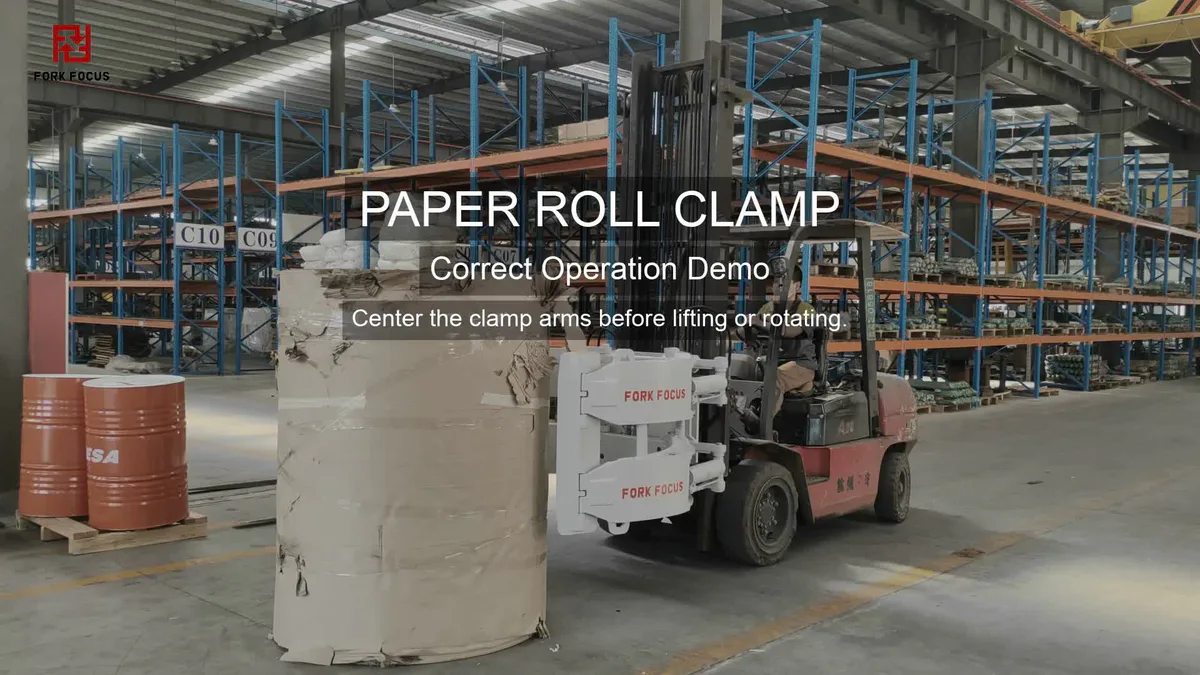
Center the clamp arms before lifting or rotating the roll.
Operators should also follow the approved pressure settings, keep the roll low during travel and avoid sudden movements. Training, daily inspection and correct operating procedures remain essential.
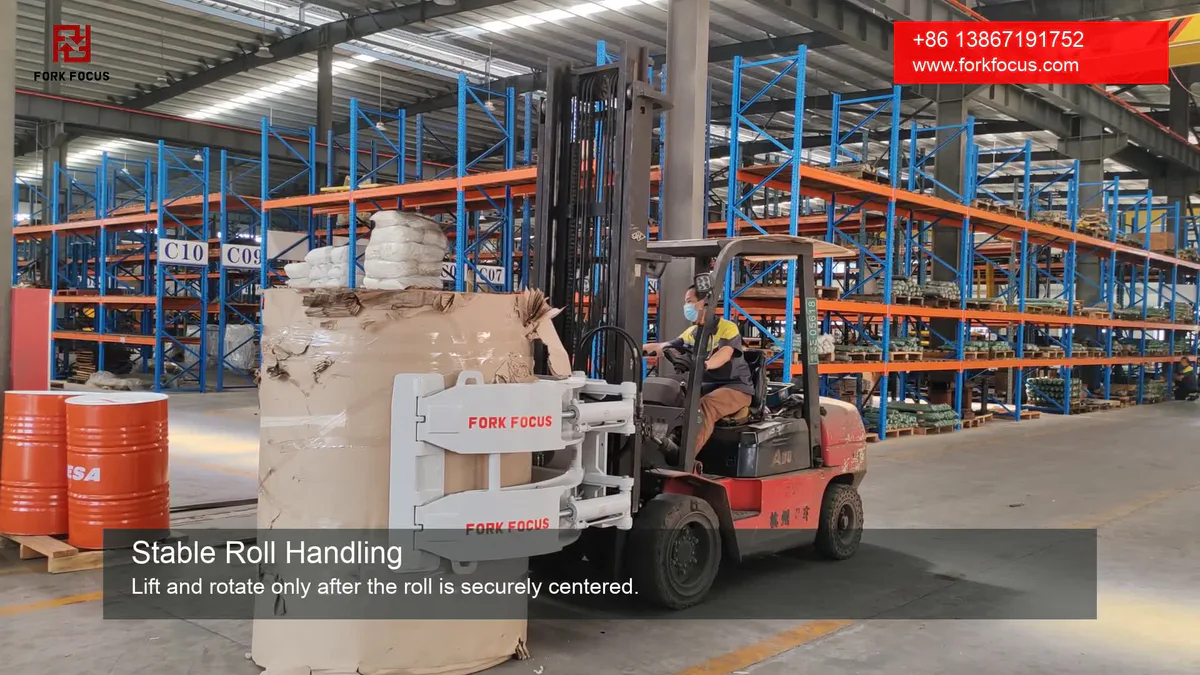
Lift and rotate only after the roll is securely centered and clamped.
Why We Ask for Photos and Basic Application Details
When a supplier asks for roll and forklift information, it should not be unnecessary paperwork. Each item should prevent a specific purchasing problem.
- Roll photographs help identify the correct clamp and contact-pad arrangement.
- Roll dimensions and weight help confirm opening range and attachment capacity.
- The forklift nameplate helps determine whether the proposed attachment is suitable for the truck.
- A carriage photograph helps verify how the clamp will be mounted.
- An operating video helps reveal the real handling challenge more clearly than a model number alone.
The purpose is simple: to prevent the buyer from discovering a selection or installation problem after delivery.
The Three Conditions of a Correct Paper Roll Clamp
A well-selected clamp should satisfy all three conditions:
- It is right for the rolls being handled.
- It can be correctly installed and operated on the intended forklift.
- It can be maintained and supported throughout its working life.
If one of these conditions is missing, the lowest initial price can quickly become the highest total cost.
Request a Paper Roll Clamp Compatibility Review
You do not need to prepare a complex technical specification before contacting us.
Send us:
- A photograph of the roll
- Minimum and maximum roll dimensions
- Maximum roll weight
- The forklift nameplate
- A front photograph of the forklift carriage
- An operating video, if available
We will review the application, identify the next information required and help determine a suitable paper roll clamp configuration. You can also contact the ForkFocus attachment team directly.
Related guide
Complete Buying Guide: Buying a Forklift Attachment from China
Product compatibility and final forklift residual capacity must be confirmed for the specific truck and application by appropriately qualified parties.
Paper roll clamp selection requires roll and forklift data
Maximum roll weight and diameter define the minimum clamp range and rating. Installation fit and truck capacity are separate checks.
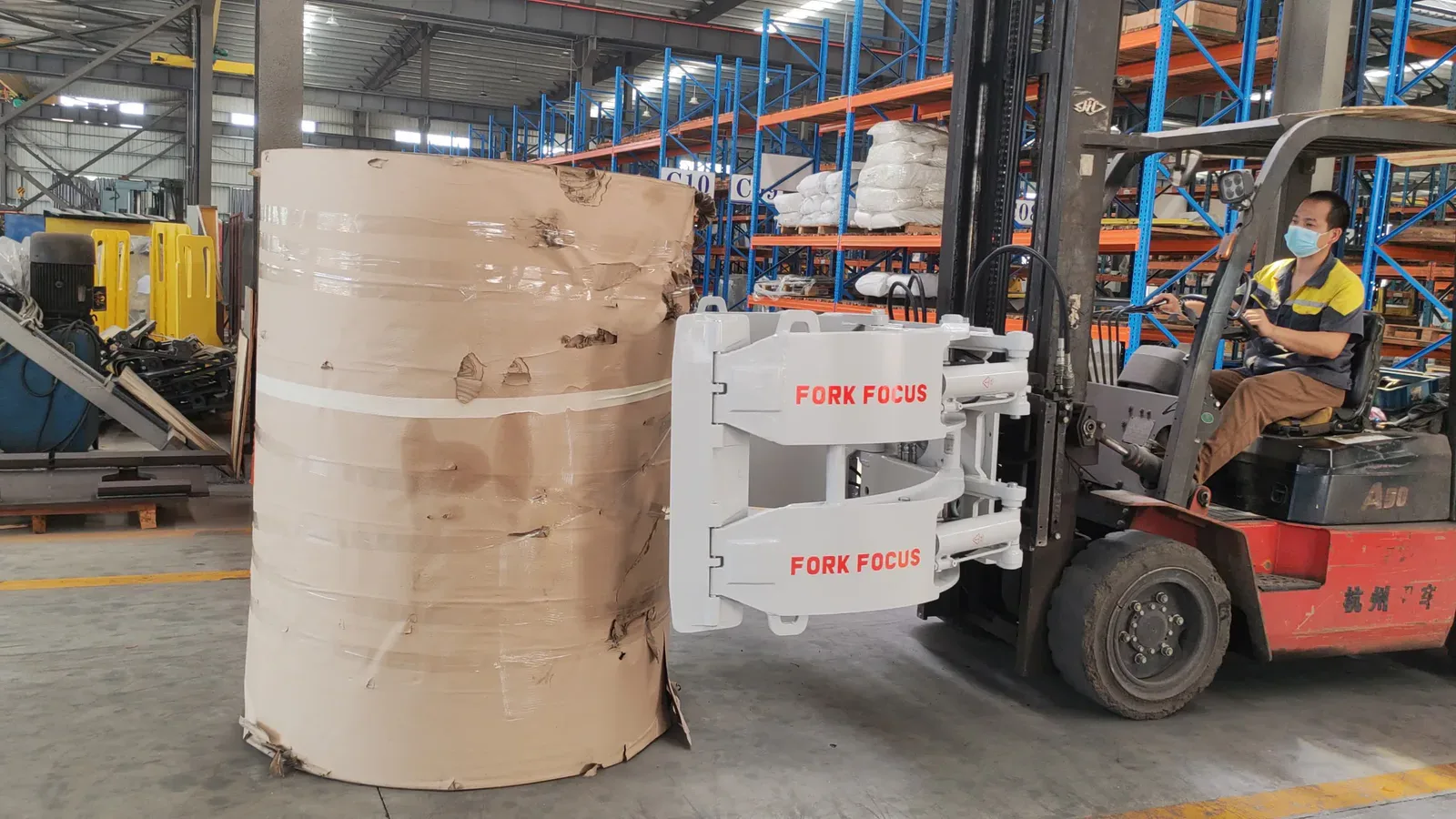
- Roll
- Weight, diameter, width, orientation and paper grade.
- Clamp
- Opening range, rating, pads, rotation and pressure control.
- Truck
- Mast, carriage, tyres, visibility and route.
- Hydraulics
- Functions, pressure, flow and hose routing.
- Capacity
- Check clamp rating and truck residual capacity independently.
electric forklift range
Indoor paper warehouses often favour electric counterbalance trucks; duty and route may justify another powertrain.
Paper roll clamp product route
The selected clamp must cover the complete roll range and preserve a verifiable truck installation.
PRODUCT RANGE VERIFICATION REQUIRED until the exact clamp evidence is complete.
Match the complete roll range to the clamp opening, rating and pads before checking the installed truck capacity.