
Side Shifter vs Fork Positioner: Which Function Fits the Load?
A side shifter moves the whole carriage and load laterally for placement correction. A fork positioner changes fork spacing for different pallet or load widths. In ForkFocus project experience, buyers who need hydraulic fork positioning commonly specify side shift in the same attachment package, because spacing adjustment and final lateral correction occur in the same rack or trailer cycle. The combined unit still requires exact range, carriage, hydraulic-function and residual-capacity checks.
Choose a side shifter where fork spacing stays fixed. Use a ForkFocus fork positioner where widths change. For many mixed-pallet operations—particularly in European and other mature warehouse markets—the practical specification is a side-shifting fork positioner, provided both functions, controls and capacity effect are verified as one package. Clean indoor pallet and rack work commonly connects this package to an electric counterbalance forklift after aisle, mast, battery duty, hydraulic and working-point capacity checks.
This ForkFocus landscape video shows hydraulic fork positioning and side shift operating on a heavy-duty forklift. It demonstrates how the two functions complement one another; it does not transfer stroke, opening range or capacity to another attachment and truck configuration.
Name the required movement before choosing the attachment
Buyers may request a side shifter when the real need is changing fork spacing, or request a fork positioner when only lateral placement correction is required, adding cost, hydraulics or capacity loss without solving the task.
Required movement
Define lateral correction, fork-spacing change or both. For a combined unit, state both stroke and opening range.
Load and pallet
Minimum and maximum widths, fork openings, centre of gravity and placement tolerance.
Carriage and forks
Class, width, fork section, length, locking and load-backrest interface.
Visibility and route
Operator sight line, rack opening, trailer, doorway and aisle.
Hydraulics
Separate side-shift and fork-positioning functions, valve sections, pressure, flow, controls and hoses.
Capacity effect
Attachment mass, effective thickness, fork position and exact truck chart.
Separate lateral correction from fork-spacing change
Side shift moves the carriage and load laterally. Fork positioning changes support spacing. A side-shifting fork positioner combines both motions and needs evidence for each function and the added geometry.
Placement correction
Measure required lateral movement when fork spacing remains fixed.
Load-width change
Measure minimum and maximum fork support positions for every pallet or load.
Combined-cycle check
If operators need both actions in the same rack or trailer cycle, specify and verify the integrated package.
Truck interface
Confirm carriage, forks, load backrest, visibility, two valve functions and hoses.
Capacity effect
Check mass, effective thickness, fork position and the exact working-point chart.
The extra function must solve a measured task
Hydraulic adjustment can reduce manual handling, but every added function changes controls, hoses, mass, effective thickness and inspection demand.
Side shift only
Corrects approach or placement but does not change support width for a different pallet.
Fork positioning only
Changes support spacing but can still require the truck to re-approach for final lateral correction.
Side-shifting fork positioner
Combines the two functions commonly requested together, while adding mass, geometry, valve and hose requirements that must be checked.
Function names that lead to the wrong attachment
- Calling lateral carriage travel fork positioning
- Using pallet outside width without fork-opening dimensions
- Assuming a combined unit needs no extra hydraulic definition
- Ignoring fork-section and carriage-class compatibility
Select a single function or the practical combined package
A separate side shifter suits fixed fork spacing. Where spacing changes regularly, ForkFocus project experience commonly points to a side-shifting fork positioner, subject to measured stroke, opening range, carriage, hydraulics and working-point checks.
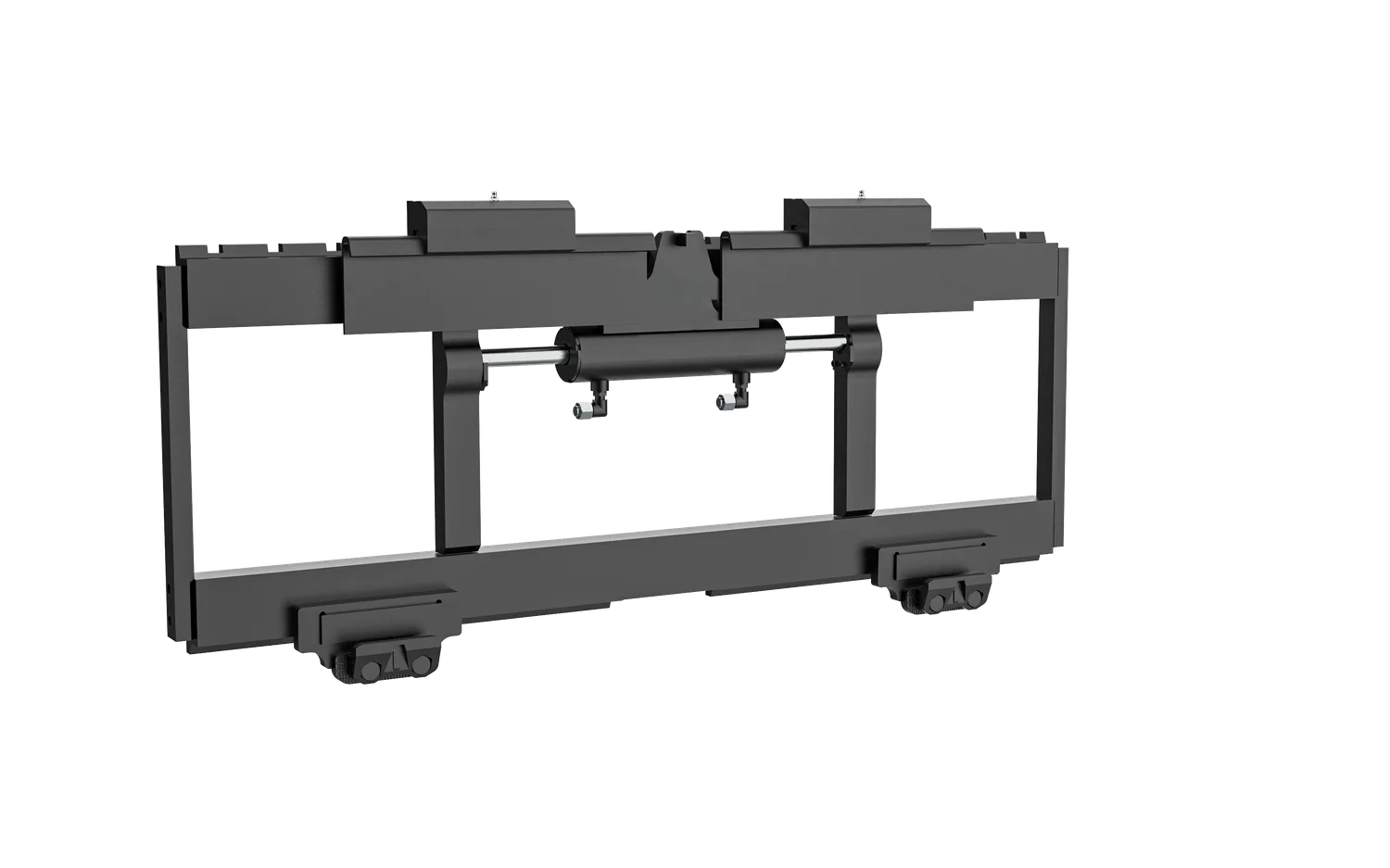
Side shifter
Why this direction may fit: Fits operations with consistent fork spacing where lateral correction helps rack, trailer or pallet placement.
Choose another route when: Select a fork positioner when the support spacing must change for different pallet or load widths.
Check before quotation: Required lateral stroke, carriage, fork pair, load, mast, hoses and capacity effect.
View Side shifter
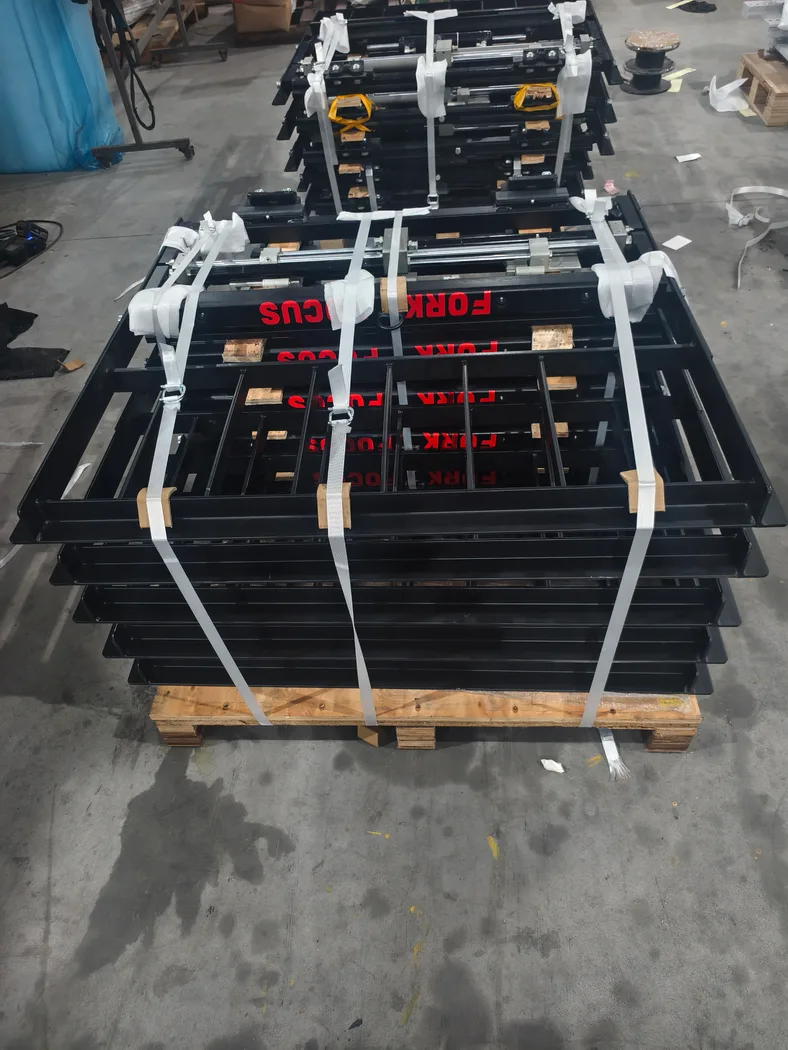
Side-shifting fork positioner
Why this direction may fit: Commonly fits mixed pallet or load widths where operators need both hydraulic spacing adjustment and lateral placement correction during the same cycle.
Choose another route when: Use a simpler side shifter when fork spacing never changes, or a fork-positioning-only unit when the site does not need lateral correction.
Check before quotation: Minimum/maximum fork opening, side-shift stroke, fork section, carriage, two hydraulic functions, visibility and capacity.
View Side-shifting fork positioner
Inspect the motion the operator actually uses
For side shift, record lateral slides, bearings or wear pads and hose movement. For fork positioning, also record fork carriers, synchronisation, fork locks and the minimum and maximum opening checks.
- Side-shift slide and hose movement inspection
- Fork-carrier, synchronisation and locking inspection
- Function test at the measured stroke or spacing limits
Include fork wear, locks, guide surfaces, synchronisation, side-shift wear strips, cylinders, hoses and seals in the service plan. Review the relevant ForkFocus lifecycle support.
Evidence required before one or both functions are specified
Confirm required stroke and spacing from measured pallets and placement tasks. Exact attachment range, carriage, forks, valve functions, visibility and working-point capacity remain model-specific.
Send Your Pallet and Fork-Spacing Data
Provide the following data so the quotation can state the truck, mast, power, tyre, attachment, capacity-verification and support scope without guessing.
Send these details to ForkFocus
If the truck type is not yet fixed, use the Forklift Selection Advisor for a preliminary direction, then return with the exact mast, load chart and attachment configuration.
- Pallet and load width range
- Minimum/maximum fork openings
- Required side-shift stroke
- Combined or separate function preference
- Truck model, carriage and fork dimensions
- Available valve sections, controls and hoses
- Lift height, rack and trailer limits
- Load chart, attachment data and duty cycle
Questions that close the Attachment selection review
Can a side shifter adjust forks for a wider pallet?
No. It moves the whole carriage laterally while the spacing between the forks remains fixed.
Why are side shift and fork positioning often combined?
ForkFocus project experience shows that buyers who adjust fork spacing often also need final lateral correction at racks, trailers or loads. This combined preference is particularly common in European and other mature warehouse markets, but exact product and hydraulic compatibility still control the order.
Does every fork positioner include side shift?
No. The quotation must state whether side shift is integrated and must verify both hydraulic functions, geometry and capacity effect.