

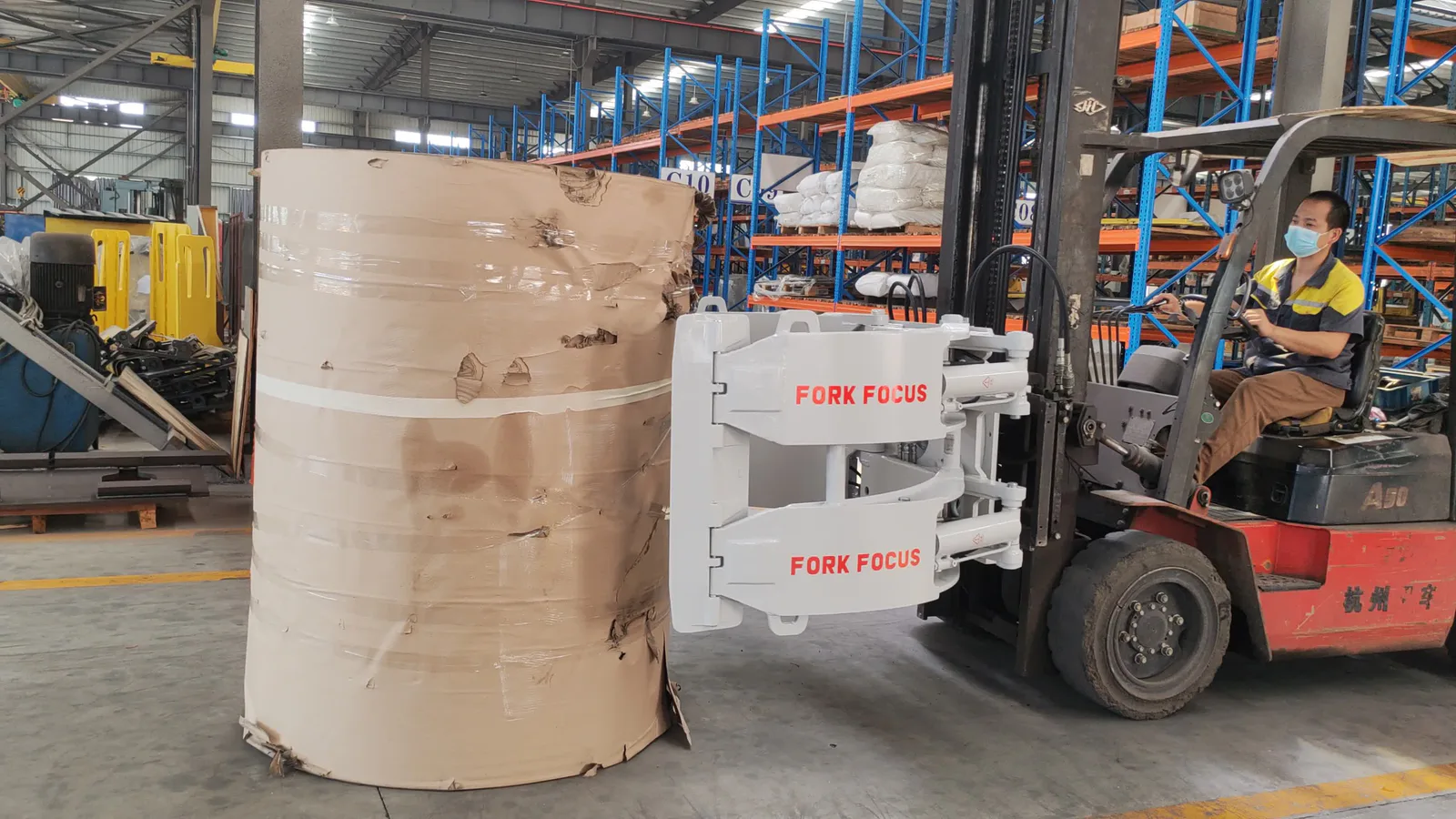
A paper roll clamp grips, lifts and rotates a load that can be valuable and easily marked. A short inspection before work is far less costly than discovering a worn pad, loose mounting lock or hydraulic leak while a roll is already in the air.
A Practical Pre-Shift Check
The operator’s pre-shift check is a visual and functional check, not a substitute for planned service. Follow the attachment manual, the forklift manufacturer’s instructions and the maintenance rules at the operating location.
| Check point | Normal condition | Stop-work sign |
|---|---|---|
| Contact pads | Clean, secure and evenly worn | Torn, hardened, oil-coated or uneven |
| Clamp arms | Straight and moving together smoothly | Cracks, deformation, looseness or uneven travel |
| Hydraulics | Dry hoses, fittings, valves and cylinders | Leakage, abrasion, kinks or damaged fittings |
| Rotation | Smooth, controlled and free from abnormal noise | Jerking, drift, impact or unusual sound |
| Mounting | Hooks and locks fully engaged | Movement between clamp and carriage |
| Capacity information | Truck/attachment/load combination confirmed | Missing or unsuitable capacity data |
For wider operating controls, use these forklift attachment safety practices alongside the equipment manuals.
Contact Pads Protect Both Grip and Paper Quality
Pad condition is not cosmetic. A worn or contaminated surface may need extra clamp pressure to hold the same roll, increasing the chance of slippage, creasing or wrapper damage.
Check wear pattern, edges, fasteners and pad alignment.
Confirm the surface is clean and free from oil or embedded debris.
Uneven pads can reveal arm, bearing or alignment problems.
The correct pad also depends on paper density and outside wrapping. Review our paper roll damage guide before changing pressure to compensate for a grip problem.
Clamp Arms Must Move Evenly
Inspect arms, pivots, carriers and visible weld areas for cracks, deformation and abnormal clearance. Open and close the unloaded clamp in a controlled area and watch for delay or uneven movement.
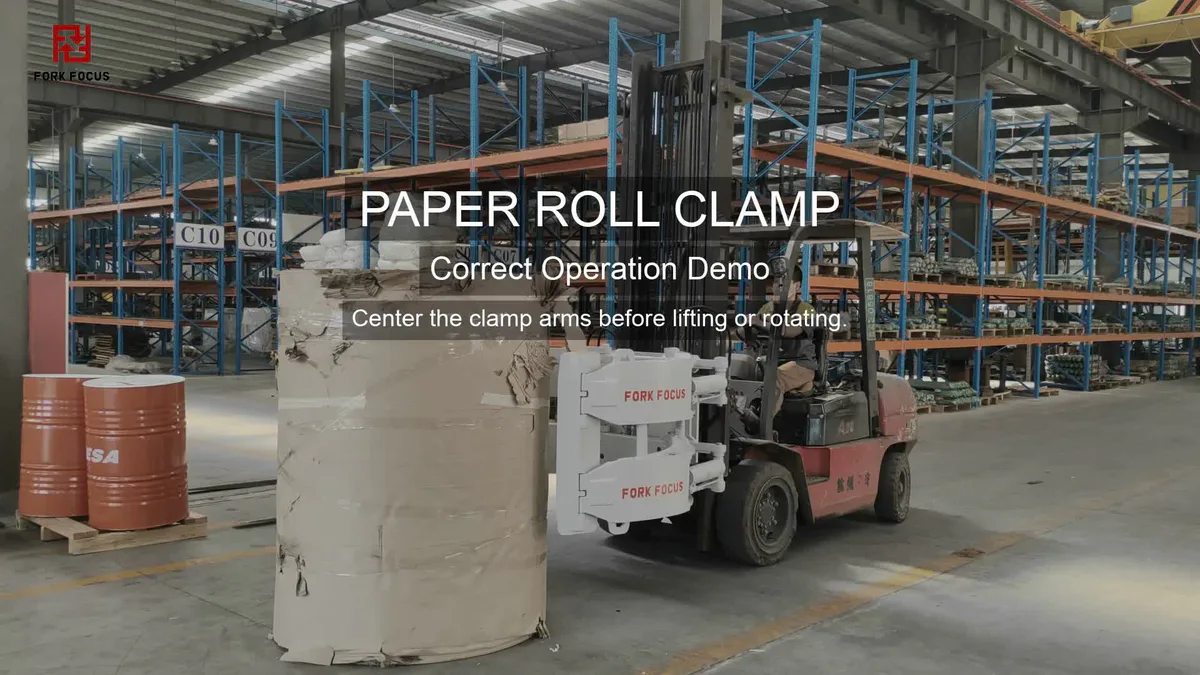
Split-arm clamps require the arm sections and their control to respond consistently to the intended roll combination. If the operation has changed, recheck the configuration using our single-roll and multi-roll clamp comparison.
Hydraulic Leakage Is a Load-Control Warning
Check cylinders, rods, hoses, fittings and the protected valve area. Oil on the floor is obvious, but a damp fitting, abraded hose or damaged routing point can be the earlier warning.
- Hoses: no rubbing, pinching, blistering or exposed reinforcement.
- Fittings: dry and mechanically secure.
- Cylinder rods: clean and free from visible damage.
- Movement: no drift, delay or loss of clamp response.
Do not use higher pressure to mask worn pads or mechanical problems. If the application itself has changed, our attachment engineering team can review the load, pressure and contact requirements together.
Rotation Should Be Smooth and Controlled
Test rotation without a load in the designated inspection area. Watch for jerking, drift, abnormal noise, loose components or harsh impact at the end position.
During operation, rotate low and under control. Sudden movement with a raised roll increases dynamic forces on the forklift attachment, load and truck.
Mounting and Capacity Must Remain Part of Maintenance
Confirm that the mounting hooks, lower locks and carriage interface are secure. Any looseness between the clamp and truck changes how the operator controls the roll.
The attachment weight and forward load centre affect residual capacity. If the clamp is moved to another truck, the truck, carriage, hydraulic functions and capacity information must be reviewed again using the attachment matching checklist.
Build the Inspection Plan Around the Working Condition
| Inspection level | Focus | Who should perform it |
|---|---|---|
| Before each shift | Visible damage, pads, leakage, mounting and functional movement | Trained operator |
| Planned inspection | Wear, fasteners, pivots, bearings, rotation system and hydraulic condition | Qualified maintenance personnel |
| After impact or abnormal operation | Structure, alignment, mounting and load-control functions | Qualified maintenance personnel before return to service |
| After changing truck or load | Compatibility, capacity, pressure, opening range and pads | Supplier/engineer plus site maintenance team |
Exact service intervals must follow the specific clamp manual and duty cycle. High-cycle mills, ports and warehouses, abrasive dust, temperature changes and delicate paper grades can justify closer inspection than a low-volume indoor operation.
For purchasing and service planning, see the attachment features that reduce downtime and cost.
In Conclusion
Effective paper roll clamp maintenance protects 3 things at the same time: the paper surface, the operator’s control and the service life of the equipment. Pads, arms, hydraulics, rotation, mounting and truck capacity therefore belong in one inspection system.
ForkFocus can help identify the correct replacement pad, review an abnormal condition or match the clamp to a changed working condition. Send the clamp model, forklift model, roll information and clear photos of the affected area so we can understand the problem before recommending action.
For the original selection data, refer to our paper roll clamp buying guide.