
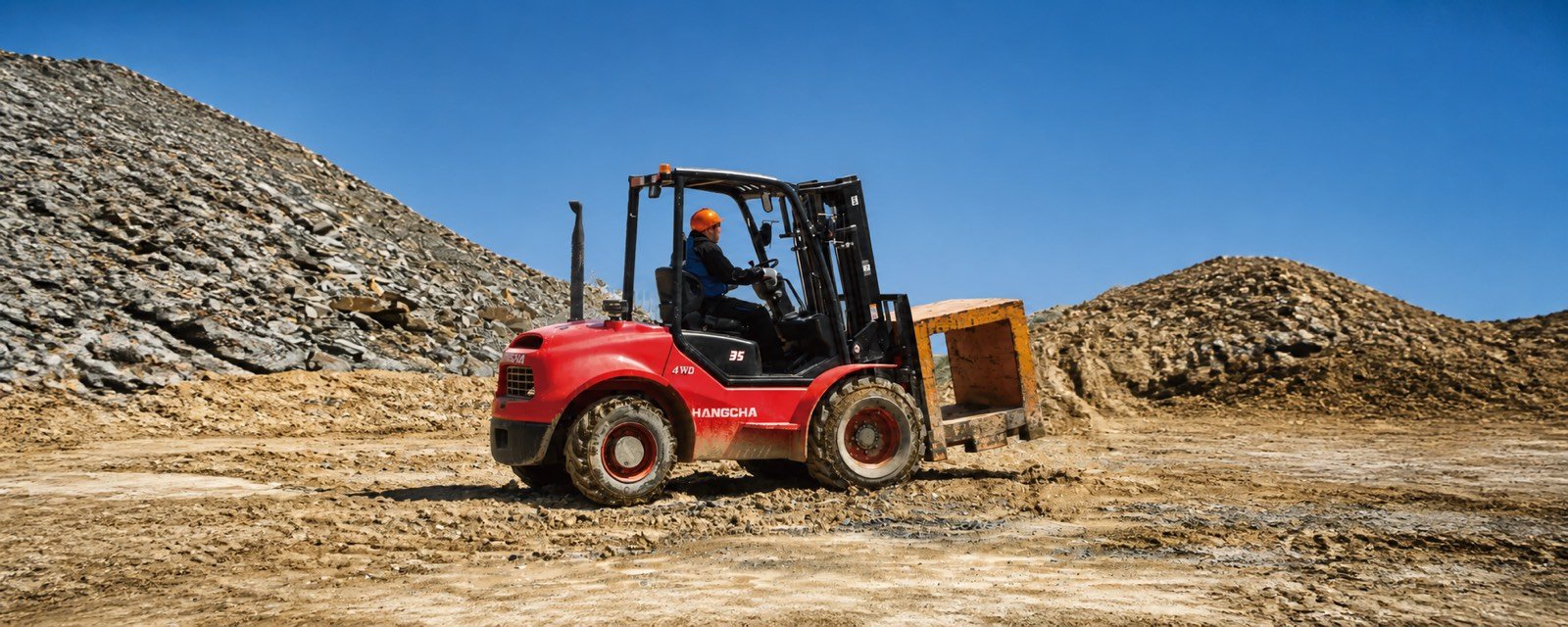
Rough-Terrain Forklifts and Telehandlers
Choose the chassis by ground condition, traction, gradient, load centre and operating route—not nominal capacity alone.
Class 7 covers two different working principles. Rough-terrain forklifts carry loads on a vertical mast, while telehandlers place loads forward and upward through a telescopic boom; their capacity charts and attachment checks cannot be treated as the same machine.
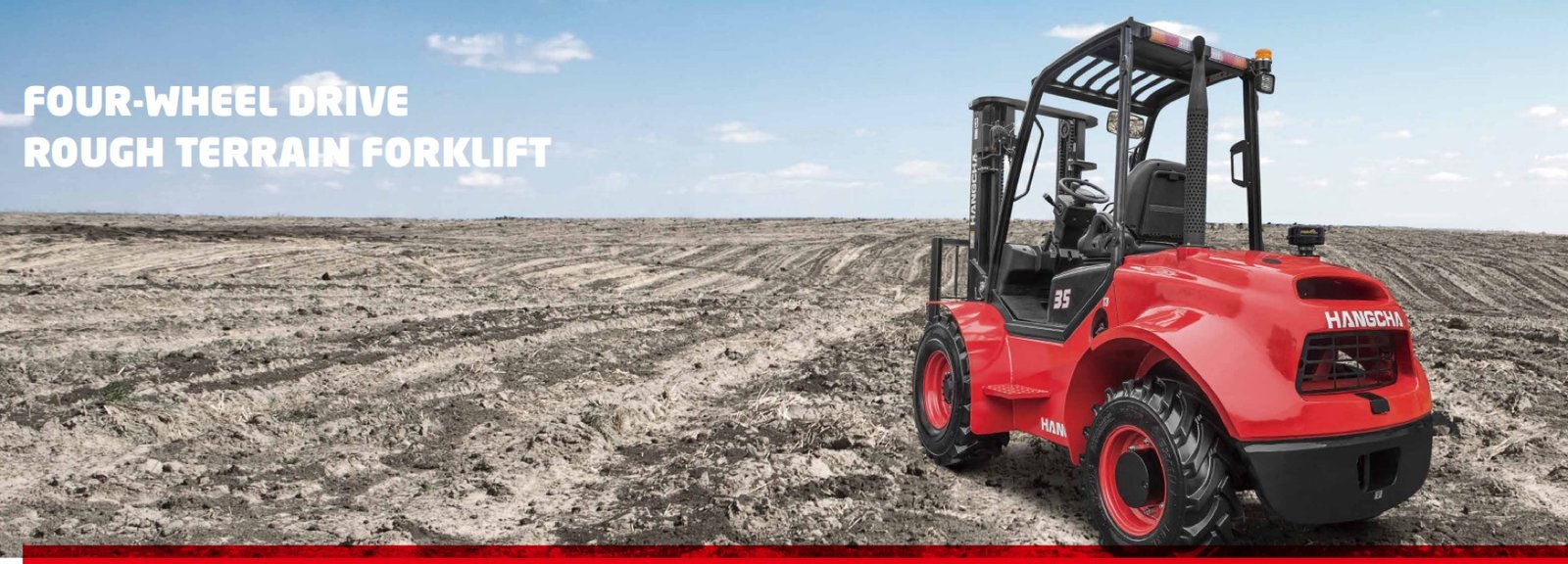
Diesel Rough-Terrain Forklifts
1.8–10.0 t diesel platforms, including 2WD and 4WD configurations for construction, timber, agriculture and demanding outdoor yards.
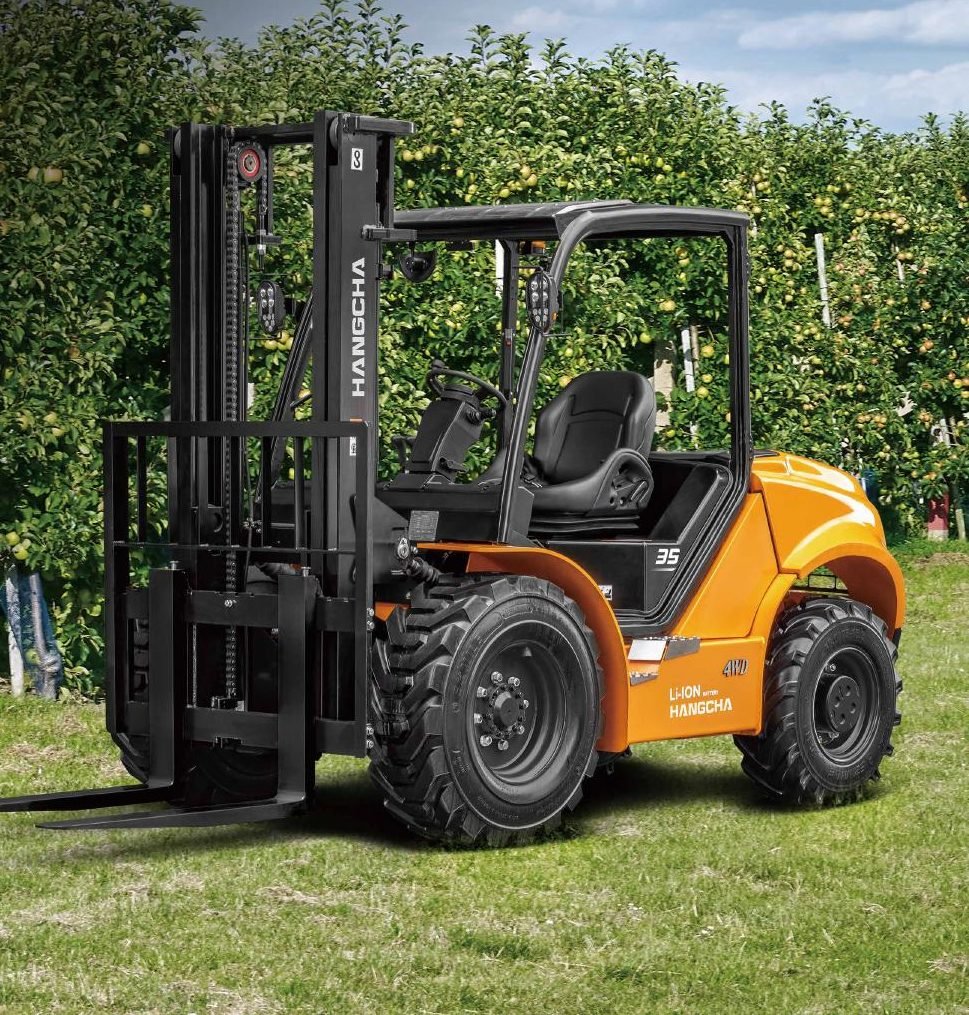
Lithium Rough-Terrain Forklifts
1.5–3.5 t high-voltage lithium platforms for outdoor traction with zero exhaust emissions at the truck.
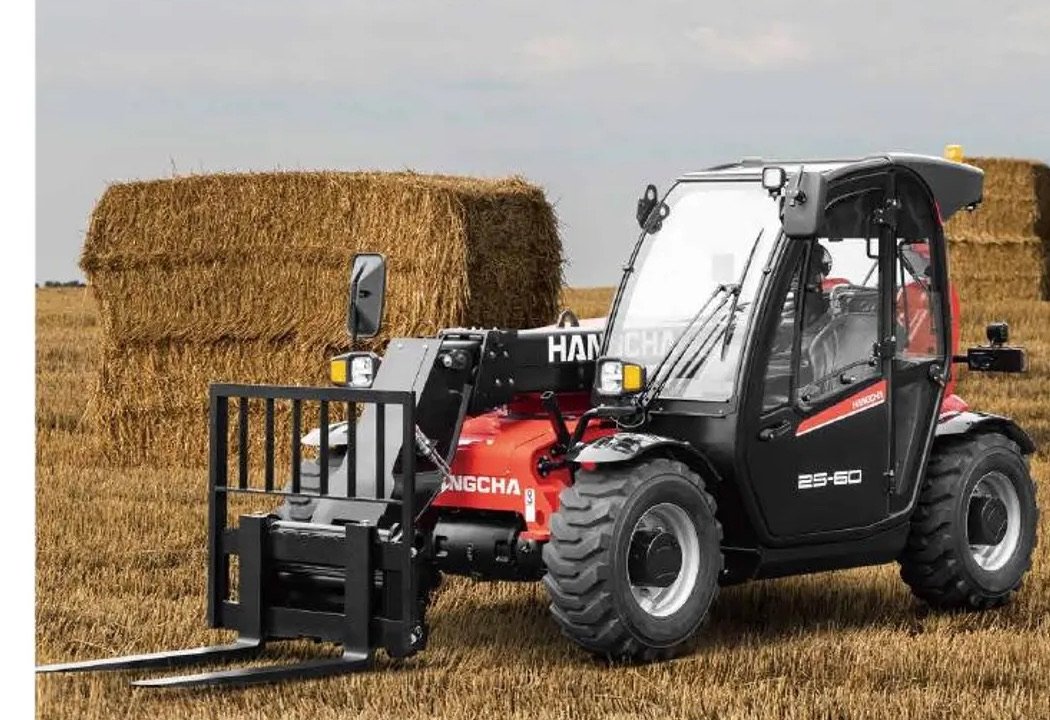
Telehandlers
X diesel and XH high-voltage lithium machines for forward reach, elevated placement and attachment work.
Diesel and high-voltage lithium platforms
The range covers 1.5–1.8 t compact trucks, 2.5–3.5 t 2WD and 4WD trucks, 5.0–10.0 t heavy rough-terrain forklifts, and 1.5–3.5 t high-voltage lithium models.
For light site work, machine width and turning room often decide the truck. For heavier loads, tyre load, ground bearing, cooling, braking and fork length become the limiting factors.
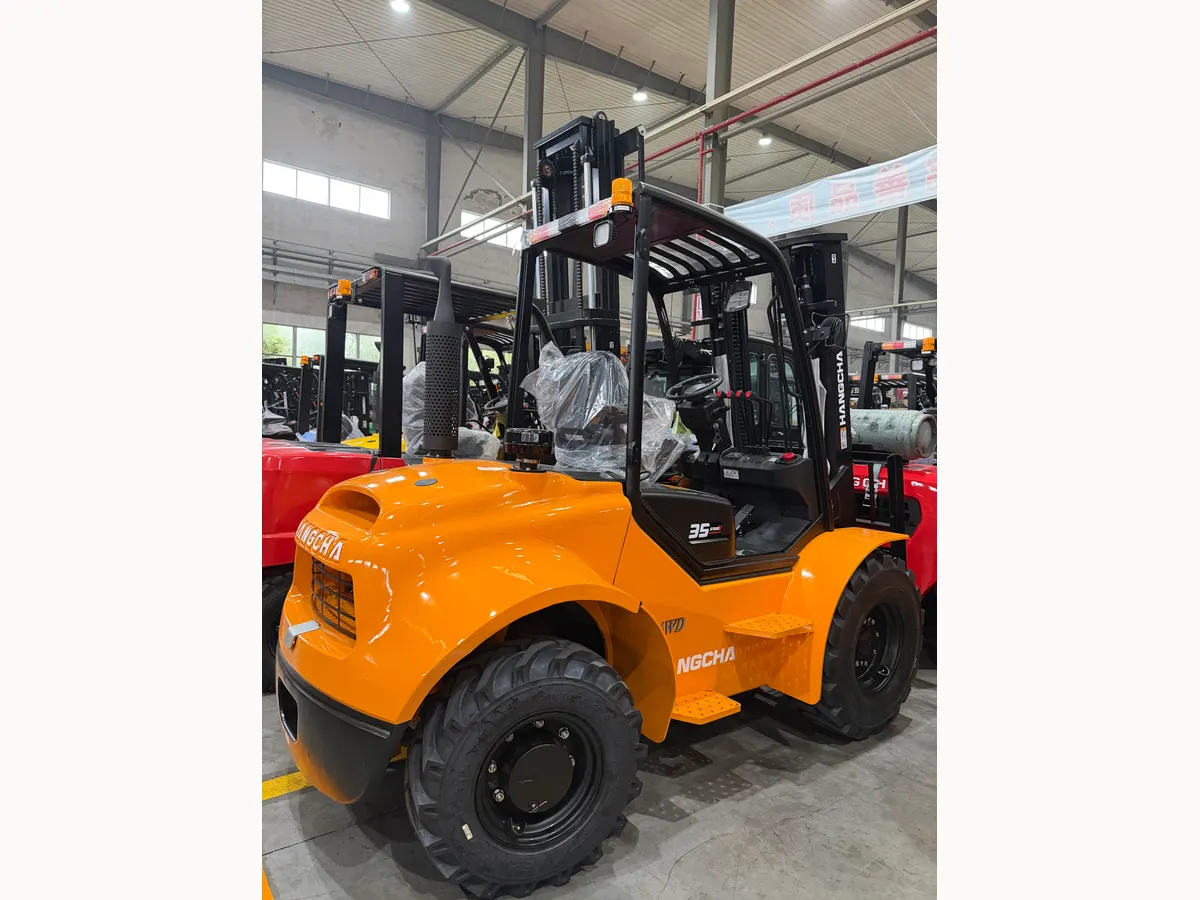
Product-family comparison
| 1.5–1.8 t | Compact sites, lighter agricultural and construction loads. |
|---|---|
| 2.5–3.5 t 2WD | Prepared outdoor routes with moderate traction demand. |
| 2.5–3.5 t 4WD | Loose ground, steeper gradients and stronger traction requirement. |
| 5.0–10.0 t | Heavier timber, construction material and industrial outdoor handling. |
| Lithium 1.5–3.5 t | Zero-emission power with fast charging for mixed indoor/outdoor applications. |
Watch a 4WD rough-terrain forklift at work
Watch the machine at work, then compare the operating route, duty cycle and configuration with your own application.
Why Hangcha
A broad platform range lets the truck specification follow the duty, rather than forcing every operation onto one standard chassis.
Powertrain, operator position, braking, steering and service access can be matched to the route and shift intensity.
Why ForkFocus
ForkFocus integrates forklifts, spare parts and Forklift Attachments into unified material handling solutions.
We review the working condition, confirm the model and configuration, coordinate inspection, and plan shipment before delivery.
Frequently asked questions
Which tyre and drive configuration is best?
Match tyre pattern and 2WD or 4WD to ground bearing, mud, gradients and travel distance.
What capacity should be quoted?
Use maximum load, actual load centre, fork length, lift height and any Forklift Attachment—not nominal load alone.
What should be checked for hot climates?
Cooling package, radiator access, fan protection and maintenance intervals must suit dust and ambient temperature.
Send us the real working condition
Share the load, route, operating hours, indoor or outdoor use, mast height and required attachment. Our forklift team will return a practical configuration instead of a catalogue-only quotation.