
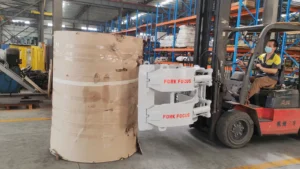
Paper Roll Clamp Preventive Maintenance Guide: Pads, Hydraulics and Rotation
A visual paper roll clamp maintenance guide covering pre-shift checks, contact pads, arms, hydraulics, rotation, mounting and inspection planning.
A visual paper roll clamp maintenance guide covering pre-shift checks, contact pads, arms, hydraulics, rotation, mounting and inspection planning.
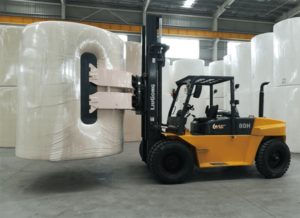
A practical comparison of single-roll and multi-roll paper roll clamps based on handling volume, roll combinations, forklift capacity, pad choice and cost per useful cycle.
A paper roll clamp should begin with the roll and the handling job—not with a price list. This guide shows how roll size, arm type, pad selection, damage control, handling quantity, forklift attachment matching and forklift residual capacity work together. The goal is simple: choose a clamp that can hold the paper roll securely, rotate it correctly, protect the paper surface and avoid overloading the truck. 01 Define the job 02 Confirm roll data 03 Choose arm type 04 Check min range 05 Match pads 06 Prevent damage 07 Compare productivity 08 Verify forklift fit ForkFocus paper roll clamp for

A real ForkFocus project showing how we designed a 6,500 kg steel pipe clamp for a HELI CPCD150 serving a major Ethiopian oil pipeline project.
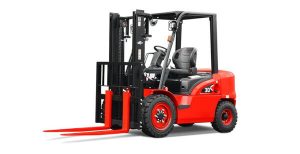
Buying a forklift is only one part of the material-handling challenge. Correct selection, verified spare parts, attachment compatibility and long-term support determine whether the investment keeps delivering value.

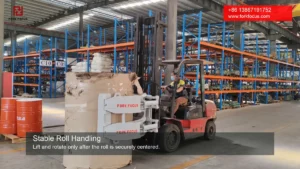
A paper roll clamp works under repeated clamping, lifting and 360-degree rotation. Regular inspection is necessary because small wear points can lead to roll slipping, surface damage, hydraulic leakage or unstable handling. Watch a ForkFocus Paper Roll Clamp in Operation See how a purpose-built paper roll clamp controls and rotates the load during a real handling cycle. Inspect the Contact Pads You can also compare the wider ForkFocus forklift attachment range when the operation handles more than paper rolls. The first item to inspect is the contact pad. Pads are directly responsible for grip and surface protection. Check whether the
When choosing a paper roll clamp, many customers first ask for capacity and price. A better question is: how many rolls do you need to handle per cycle, and does the forklift have enough capacity to do it safely? Watch a ForkFocus Paper Roll Clamp in Operation See how a purpose-built paper roll clamp controls and rotates the load during a real handling cycle. When a Single-Roll Clamp Makes Sense You can also compare the wider ForkFocus forklift attachment range when the operation handles more than paper rolls. A single-roll paper roll clamp is usually the most practical choice for
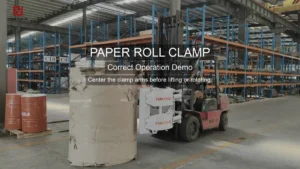
Paper rolls are heavy, round and easily affected by surface pressure. Even when the forklift operator is experienced, the wrong paper roll clamp configuration can cause roll deformation, edge damage, wrapper tearing or telescoping. Watch a ForkFocus Paper Roll Clamp in Operation See how a purpose-built paper roll clamp controls and rotates the load during a real handling cycle. Control Clamp Force You can also compare the wider ForkFocus forklift attachment range when the operation handles more than paper rolls. One common cause is incorrect clamp force. If the clamp force is too low, the roll may slip during lifting,
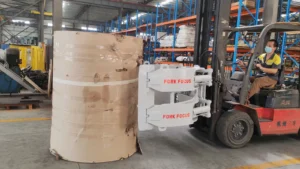
A paper roll clamp is not selected by forklift capacity alone. The correct model depends on the paper roll itself, the way it is packaged, and how the roll will be handled in daily operation. For most paper roll applications, 360-degree rotation is a basic functional requirement. Paper rolls often need to be picked up, rotated, stacked, loaded into containers, or transferred between vertical and horizontal positions. Without rotation, the operator may need extra handling steps, which increases time and the risk of roll edge damage. Watch a ForkFocus Paper Roll Clamp in Operation See how a purpose-built paper roll
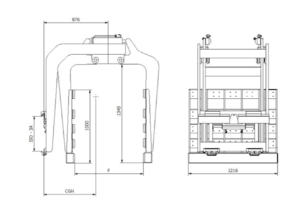
Block clamp innovation is moving from stronger steel toward better control and better information. The goal is not to add electronics to every clamp; it is to hold variable masonry packs with less damage, less operator guesswork and less wasted movement. Useful innovation strengthens the core forklift attachment function: controlled contact, predictable movement and serviceable design. The following developments are changing how buyers specify equipment and how operations measure results. Watch a ForkFocus Block Clamp in Operation See how a purpose-built block clamp controls masonry loads in a real ForkFocus operating demonstration. Block clamp development is moving beyond stronger steel