
Tow Tractor and Tugger Train Configuration Guide
Tow-tractor selection begins with the complete laden trailer train and the real route—not the tractor catalogue capacity alone. Calculate total towed mass from every trailer tare plus its maximum payload, then record trailer quantity and load distribution. Separately review the complete operating train mass when braking and route risk are assessed. Required drawbar pull, start-on-grade demand, route slope, stopping distance, hitch geometry, turning envelope, off-tracking, aisle and corner radius, traffic, route length and trips per shift must all pass for the same combination.
A verified ForkFocus electric tow tractor may replace repeated forklift carrying on suitable horizontal routes. Where the project is evaluating the Hangcha equipment family shown in the Hero, continue through the Hangcha industrial utility-equipment route. The broader warehouse material-handling equipment route helps compare towing with carrying equipment, while the local warehouse forklift and equipment selection guide places the tugger train inside the complete material-flow plan.
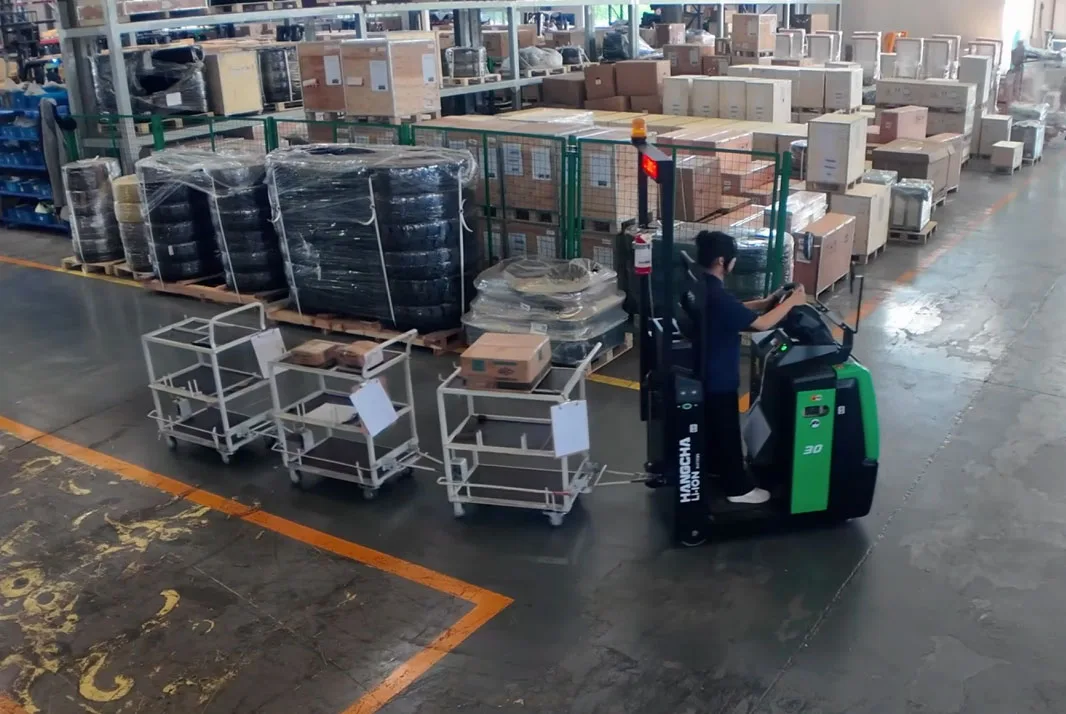
Connect route geometry to pull, tracking and braking
The tractor cannot be selected from nominal towing capacity alone. Trailer quantity, tare and payload, hitch geometry, gradient, aisle/corner geometry, off-tracking and stopping conditions define the duty.
Map material flow
Record loading points, hand-offs, peak volume, route length, timetable and permitted speed.
Build the train mass
List every trailer tare and maximum payload, then calculate total towed mass and document load distribution.
Survey the complete route
Measure gradients, slope length, aisles, doorways, the tightest corner radius, intersections, surfaces and stopping zones.
Define hitch and trailer geometry
Confirm coupling type, rating, height, articulation, trailer wheelbase, axle/steering layout and operating clearance.
Prove swept path
Check the complete train—not only the tractor—through the tightest corner, doorway and traffic conflict using the proposed trailer quantity.
Verify pull and braking
Use exact towing-rating, drawbar-pull, gradeability and braking evidence for uphill starting, sustained travel and downhill stopping.
Prove sustained duty
Check trips, shifts, battery or fuel recovery, tyres, thermal limits, coupling cycles and inspection intervals.
Map the laden train through every turn and stop
Truck selection based only on nominal towing capacity ignores total laden train weight, drawbar pull, gradient, turns, stopping distance, hitch geometry, trailer behaviour, route length and energy replenishment.
Towed mass and train mass
Record trailer quantity, each trailer tare, maximum load per trailer and load distribution. Total towed mass is the sum of all trailer tare and payload; braking and route risk also require the complete operating train mass.
Route slope and surface
Measure the maximum gradient, slope length, cross-slope, surface and adhesion. Check the worst loaded direction, start-on-grade condition and downhill stopping case; use the local forklift ramp and slope selection guide to prepare the route evidence.
Drawbar pull and towing rating
Do not treat nominal towing capacity in kilograms as drawbar pull in newtons. Verify the manufacturer rating basis, continuous and peak pull where published, gradeability and sustained duty for the exact route.
Turning and route geometry
Measure aisle width, door width and every corner radius. Tractor turning radius alone is insufficient because trailer count, wheelbase, axle/steering layout and articulation determine swept path and off-tracking.
Hitch and coupling
Confirm hitch type, pin or coupling dimensions, height, articulation, rated horizontal and vertical loads, retention device, operating clearance and coupling procedure.
Braking and stopping
Confirm tractor service and parking brakes, trailer brakes where required, permitted speed, emergency and downhill stopping, stopping distance, surface adhesion and runaway controls for the complete train.
Power, tyres and duty
Use the electric versus IC forklift comparison to frame the power decision, then match the exact battery recovery or refuelling plan. Confirm route surface and duty through the forklift tyre selection guide; for an electric tractor, verify charger input, battery and site supply through the local battery-charger and site-power compatibility guide.
Lifecycle plan
Define inspections and critical parts for every hitch, safety device, trailer wheel/tyre, brake, tractor tyre, battery or cooling component. Carry wear and downtime items into the forklift spare-parts package, and record the approved tractor-and-trailer configuration in the pre-shipment inspection checklist.
Adding trailers changes more than total payload
A longer train may consolidate material flow while increasing inside tracking, swept path, coupling time, stopping demand and traffic interaction.
More trailers
Can consolidate flow and reduce tractor trips, but increases total towed mass, coupling points, train length, swept path, off-tracking and stopping demand.
Higher load per trailer
Can reduce trailer quantity, but may raise axle, wheel, hitch and floor loads and can make loading balance more sensitive.
Compact tractor
May improve manoeuvrability, yet the complete train must still pass drawbar pull, braking and route-geometry checks.
Electric route
Can suit indoor logistics when battery recovery, charging, slope and repeated-trip duty all pass; charging availability alone does not prove the towing configuration.
Tow-train specifications that ignore the trailers
- Selecting by nominal towing capacity alone
- Calling trailer payload the total towed mass and omitting trailer tare
- Using tractor turning radius as the complete train turning envelope
- Leaving trailer quantity and load per trailer undefined
- Ignoring hitch type, height, articulation or coupling rating
- Checking uphill pull but not downhill braking and stopping
- Approving a straight aisle while skipping the tightest corner and doorway
Choose towing only after the material-flow method is clear
Use the Hangcha route when the buyer is evaluating the Hangcha equipment family shown by the page media; keep the general ForkFocus electric tow-tractor route available while brand selection remains open. In either case, the measured train mass, drawbar pull, hitch, swept path, braking and energy plan must all pass. If the material-flow method is still undecided, compare towing with carrying equipment before selecting the tractor.
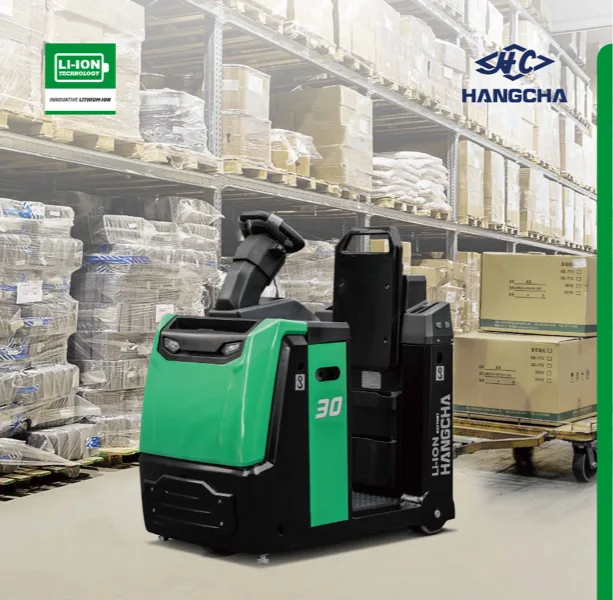
Hangcha tow tractor and industrial utility equipment
Why this direction may fit: Use this Hangcha route when the buyer is evaluating the Hangcha equipment family shown in the image and the measured train, route, hitch, braking and energy plan support towing.
Choose another route when: Use the general ForkFocus tow-tractor route when the brand or equipment family is still open; review another material-flow method when the complete train cannot pass the route and stopping checks.
Check before quotation: Exact Hangcha model, total train load, route, gradient, hitch, tracking, braking, battery and trips per shift.
View Hangcha tow tractor and industrial utility equipment
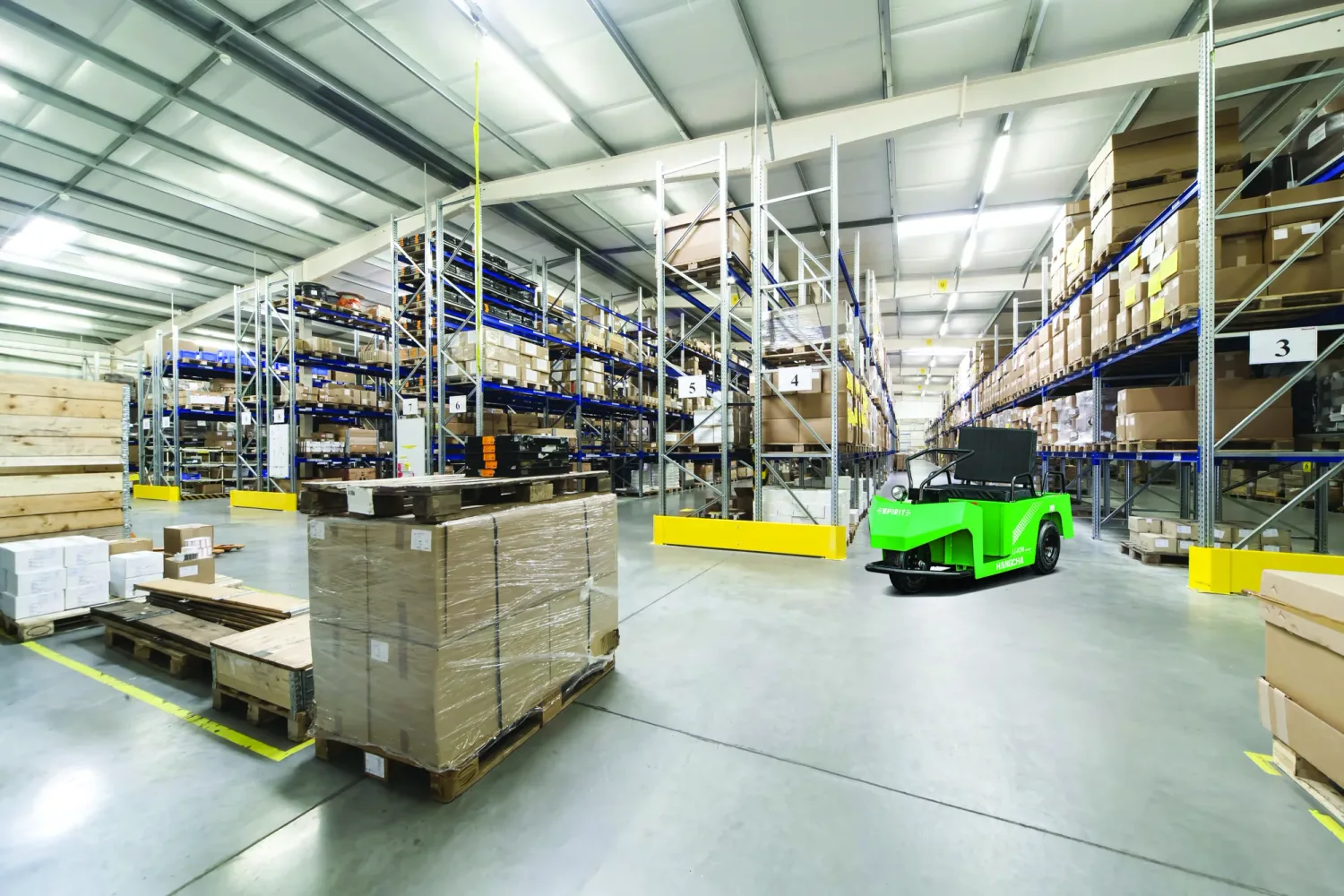
Warehouse material-handling equipment
Why this direction may fit: Use the broader warehouse-equipment route when the decision is still between towing, carrying, pallet transfer and fixed hand-off points.
Choose another route when: Use the electric tow-tractor page when the route, trailer system and towing method are already confirmed.
Check before quotation: Material-flow map, loading points, load unit, peak volume, route conflicts, hand-off method and timetable.
View Warehouse material-handling equipment
Complete the tow-tractor and tugger-train specification
Use the measured train mass and route to review the tractor, slope, charging, lifecycle and RFQ requirements together.
Treat hitches, trailer brakes and tyres as train components
The inspection plan should cover every coupling, safety device, trailer wheel and brake where fitted, plus tractor tyres, brakes, battery or cooling and the route condition that affects stopping.
- Hitch, coupling and safety-device inspection
- Trailer wheel, tracking and brake checks where fitted
- Tractor tyre, brake and energy-system inspection
Evidence required for the exact tractor-and-trailer combination
CONFIGURATION CONFIRMATION REQUIRED — verify the exact tractor, hitch and every trailer against manufacturer towing-rating, drawbar-pull, gradeability, brake and duty evidence. Run a swept-path review or controlled route trial using the proposed trailer count, wheelbase, load distribution and coupling geometry. No towing class, slope capability, turning envelope or stopping result may be transferred between models or trailer combinations.
Send Your Tugger Route and Train Data
Provide the tractor, trailer, hitch, train-mass, route, drawbar-pull, braking, energy and lifecycle evidence so the exact tow-train configuration can be reviewed without guessing.
- Route drawing, distance, aisle widths and door widths
- Tightest corner radius and required swept-path clearance
- Maximum gradient, slope length, surface and loaded direction
- Trailer quantity, wheelbase, axle/steering layout and empty weight
- Maximum load per trailer, load distribution and total towed mass
- Hitch type, pin/coupling dimensions, height, rating and articulation
- Permitted speed, brake arrangement and required stopping distance
- Trips per hour, shifts, power plan and recovery margin
- Brake, tyre, battery and hitch inspection/service requirements
Questions that close the Train and route selection review
Is nominal towing capacity the same as total trailer payload?
No. Total towed mass must include every trailer tare plus its payload. The manufacturer towing rating and drawbar-pull evidence must then be checked against the exact route and duty.
Does nominal towing capacity include the route gradient?
Not necessarily. Confirm the manufacturer rating basis and compare drawbar pull, gradeability and braking with the exact laden train, start-on-grade condition and route.
Is tractor turning radius enough to approve a tugger train route?
No. Trailer quantity, wheelbase, steering or axle layout and hitch articulation change swept path and off-tracking. Verify the complete train through the tightest aisle, corner and doorway.