
Counterbalance or rough-terrain forklift for uneven ground?
Describe the surface, soft spots, gradients, drainage, travel distance and weather before selecting the truck. Tyres, ground clearance, traction, axle/chassis design, stability, visibility and powertrain must be checked with the load and duty. A rough-terrain forklift may be appropriate, but some firm yards can use a correctly configured counterbalance truck.
This guide distinguishes correctly configured counterbalance forklifts from rough-terrain forklifts for yards, construction sites, farms and uneven outdoor routes.
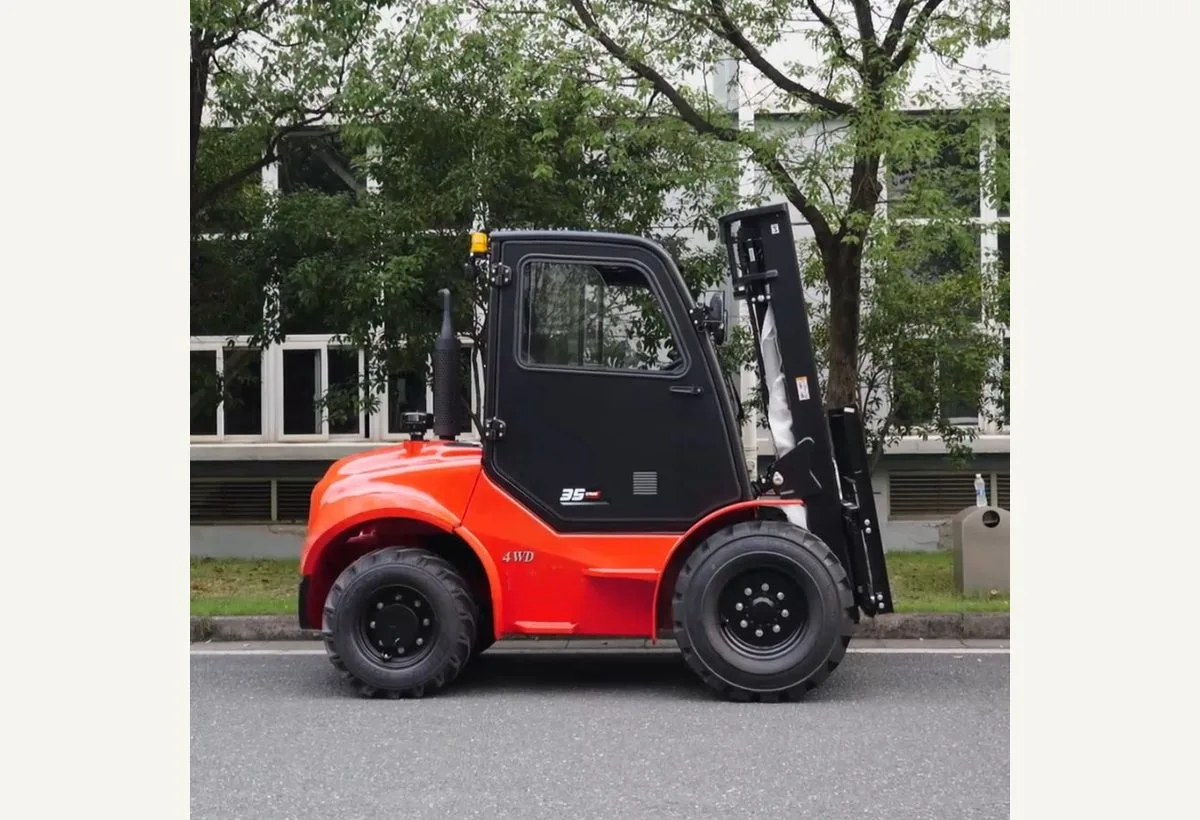
Watch a four-wheel-drive forklift on rough ground
This ForkFocus landscape video shows traction and chassis movement on uneven ground. The project still requires measured gradients, surface condition, load, tyre and manufacturer operating limits.
Ground and route data that determine the truck type
What forklift configuration suits uneven yards, rough ground or construction-type surfaces?
Ground map
Firmness, ruts, gravel, mud, potholes, edges and drainage
Grade and transitions
Maximum working slope, breakover points, ramps and cross-slope exposure
Tyres and traction
Construction, tread, inflation/solid type and puncture risk
Clearance and chassis
Underbody clearance, wheelbase, steering and drive architecture
Load stability
Load shape, travel height, centre of gravity and visibility
Weather and duty
Rain, dust, heat/cold, distance, cycle intensity and maintenance access
A slightly uneven yard does not automatically require a rough-terrain forklift
In practical selection work, the surface severity, soft-ground exposure, gradients, drainage and load matter more than the word “outdoor.” A firm compacted yard may suit a correctly configured counterbalance truck; ruts, mud, steep transitions or soft edges may justify specialist traction and clearance.
Describe the worst recurring section
Use the roughest real part of the route rather than the average yard condition.
What changes the truck direction
Traction, ground clearance, tyre construction, drive architecture, cross-slope exposure and load travel height must be considered together.
Manufacturer operating limits
Apply the exact limits for grade, tyres, load and operating conditions after the site condition has been measured.
Ground-condition choices that affect traction and stability
Tyres, drive system, clearance and chassis geometry must match the worst recurring section of the route.
Traction vs surface damage
Aggressive tread can improve grip but may mark or damage finished floors.
Ground clearance vs step-in/height
Outdoor capability can increase truck height and access requirements.
Rough-terrain truck vs indoor use
A specialist truck can be less efficient or less manoeuvrable on smooth indoor routes.
Outdoor-forklift selection errors that misread the site
The word “outdoor” does not establish the required traction, clearance or operating limits.
- Choosing by “outdoor” alone
- Treating gradeability as safe working permission at any load
- Ignoring cross-slope and soft edges
- Using pneumatic-looking tyres as proof of rough-terrain capability
Choose between an industrial and rough-terrain chassis
The worst recurring surface—not the word “outdoor”—determines which product route deserves priority.
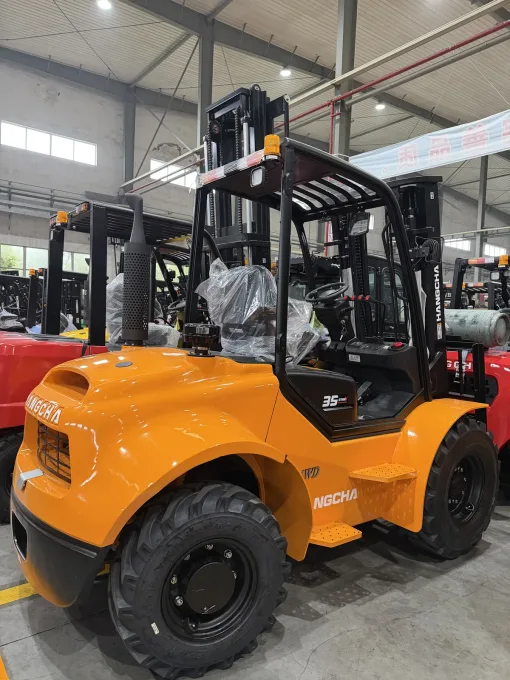
Mud, ruts, loose ground and construction routes
4WD rough-terrain forklifts · 1.8, 2.5 and 3.5 t
Why this direction may fit: This direction may fit routes where traction, ground clearance and recurring soft-ground exposure exceed a standard industrial yard.
Choose another route when: Choose an industrial truck when the route is firm, maintained and does not require specialist clearance or four-wheel-drive traction.
Check before quotation: Confirm grade, cross-slope, tyre, load travel height, ground condition, route transitions and manufacturer operating limits.
View 4WD rough-terrain forklifts · 1.8, 2.5 and 3.5 t
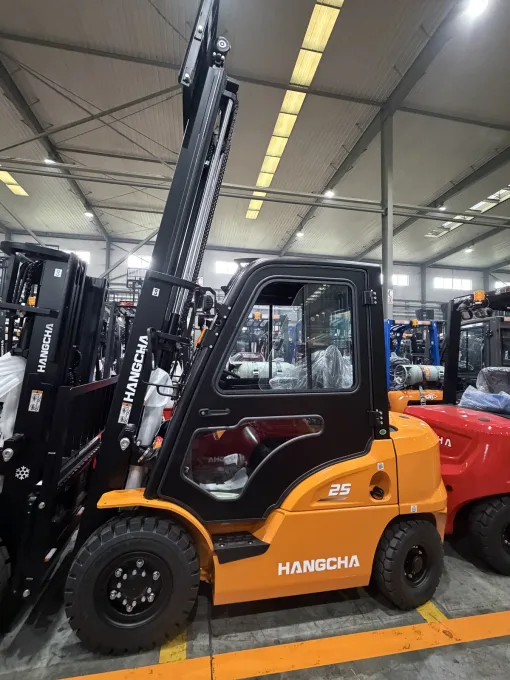
Firm paved yards with occasional uneven sections
X Series IC counterbalance forklifts · 1.5–3.8 t
Why this direction may fit: This direction may fit firm, maintained outdoor surfaces when the selected tyre, ground clearance and traction are adequate.
Choose another route when: Choose a rough-terrain route for persistent mud, soft shoulders, deep ruts, severe breakover points or traction demands outside industrial-truck limits.
Check before quotation: Confirm the worst recurring surface, gradient, cross-slope, tyre, clearance, load travel height and model operating limits.
View X Series IC counterbalance forklifts · 1.5–3.8 t
Match the truck to the ground and route
Use the measured surface, gradient and duty to compare tyres, chassis direction, working-point capacity and service requirements.
Site data required for an uneven-ground proposal
Provide the worst surface, gradients, seasonal conditions, load and indoor/outdoor transitions.
Send photos of the worst route and the operating load
ForkFocus can compare a conventional counterbalance configuration with rough-terrain equipment against the measured site.