
Reach truck vs counterbalance forklift
A reach truck is usually the stronger direction for high racking and narrow indoor aisles on suitable floors. A counterbalance forklift is more flexible for general handling, loading docks, yards and mixed routes. The choice depends on aisle geometry, lift height, load, floor, travel distance, doorways and whether the truck must work outside the rack aisle.
Watch a reach truck working in a warehouse aisle
This ForkFocus landscape video shows reach-truck travel and load handling in a real warehouse context. It helps explain rack-face work, but the final comparison still depends on aisle width, lift height, floor, load and the route outside the racks.
The warehouse geometry decides the truck architecture
Choose the truck architecture that fits the warehouse and movement route.
Choose around the rack aisle, loading area and complete travel route.
Choose around the complete material route
Choose a reach truck when storage density, high racking and narrow indoor aisles dominate. Choose a counterbalance truck when the machine must load vehicles, cross yards, handle varied surfaces or work across a wider facility. Review further when one truck is expected to cover both high-rack work and outdoor loading.
Reach truck and counterbalance comparison
Choose the truck architecture that fits the warehouse and movement route.
| Decision factor | Reach truck | Counterbalance forklift | Confirm before selection |
|---|---|---|---|
| Primary role | High racking and narrow indoor aisles | General handling, docks, yards and mixed routes | Main task and percentage of time |
| Aisle | Can work in narrower rack aisles, model dependent | Usually needs more manoeuvring space | Ast / right-angle stacking aisle and turning area |
| Lift height | Built for high rack access; capacity still derates | Available with high masts but geometry and capacity change | Working height, load chart, lowered mast height |
| Floor | Requires a suitable level floor for its design | More configurations for varied floors and yards | Flatness, joints, ramps and outdoor surface |
| Travel | Optimised for warehouse travel patterns | More flexible across mixed facility routes | Distance, doors, docks and outside travel |
| Load handling | Load and pallet must suit reach geometry | Direct counterbalance layout handles broader tasks | Load dimensions, centre and attachment |
Measure the complete travel route
The rack aisle alone is insufficient; measure the approach, right-angle stacking movement and every route segment outside the racks.
Ast / right-angle stacking aisle
Use the applicable truck calculation or manufacturer data at the actual load dimensions. Measure the narrowest clear working aisle, including pallet overhang and obstructions.
Lift and mast
Provide top beam and placement height, lowered mast limit, free lift and capacity required at height.
Load geometry
Record pallet entry, load width/depth, weight and actual load centre. Oversize or non-pallet loads may change the truck direction.
Floor condition
Reach trucks depend on a suitable indoor floor. Confirm flatness, joints, slopes and thresholds.
Route outside the aisle
Map doors, docks, ramps, truck loading and any outdoor segment. A rack solution may not cover the complete route.
Attachment or special handling
Side shift, fork positioner and other functions affect carriage, hydraulics, visibility and residual capacity.
Choose by rack face, dock and outdoor movement
The final recommendation can change when the load, route, duty or site constraints change.
Choose a reach truck when…
High racking, controlled indoor floors and narrow aisles are the main constraints, and the travel route stays within its operating envelope.
Choose counterbalance when…
The truck must load vehicles, cross varied routes, work outdoors or handle a wider range of loads and tasks.
Review further when…
One truck is expected to serve rack aisles, docks and yards, or when high lift combines with unusual load centres or attachments.
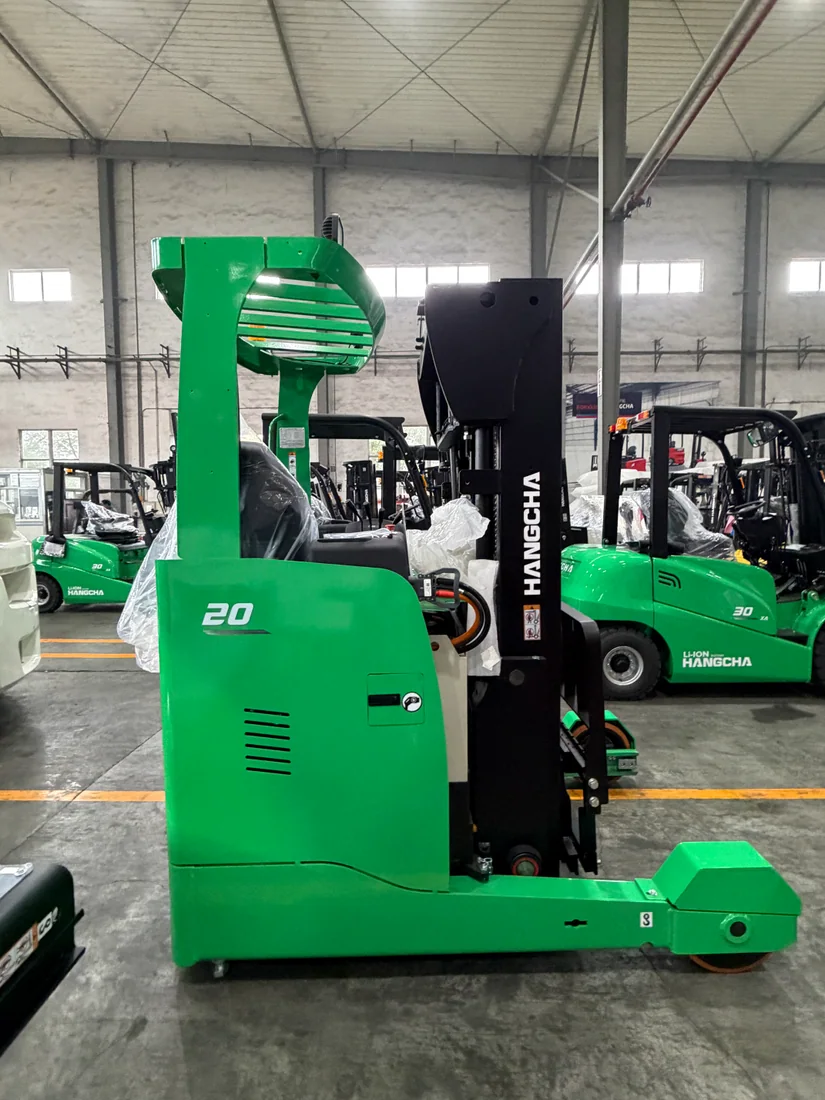
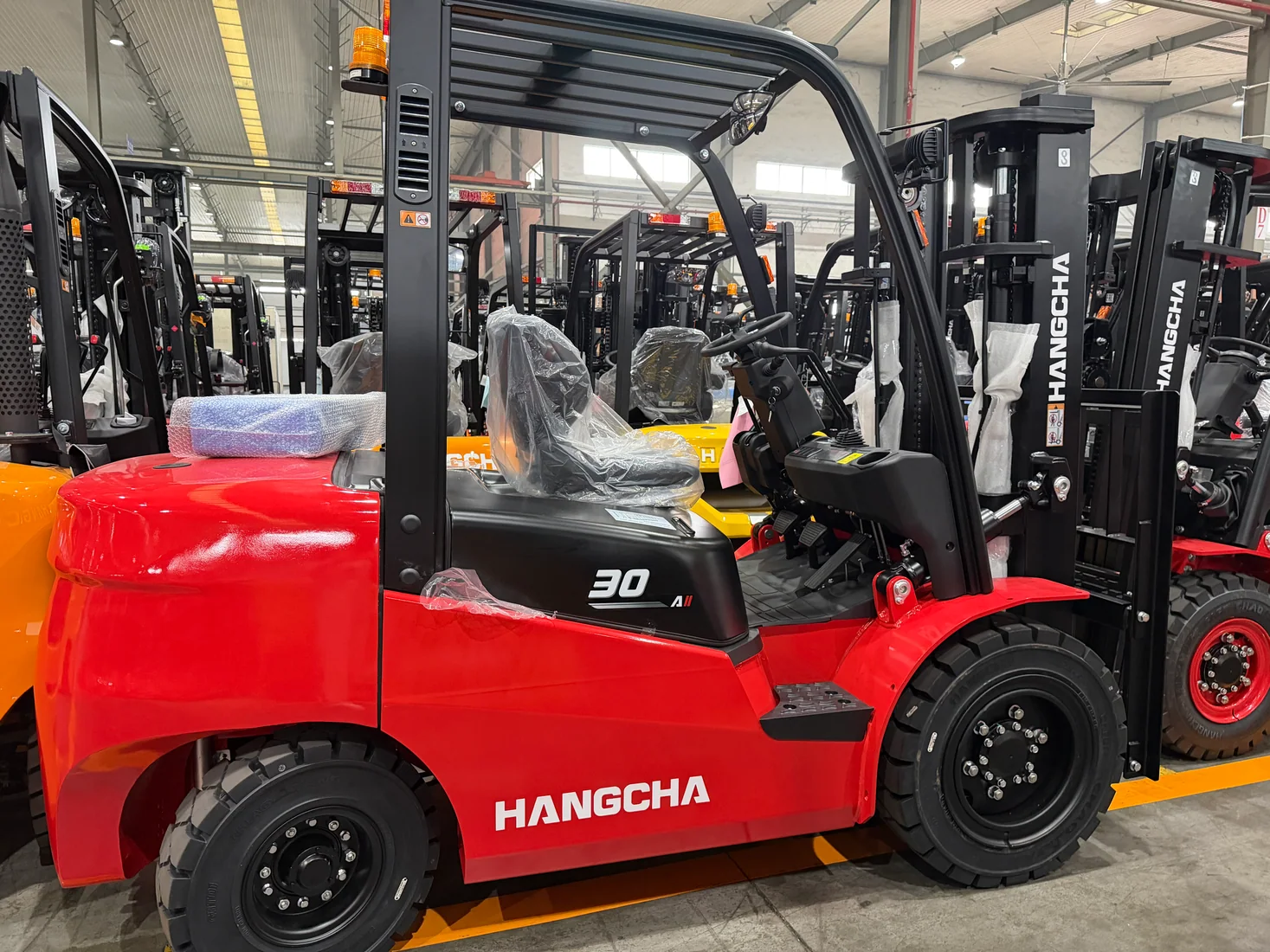
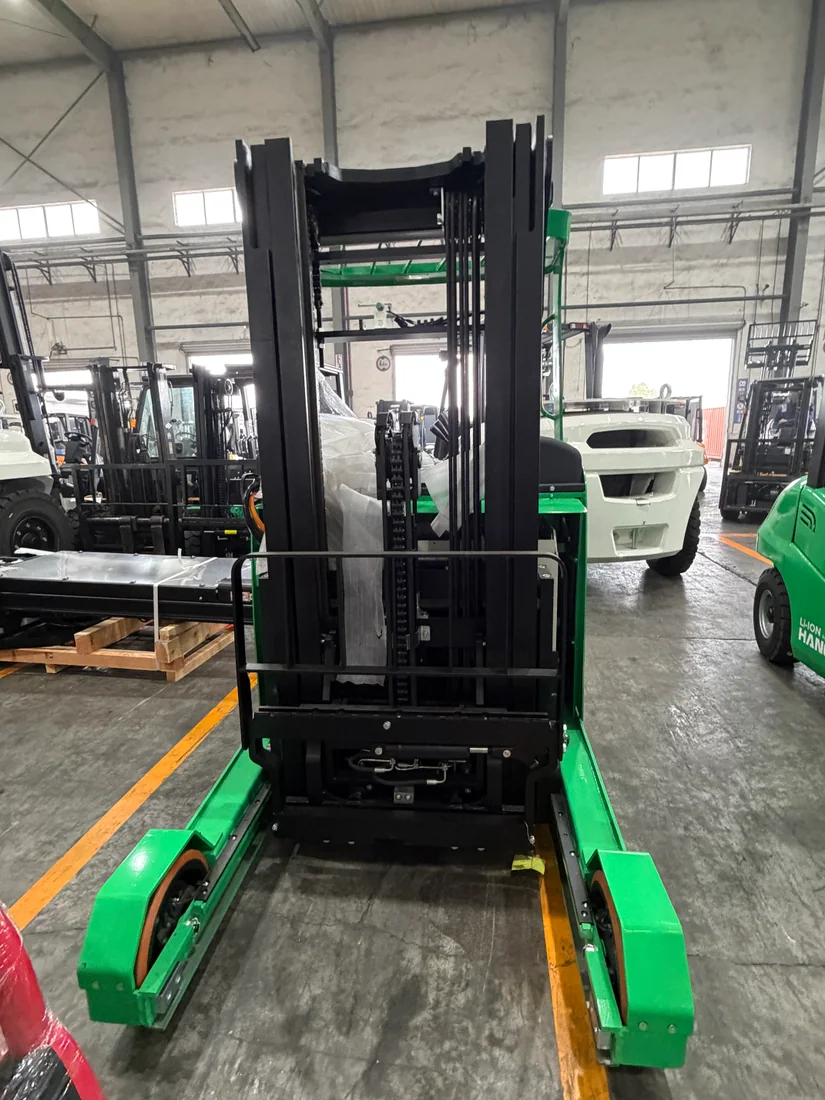
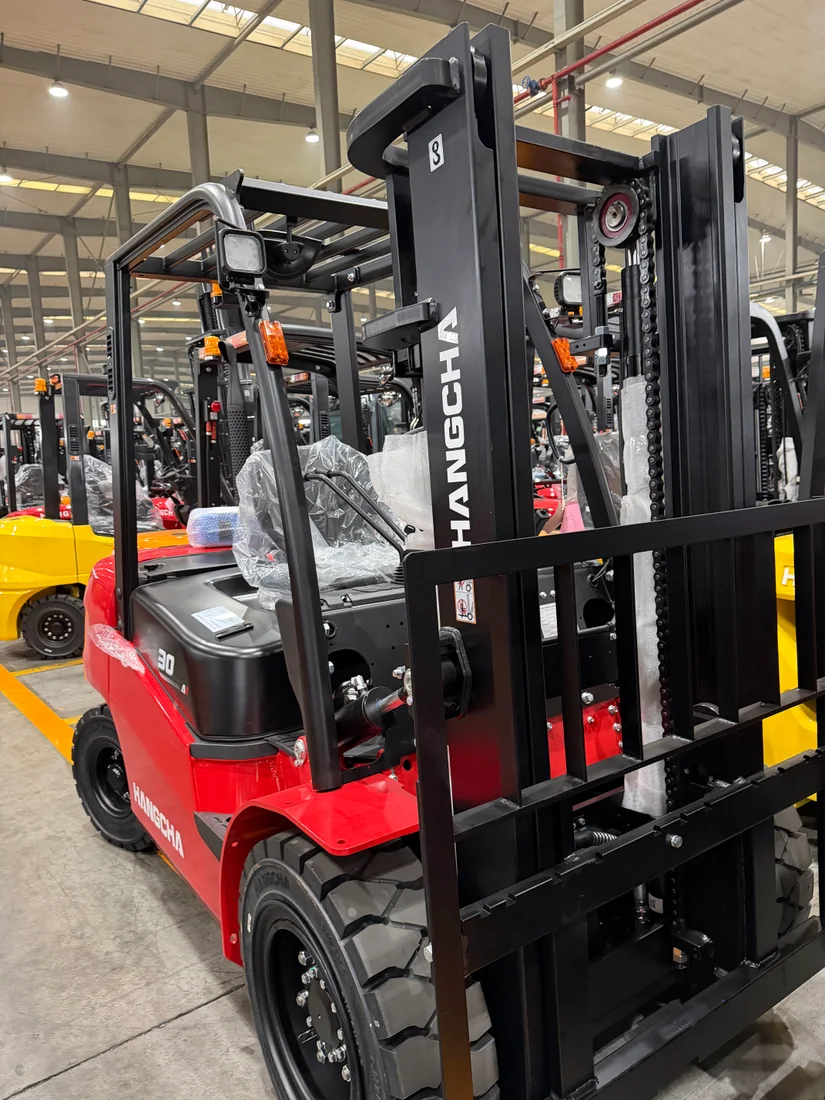
Two truck architectures in real equipment
Each image has a defined buyer purpose. Captions state what the image does—and does not—verify.
Checks before confirming aisle suitability
Aisle suitability is a truck-and-load geometry check, not a generic reach-truck label.
Continue from warehouse geometry to model selection
Measure the aisle and use the Forklift Selector.
Questions about aisles, racks and mixed routes
Practical guidance for procurement and equipment teams.
Is a reach truck always better for a narrow aisle?
Not automatically. The exact right-angle stacking aisle, load, lift height, rack geometry, floor and model dimensions must be checked.
Can a reach truck load a road truck outdoors?
That may be outside the intended operating envelope of many reach-truck configurations. Check floor, gradient, weather, dock and manufacturer limits; a counterbalance truck may be more appropriate.
Can a counterbalance forklift use a high mast?
Yes, but lowered height, free lift, visibility, stability and capacity at height must be reviewed using the exact truck and mast data.
Which measurement should I send first?
Send the narrowest rack aisle, top load placement height, door height, load dimensions/weight and a route sketch or photos.
Measure the warehouse before choosing the truck
Send the aisle, rack, load, lift, door and floor details so ForkFocus can compare the correct truck architecture.