
1.0–1.2 Tonne XC Series Lithium Reach Trucks
Four XC configurations with 7,000 mm maximum lift height, 14 km/h travel speed and a choice of mechanical-lever or fingertip control.
Request the Residual-Capacity ReviewDiscuss It on WhatsAppA Series or XC Series reach truck?
The A Series and XC Series overlap in common warehouse capacities, but they are not the same performance package. The comparison below uses the 1.2–2.0 tonne A Series catalogue and the XC catalogues that cover 1.0–1.2 tonnes and 1.4–2.5 tonnes.
Use the overlapping 1.2–2.0 tonne band for a fair comparison. The final decision still depends on the pallet, mast height, residual capacity, aisle and shift intensity.
| Selection point | A Series reach truck | XC Series reach truck | Practical selection guidance |
|---|---|---|---|
| Capacity range in the relevant catalogues | 1.2–2.0 tonnes | 1.0–1.2 tonnes and 1.4–2.5 tonnes | XC gives a broader capacity route. A remains relevant for standard warehouse duties in the overlapping capacity band. |
| Travel speed | 10.2 km/h laden and unladen | 14 km/h laden and unladen | XC shortens horizontal travel time on longer, clear warehouse routes. Short aisles may not realise the full speed advantage. |
| Lift speed | Up to 0.53 m/s unladen; laden speed varies by capacity | Up to 0.81 m/s unladen in the 1.4–1.6 tonne group | XC is the stronger choice where pallets move repeatedly between floor level and high rack levels. |
| Traction and lift system | 6.5 kW AC drive and 12.8 kW lift motor | 8.1 kW AC drive and 20 kW lift motor in the 1.4–2.5 tonne group | The stronger XC package suits a higher cycle rate, heavier travel duty and more demanding lift work. |
| Battery system | 48 V lead-acid configuration in the 1.2–2.0 tonne catalogue | 80 V lithium system; battery capacity varies by model and shift plan | XC is normally preferred where opportunity charging, lithium maintenance and multi-shift planning matter. A may be more economical for moderate single-shift duty. |
| Maximum mast-height route | Up to 12,500 mm in the catalogue | Up to 13,000 mm in the 1.4–2.5 tonne catalogue | Do not decide by maximum mast height alone. Compare residual capacity at the actual top beam and load centre. |
| Best fit | Standard warehouse work where acquisition cost and proven configuration matter | Higher-throughput work where faster travel, faster lift and lithium energy management improve the shift | ForkFocus compares cycle demand and total operating cost rather than recommending the higher specification automatically. |
ForkFocus recommendation: choose the A Series when the duty is moderate and the lower-performance package already meets the pallet rate. Move to XC when the route, lift frequency, mast height or charging plan can use its higher travel, lift and lithium performance.
What is the XC 1.0–1.2 t reach truck range?
This compact lithium-ion range is designed for high-rack pallet storage with a 600 mm load centre. It combines a narrow 1,120 mm chassis with 14 km/h travel speed and a maximum lift speed of 0.7 m/s.
The four models separate 1.0 and 1.2 tonne capacity from the operator-control choice. Mast height, residual capacity, aisle and battery duty still need project confirmation.
Models in this XC lithium reach truck catalogue
| Model | Rated capacity | Operator control | Turning radius | Aisle with 1,000 × 1,200 mm pallet |
|---|---|---|---|---|
| CQD10-XC5-SI | 1,000 kg | Mechanical lever | 1,515 mm | 2,610 mm |
| CQD10-XC5D-SI | 1,000 kg | Fingertip control | 1,515 mm | 2,610 mm |
| CQD12-XC5-SI | 1,200 kg | Mechanical lever | 1,595 mm | 2,627 mm |
| CQD12-XC5D-SI | 1,200 kg | Fingertip control | 1,595 mm | 2,627 mm |
The aisle figures are reference values for the stated pallet orientation. Rack clearance, load overhang and the actual transfer aisle must still be verified on the warehouse drawing.
Five performance points that matter during a working shift
Battery, maintenance access and operator protection
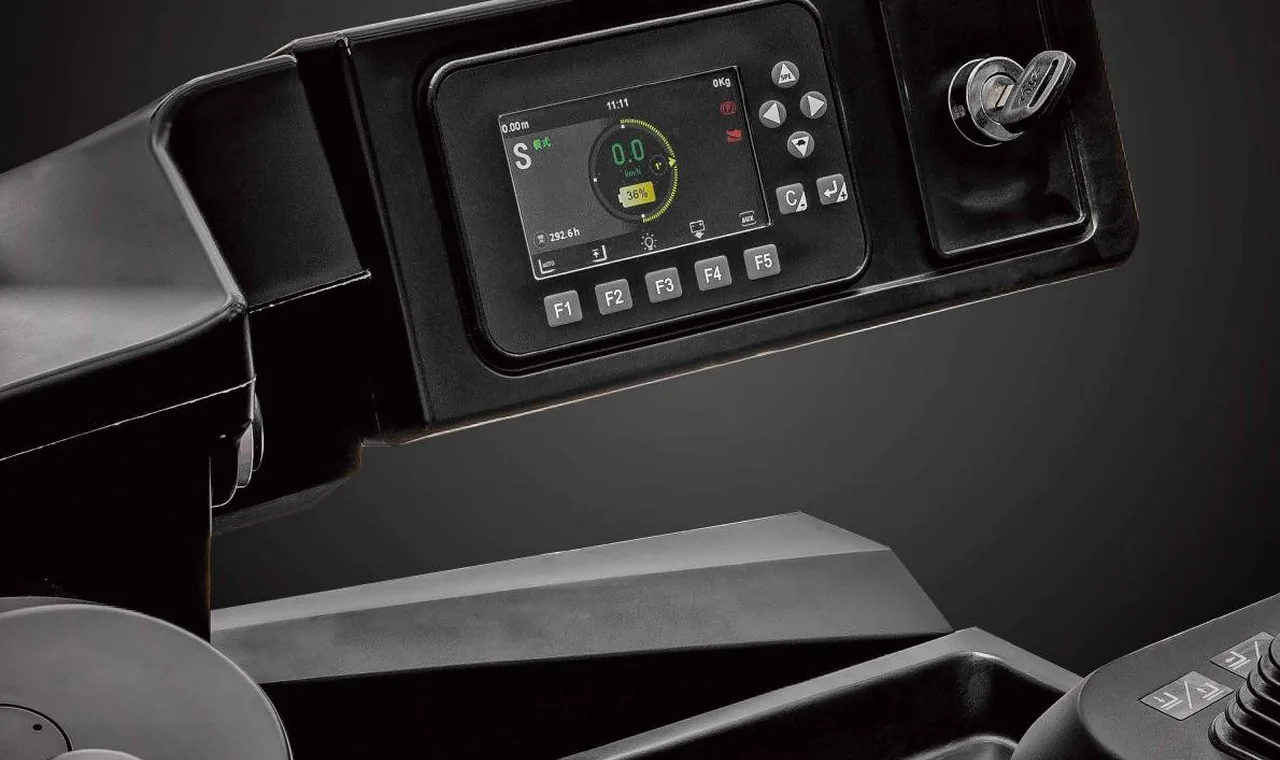
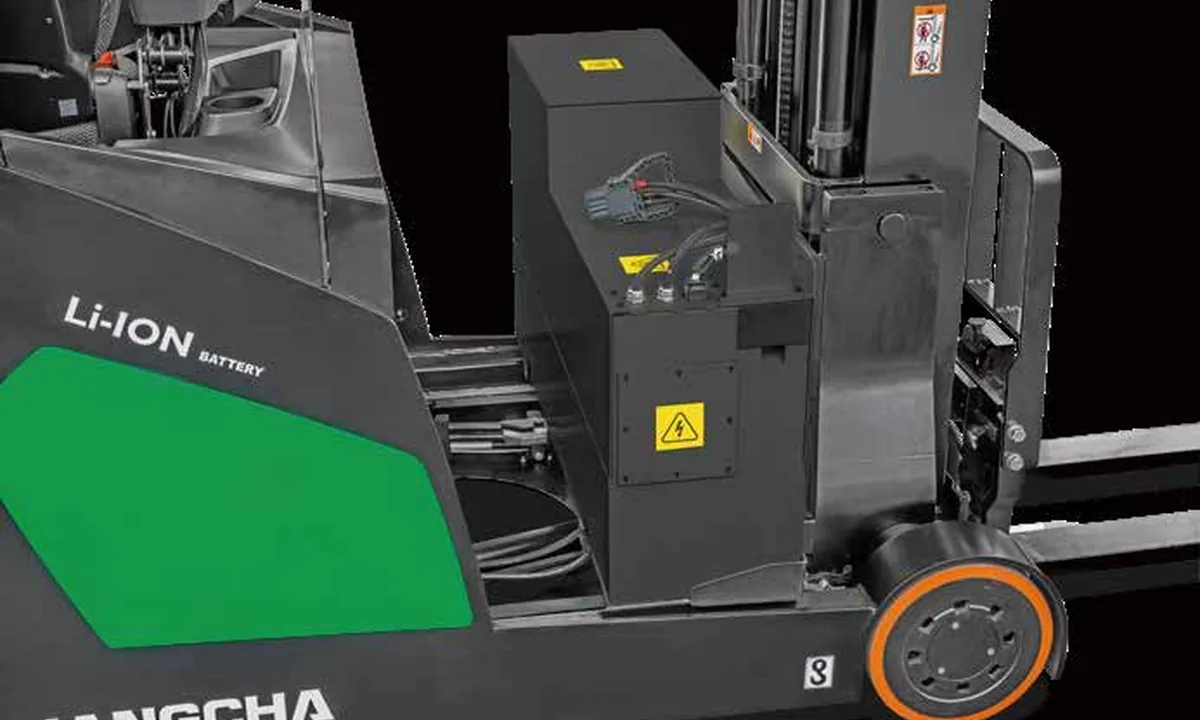
An 8.1 kW drive motor and 14.8 kW lift motor give this compact truck its performance. Battery capacity and charger input must be matched to the travel distance, lifts per hour and available charging window.
The 180-degree opening seat panel improves service access. Travel and traverse limits with raised forks, battery locking and creep interlocks support safer daily operation.
Height pre-selection is useful when the rack levels are fixed
Pre-selecting the target height can reduce repeated mast corrections during high-rack work. The stored heights must correspond to the actual rack and be checked after installation.
It is an operating aid, not a replacement for checking pallet clearance and residual capacity.
ForkFocus confirms the deliverable configuration before the order is released
We review the pallet weight and dimensions, load centre, rack drawing, mast height, aisle, floor, shift pattern, battery, charger and cold-store requirement. Mechanical-lever and fingertip-control models are compared with the operator team and duty cycle.
Planned parts, inspection documents and packing can be coordinated through our 360 Service. The truck and service items can be arranged through our flexible shipment planning.
Delivery: normally about 30 days after technical confirmation. Payment: normally 30% deposit and 70% before delivery. Warranty: 1–2 years or 2,000 working hours, whichever comes first, subject to the confirmed order.
XC 1.0–1.2 t Reach Truck FAQ
What is the difference between CQD10 and CQD12?
CQD10 models are rated at 1,000 kg and use a smaller turning radius. CQD12 models are rated at 1,200 kg and can be specified with the larger 80 V / 228 Ah battery.
What is the difference between XC5-SI and XC5D-SI?
XC5-SI uses mechanical hydraulic levers. XC5D-SI uses fingertip controls; the capacity and principal truck dimensions remain within the same model group.
Can the truck carry 1.2 tonnes at 7,000 mm?
Do not assume full rated capacity at the maximum mast height. The exact mast and residual-capacity chart must be checked for the actual load centre and fork configuration.
Which battery should be selected?
80 V / 125 Ah is standard. The optional 80 V / 228 Ah battery on the 1.2 tonne model is considered when shift duration, travel distance and charging windows justify it.
Can this series work in a cold store?
A cold-store configuration is available for suitable projects. Operating temperature, time inside the freezer, condensation, door transitions and charging location must be confirmed.
Reviewed by the ForkFocus forklift team using the XC 1.0–1.2 t lithium reach truck catalogue and practical warehouse configuration checks.