
What the model suffix changes
The range includes 1.5, 1.8, 2.0, 2.5, 2.7, 3.0, 3.5 and 3.8 tonne trucks. The high-performance “H” variants on applicable capacities are not cosmetic: motor rating, battery size, travel speed, lift speed, drawbar pull and gradeability change.
For a normal warehouse route, a standard variant may deliver the correct cost and operating time. For loaded travel, ramps and repeated lifting, the high-performance version may reduce cycle time and give more reserve.
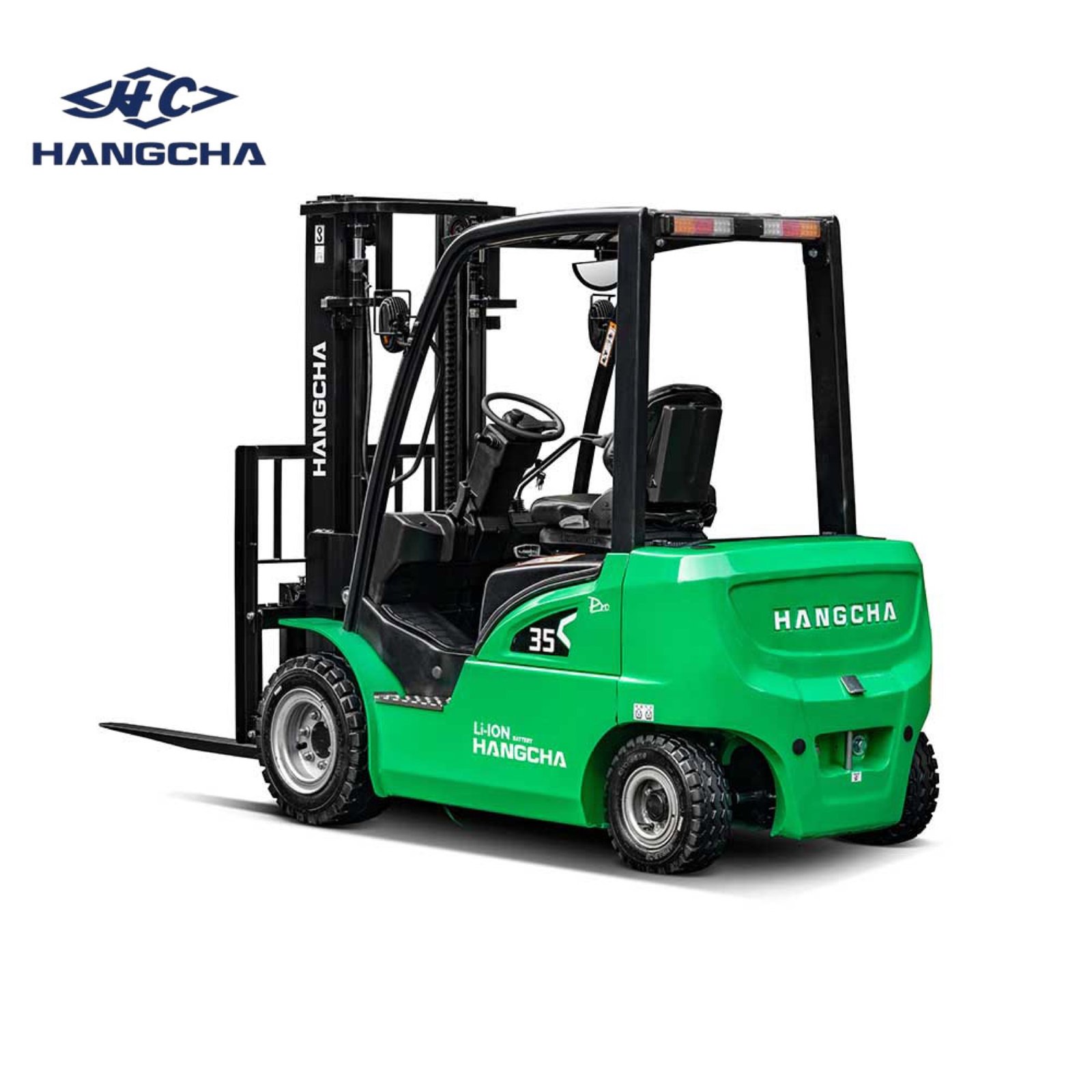
Five field notes from the 1.5–3.8 tonne specification
- Standard models are not slow, but high-performance variants are meaningfully faster. Standard models list 16/17 km/h laden/unladen. Applicable high-performance 2.0–3.5 tonne models list 19/20 km/h.
- Lift speed shows the biggest cycle-time difference. Standard 2.0–3.5 tonne models list 0.35/0.46 m/s laden/unladen. The 2.0 and 2.5 tonne high-performance versions list 0.50/0.60 m/s; 3.0 and 3.5 tonne H versions list 0.45/0.55 m/s.
- Ramp work needs the correct version. Standard models generally list 15/25% gradeability, while applicable H versions list 20/28%. Real ramp length, surface and loaded direction still require confirmation.
- Battery capacity follows chassis and performance. Listed 80 V battery packages range from 173 Ah to 460 Ah. A larger number is not automatically better if the charger, shift and utilisation do not justify it.
- Hydraulic attachments must remain within the working envelope. The referenced data lists ≤160 bar and 25 L/min for attachments; valve functions, hose routing, carriage, attachment weight and residual capacity still need engineering confirmation.
What the specification means during a working shift
Standard configuration · controlled indoor duty
The 16/17 km/h travel speed and standard motor package suit normal warehouse and production routes where travel distance, ramps and lift frequency are moderate. It avoids paying for a stronger drive and battery package that the operation will not use.
High-performance configuration · longer loaded travel and ramps
The 19/20 km/h travel speed, higher lift speed and 20/28% gradeability shorten cycles when the truck repeatedly moves loaded or climbs ramps. The benefit only appears when floor condition, stopping distance and operator route allow the extra performance to be used safely.
Battery and charger · runtime is a system decision
The 80 V battery range from 173 Ah to 460 Ah covers different chassis and duty levels. ForkFocus matches usable energy and charger output to shift length, breaks, load, lift frequency and site power instead of treating the largest battery as the automatic choice.
Hydraulics and attachment · capacity at the fork is not the final capacity
A carton clamp or paper roll clamp adds weight and moves the load centre forward. We check the valve functions, pressure, oil flow, mast height and residual-capacity chart before confirming that the selected XC model can handle the real cargo.
Models and performance groups
The table separates laden and unladen performance and identifies each high-performance H variant by its exact model suffix. Final mast, tyre and attachment choices are confirmed against the ordered truck.
| Model | Capacity | Travel laden/unladen | Lift laden/unladen | Gradeability laden/unladen | Drive / lift motor | Battery |
|---|---|---|---|---|---|---|
| CPD15-XCY2-SI | 1,500 kg | 16 / 17 km/h | 0.36 / 0.50 m/s | 15 / 25% | 10 / 18 kW | 80 V / 173 Ah |
| CPD18-XCY2-SI | 1,800 kg | 16 / 17 km/h | 0.36 / 0.50 m/s | 15 / 25% | 10 / 18 kW | 80 V / 173 Ah |
| CPD20-XCXY2-SI | 2,000 kg compact | 16 / 17 km/h | 0.36 / 0.50 m/s | 15 / 25% | 10 / 18 kW | 80 V / 173 Ah |
| CPD20-XCY2-SI | 2,000 kg | 16 / 17 km/h | 0.35 / 0.46 m/s | 15 / 25% | 17 / 23 kW | 80 V / 230 Ah |
| CPD20-XCY2H-SI | 2,000 kg high performance | 19 / 20 km/h | 0.50 / 0.60 m/s | 20 / 28% | 20 / 28 kW | 80 V / 304 Ah |
| CPD25-XCY2-SI | 2,500 kg | 16 / 17 km/h | 0.35 / 0.46 m/s | 15 / 25% | 17 / 23 kW | 80 V / 230 Ah |
| CPD25-XCY2H-SI | 2,500 kg high performance | 19 / 20 km/h | 0.50 / 0.60 m/s | 20 / 28% | 20 / 28 kW | 80 V / 304 Ah |
| CPD27-XCY2H-SI | 2,700 kg | 16 / 17 km/h | 0.35 / 0.46 m/s | 20 / 28% | 20 / 28 kW | 80 V / 304 Ah |
| CPD30-XCY2-SI | 3,000 kg | 16 / 17 km/h | 0.35 / 0.46 m/s | 15 / 25% | 17 / 23 kW | 80 V / 304 Ah |
| CPD30-XCY2H-SI | 3,000 kg high performance | 19 / 20 km/h | 0.45 / 0.55 m/s | 20 / 28% | 20 / 28 kW | 80 V / 460 Ah |
| CPD35-XCY2-SI | 3,500 kg | 16 / 17 km/h | 0.35 / 0.46 m/s | 15 / 25% | 17 / 23 kW | 80 V / 304 Ah |
| CPD35-XCY2H-SI | 3,500 kg high performance | 19 / 20 km/h | 0.45 / 0.55 m/s | 20 / 28% | 20 / 28 kW | 80 V / 460 Ah |
| CPD38-XCY2-SI | 3,800 kg | 16 / 17 km/h | 0.35 / 0.46 m/s | 15 / 25% | 20 / 28 kW | 80 V / 460 Ah |
Comparison context: the official Linde X20–X35 technical sheet lists 22 km/h travel speed and approximately 0.54–0.58 m/s loaded lift speed for comparable premium electric trucks. XC standard variants occupy a different cost/performance position, while applicable H variants narrow part of the performance gap.
The final comparison must use the same rated capacity, load centre, mast, tyres and loaded condition.
ForkFocus turns the truck into a deliverable configuration
We confirm mast height, mast type, fork carriage, tyre, battery, charger, weather or cold-storage package, lights, alarm, FIMS option and attachment hydraulics. A carton clamp or paper roll clamp is checked against the real load and residual-capacity chart before the order is released.
Planned service parts, documents, inspection and packing are coordinated through our 360 service. Where practical, the truck, attachment and service items can be planned within one shipment arrangement.
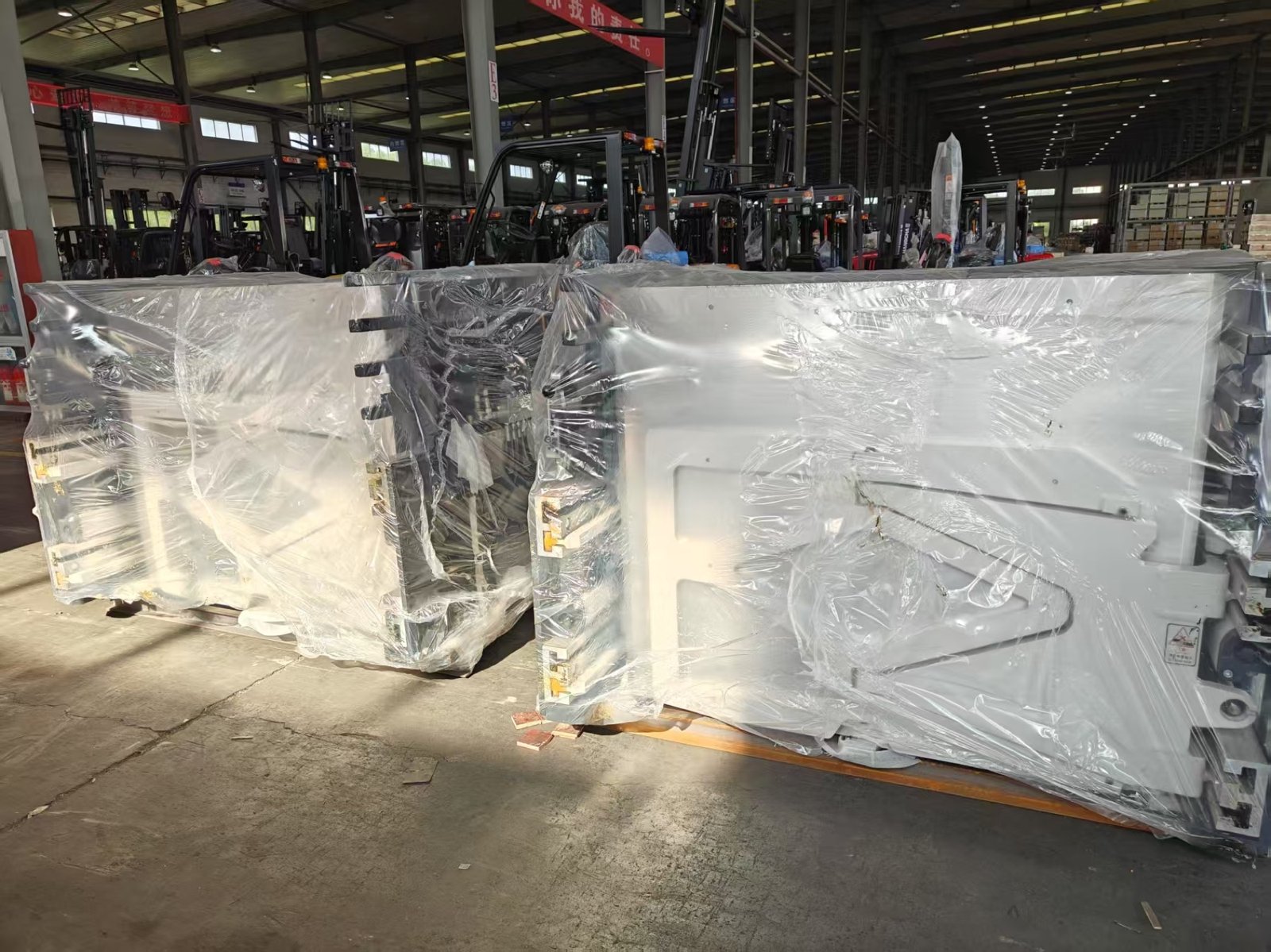
Watch the truck and load move, not only the data table
Video helps clients judge steering space, fork control and how the truck behaves during a real handling cycle. The exact XC suffix, mast, battery and attachment are then checked against the documented performance table.
XC 1.5–3.8 tonne FAQ
Which model is best for a 2.5-tonne load?
CPD25 is the nominal starting point at a 500 mm load centre, but load dimensions, mast and attachment can require a 3.0 or 3.5 tonne chassis. CPD25-XCY2H-SI is considered when ramp and cycle performance justify the stronger package.
Does the 19/20 km/h figure apply to every model?
No. It applies to documented high-performance variants such as CPD20-XCY2H-SI, CPD25-XCY2H-SI, CPD30-XCY2H-SI and CPD35-XCY2H-SI. Standard models are generally 16/17 km/h.
Can these trucks work in cold storage?
A -30°C cold-storage option is listed, but the complete package must include the battery, cables, hydraulic oil, seals, display, condensation control and charging environment appropriate to the site.
Can a clamp be installed?
Yes, after checking attachment weight, effective load centre, carriage, hydraulic functions, pressure, flow and residual capacity. Cargo packaging determines clamp pad and pressure requirements.
What are the normal commercial terms?
Delivery for a technically confirmed small-capacity truck is normally about 30 days. Payment is normally 30% deposit and 70% before delivery; warranty is normally 1–2 years or 2,000 working hours, whichever comes first, depending on the model and order.
Choose the motor and battery package from the cycle
Send loaded travel distance, ramp, lifts per hour, mast, attachment and charging window. We will compare the standard and high-performance variants before quotation.