
Why the XC Series needs more than one specification
XC is not one uniform truck. In the 1.5–3.8 tonne product range alone, standard and high-performance variants use different traction and lift motors, battery capacities, travel speeds, lift speeds and gradeability.
That distinction lets a fleet avoid over-specifying normal warehouse work while still giving demanding routes the performance they require. ForkFocus checks which variant is justified by the loaded travel distance, ramp, lift frequency, attachment and charging plan.
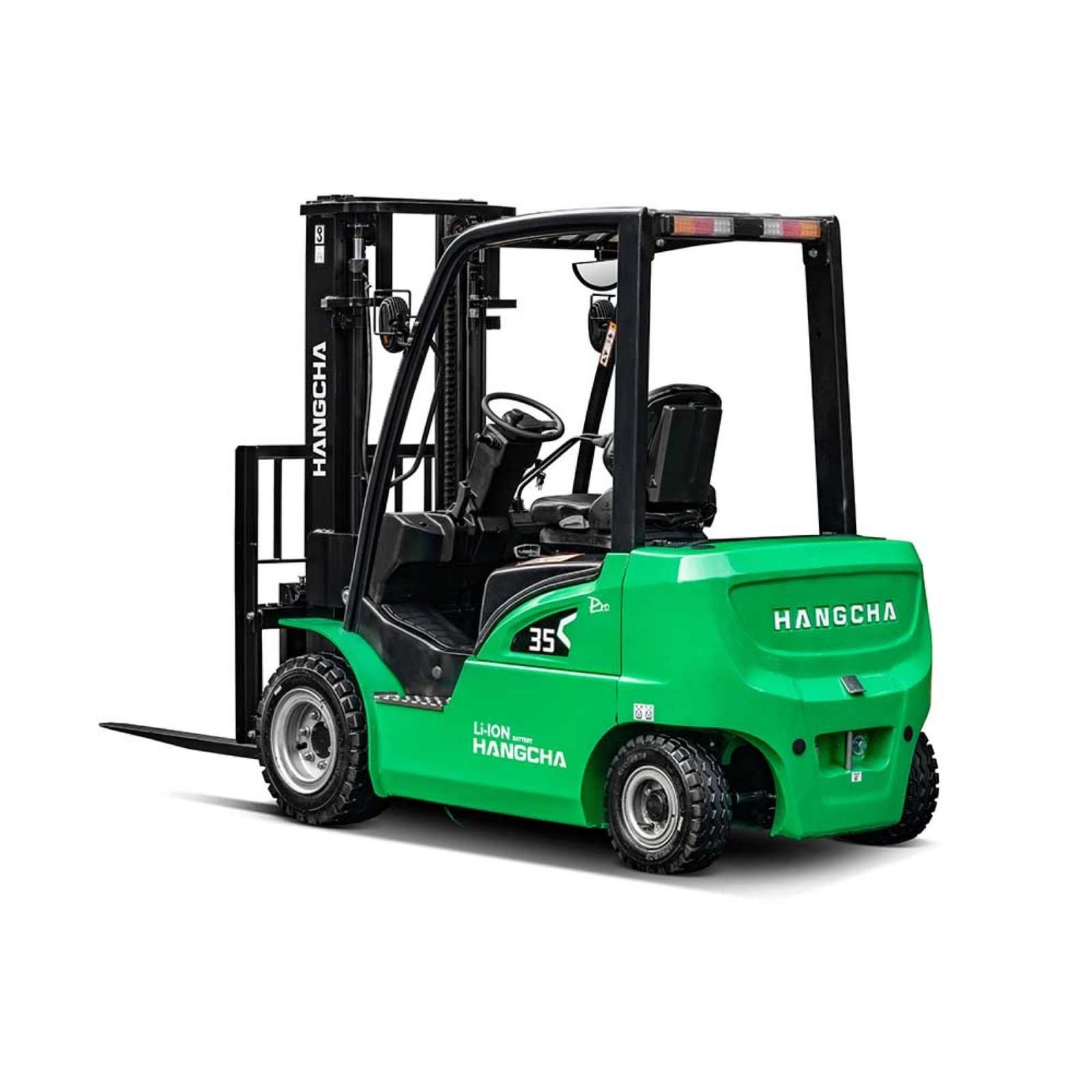
Five XC Series strengths and practical limits
- Standard and high-performance versions serve different cycles. Applicable 2.0 and 2.5 tonne high-performance variants reach 19/20 km/h and 0.50/0.60 m/s lift speed, while standard variants are typically 16/17 km/h and 0.35/0.46 m/s.
- Gradeability changes with the performance package. Standard 2.0–3.5 tonne configurations list 15/25% laden/unladen gradeability; applicable high-performance variants list 20/28%.
- The lithium chassis supports compact packaging. Low battery placement, enlarged operator space and a low centre of gravity support manoeuvrability and stability, but turning radius still changes by chassis.
- Hydraulics are designed for controlled handling. Load-sensing hydraulics and fork soft landing improve fine control; attachment pressure, oil flow and number of functions still require confirmation.
- Protection supports mixed service, not unlimited abuse. Sealed main electrical components and IPX4 truck protection help in outdoor exposure. Sustained heavy outdoor duty should still be compared with XE or XH rather than assumed from capacity alone.
Open the correct XC capacity band
1.5–3.8 tonnes
Compact, standard and high-performance variants with several 80 V battery and motor packages.
4.0–5.0 tonnes
Mid-capacity XC trucks requiring a separate chassis, tyre, mast and energy review.
4.0–5.0 t page in preparation
6.0–10.0 tonnes
Heavy XC configurations where thermal load, tyre, braking, residual capacity and shipment require project confirmation.
6.0–10.0 t page in preparation
How an experienced fleet chooses the XC variant
For short indoor routes and moderate lift cycles, the standard motor and battery package can be the sensible cost point. High-performance variants become relevant when the truck repeatedly travels loaded, works ramps or must recover cycle time through higher travel and lift speed.
A paper roll clamp, carton clamp or fork positioner can move the selection to a larger chassis even when the load weight seems within range. We calculate the attachment weight, effective load centre, mast and residual capacity together.
| Performance | Standard or high-performance motor package; loaded and unladen values kept separate. |
|---|---|
| Battery | 80 V packages from 173 Ah to 460 Ah in the 1.5–3.8 t product range, depending on model and version. |
| Protection | Sealed main components and IPX4 truck protection on the documented configuration. |
| Attachment | Pressure up to 160 bar and 25 L/min oil volume in the referenced 1.5–3.8 t data; final plumbing must match the attachment. |
| Noise | Documented sound pressure at the driver’s seat is ≤70 dB(A) for listed 1.5–3.8 t models. |
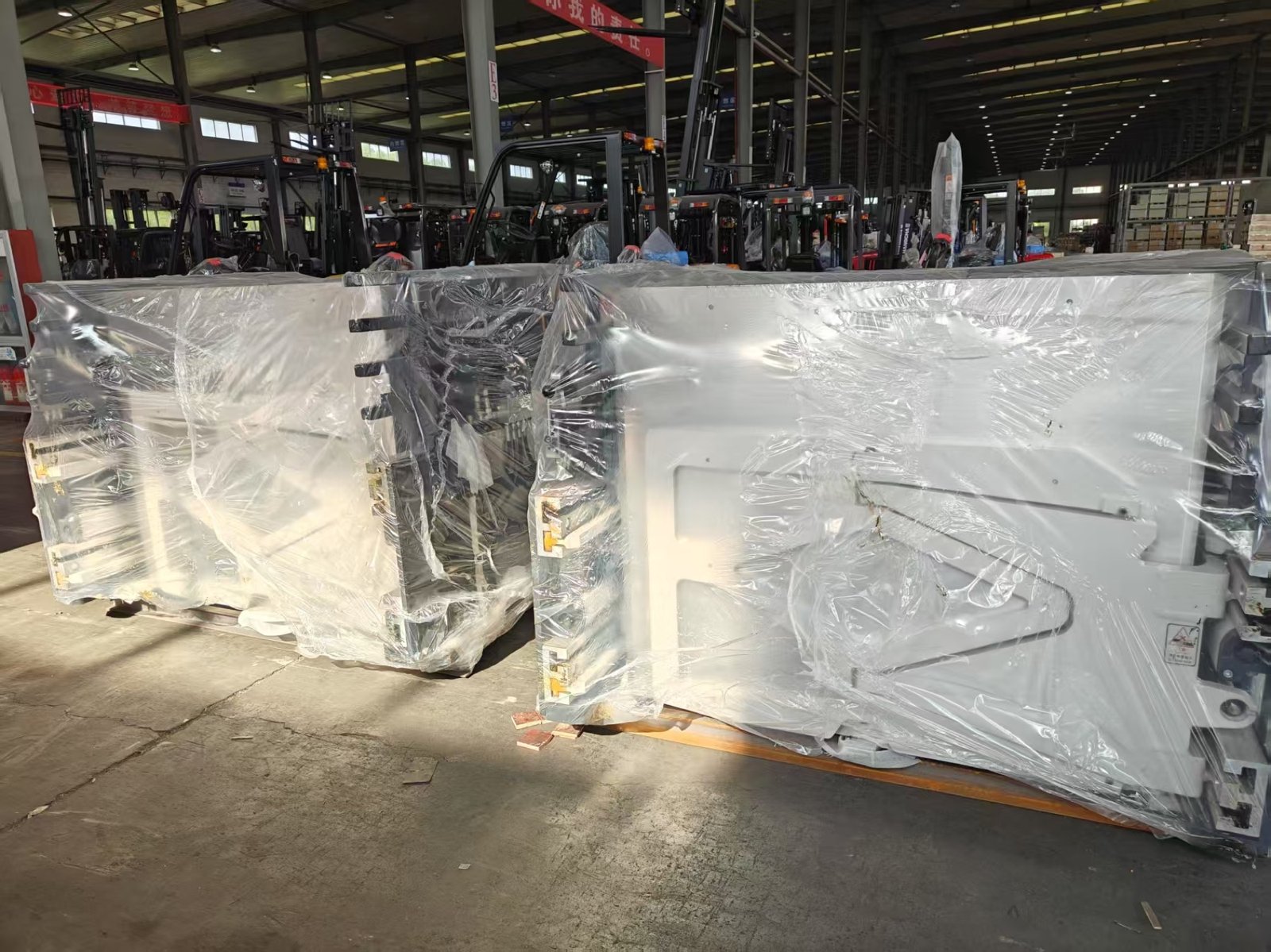
ForkFocus completes the XC configuration beyond the base truck
We confirm the required mast height, mast type, fork carriage, tyres, battery, charger, cab or weather package, lights, hydraulic functions and residual capacity. The same review covers a carton clamp, paper roll clamp or other attachment when the handling task requires it.
Documents, inspection, planned parts, packing and flexible shipment are coordinated through our 360 service.
An attachment changes the XC truck specification
A clamp, rotator or push-pull adds weight, front overhang and hydraulic functions. The XC chassis must therefore be checked for residual capacity, carriage class, pressure, flow and hose arrangement—not only rated capacity.
The video shows why the truck and attachment are confirmed as one working configuration. ForkFocus checks the real cargo, load centre, opening range and duty cycle before the model, mast and battery are released.
XC Series FAQ
What is the difference between the standard and high-performance XC versions?
The high-performance versions use stronger motor and battery packages on applicable models, increasing travel, lift and grade performance. The suffix, motor rating, battery capacity and technical table must be checked rather than assuming every XC truck has the same output.
Should XC or XE be chosen for outdoor work?
XC can cover mixed indoor-outdoor work with the correct protection, tyres and performance package. XE deserves comparison when the route resembles sustained IC forklift duty and outdoor performance is the main requirement.
Can XC use a carton clamp or paper roll clamp?
Yes, when carriage class, hydraulic functions, pressure, flow and residual capacity are confirmed. Attachment selection begins with the cargo dimensions, weight, packaging and handling cycle.
What is the normal delivery and warranty?
Small-capacity trucks are normally about 30 days after technical confirmation. Warranty is normally 1–2 years or 2,000 working hours, whichever comes first, depending on the model and agreed order terms.
What additional value does ForkFocus provide?
We compare duty and configuration, coordinate drawings and options, plan genuine or suitable service items, verify packing and arrange flexible shipment through our 360 service.
Specify the XC truck by duty, not colour or capacity alone
Send the load, lift height, ramp, travel distance, shifts, charger supply and attachment. We will identify the relevant chassis and performance package.
Why the XC Series earns its place in a working fleet
The XC Series is the mainstream lithium-ion counterbalance choice when customers need familiar forklift handling with integrated lithium power.
Why Hangcha
The platform range lets customers match capacity, battery system, mast height, tyres and operator package to the real duty instead of accepting a generic truck.
For continuous shifts, we review cooling, travel route, lifting frequency and residual capacity together—not as separate catalogue figures.
Why ForkFocus
ForkFocus integrates forklifts, spare parts and Forklift Attachments into unified material handling solutions.
We confirm load centre, mast height, battery and charger, carriage class, auxiliary hydraulics and any required carton clamp or paper roll clamp before the order is fixed.
Inspection and documentation, planned service parts and shipment planning remain under one project team.
See the equipment in real work
The operating footage is a practical reference for truck stability, visibility and hydraulic response. Final configuration is still checked against the customer’s load and site.
