
Where this truck fits
Lithium-ion forklifts with strong travel, grade and lifting performance for factory and mixed indoor-outdoor duty.
Final capacity depends on the actual load centre, lift height and hydraulic attachment. A long load or clamp can require the next chassis size.
Working advantages
- High-torque drive system
- Improved motor cooling
- Low centre of gravity
- Increased ground clearance
- IPX4 and cold-weather options on specified trucks
Information required before quotation
Provide the load weight and dimensions, lift height, aisle or yard condition, shifts, charger supply and attachment requirement.
| Load centre | Confirm from the real load dimensions, not an assumed 500 mm. |
|---|---|
| Mast | Lift height, free lift, lowered height and overhead clearance. |
| Travel route | Floor, ramp, outdoor surface and turning or aisle space. |
| Battery | Operating hours, charging window and available mains supply. |
| Hydraulics | Attachment type, carriage class and number of functions. |
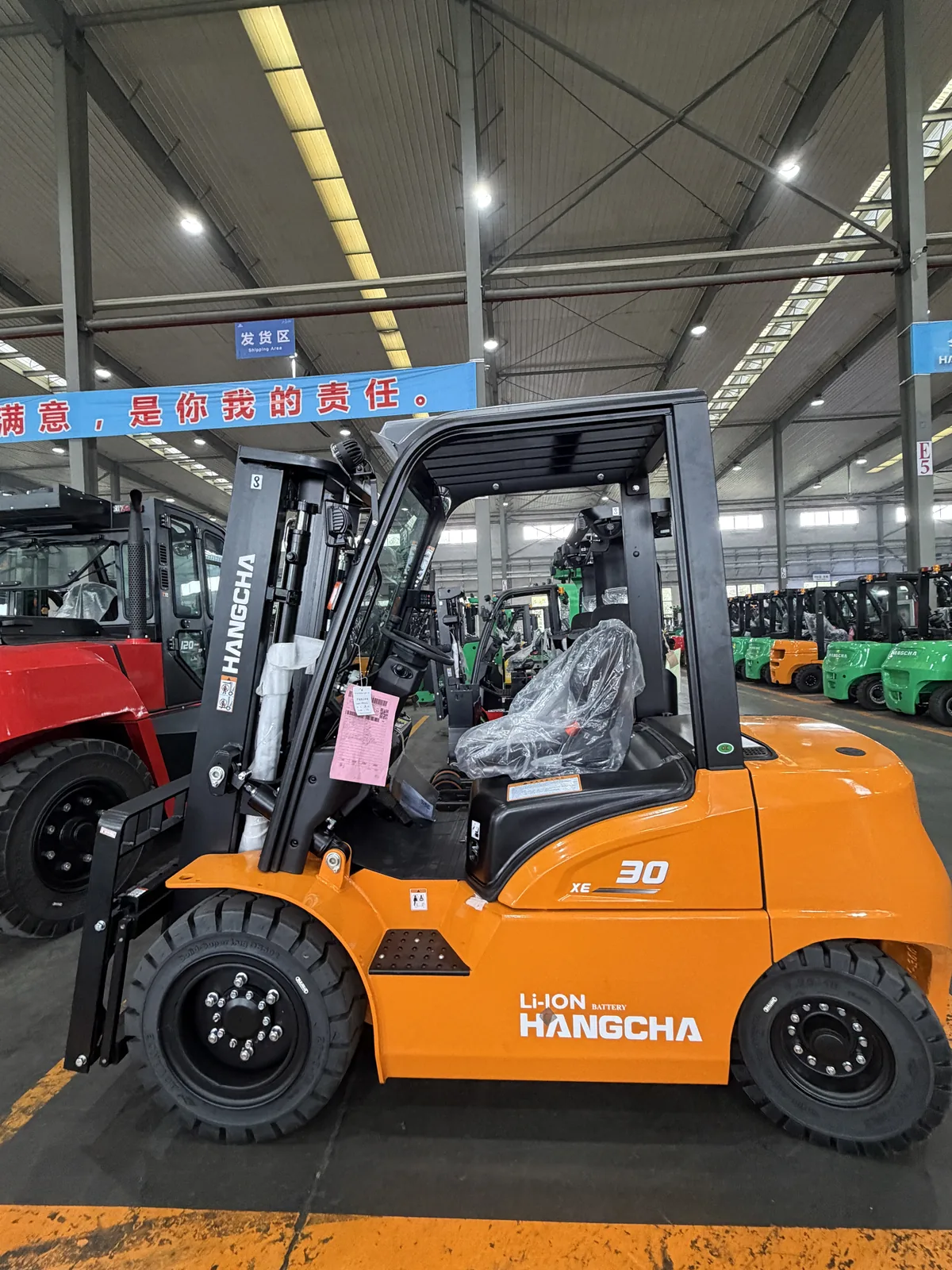
XE is designed for work normally assigned to an IC forklift
The XE Series is one of Hangcha’s main lithium platforms. Its practical position is not a basic indoor electric truck: it combines lithium operating cost with the ground clearance, travel performance, cooling and outdoor adaptability required in many IC-forklift duties.
That makes XE a strong value choice for factories and fleets moving from diesel to lithium without giving up ramp work, yard travel or longer shifts. The final configuration still depends on surface, gradient, temperature, charger supply and attachment load.
Models and configuration family
CPD15–38 XEY2 · CPCD15–38 XEY2 and the related 80 V battery/configuration variants.
The CPCD designation and suffixes must be confirmed against the selected drive layout, battery, mast, tyres and market package. ForkFocus checks the full model code before quotation so the truck, parts list and service documents match.
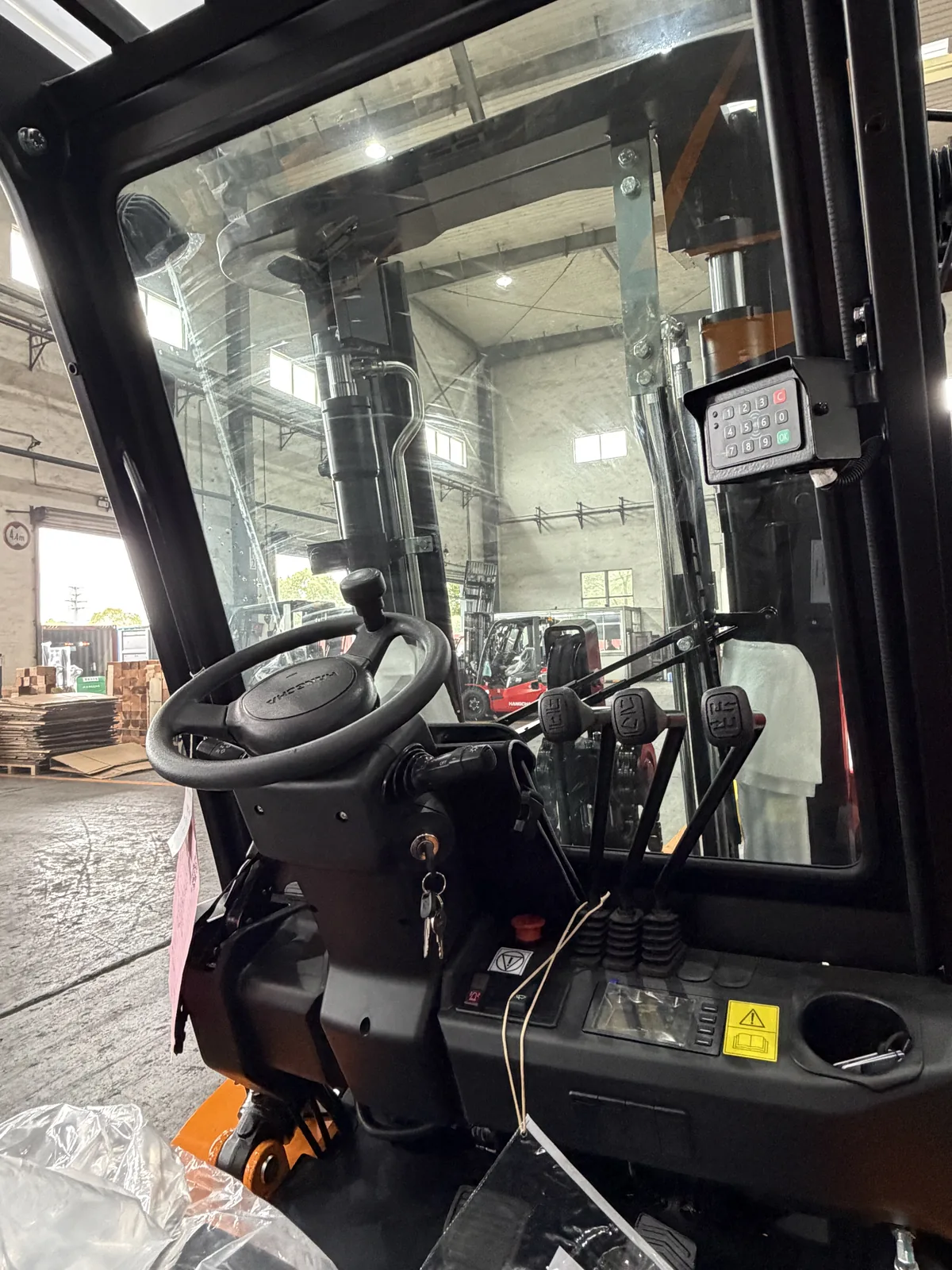
Real XE trucks before delivery
What the performance figures mean on site
| Item | Published range | Selection meaning |
|---|---|---|
| Travel speed | Up to 20 km/h | Supports longer internal routes and yard transfer, provided the surface, tyres and braking requirement are suitable. |
| Unladen lift speed | Up to 600 mm/s on higher-performance versions | Useful for cycle productivity, but the laden figure and residual capacity at mast height are the correct working checks. |
| Ground clearance | Approximately 130–155 mm at the wheelbase centre | Better mixed-duty adaptability than a low warehouse-only electric truck, but not a rough-terrain forklift. |
| Gradeability | Up to approximately 25% unladen on selected versions | The loaded ramp, route length, surface and braking duty must be reviewed before confirming the application. |
| Battery system | 80 V configurations | Battery capacity and charger output should be sized from shifts, opportunity-charging windows and local mains supply. |
How XE sits in the electric range
| Series | Practical position | Typical decision |
|---|---|---|
| A Series | Economical platform | Budget-led, standard indoor duty. |
| X Series | Optimised value/performance | More performance without moving to the highest specification. |
| XC Series | Higher-price, higher-performance lithium platform | Productivity and configuration depth justify the investment. |
| XE Series | Cost-effective IC-replacement route | Mixed indoor/outdoor duty, ramps and stronger cycle performance. |
| XH Series | High-voltage, highest-performance route | High-load, high-cycle work where power and energy efficiency justify the premium. |
Fair comparison rule: a lower A Series price does not make an XE quotation expensive. Compare the same duty cycle, outdoor condition, battery, charger, mast, tyres, residual capacity and hydraulic functions.
Five points we check before recommending XE
Ground clearance, tyres, ramps, drainage, braking and route length all matter.
A truck can show a high peak speed but still lose productivity if the drive and hydraulic systems cannot reject heat during repeated cycles.
Break times, charger output and battery state of charge should cover the working shift with operating margin.
A paper roll clamp, carton clamp, fork positioner or long forks move the load centre and may require a larger chassis.
Battery heating, sealing and component protection must be confirmed for the actual temperature and exposure.
Why ForkFocus for an XE project
We match the lithium forklift to the complete material-handling task.
ForkFocus checks load dimensions, load centre, mast height, route, gradient, tyres, battery, charger and hydraulic functions before the final model is fixed.
We can coordinate the forklift, planned forklift parts and the required Forklift Attachment as one solution.
360 Service covers configuration review, inspection and documentation. Shipment planning is coordinated around the complete order.
Commercial terms commonly used
Typical small-tonnage forklift lead time is around 30 days. Warranty is normally 1–2 years or 2,000 working hours, whichever comes first, subject to the confirmed order.
Normally: 30% deposit and 70% balance before delivery. Special terms may be discussed for special orders.
Send the load weight and dimensions, mast height, indoor/outdoor route, gradient, shift hours, local charger supply and attachment requirement for an accurate quotation.
Configuration questions
Can the nominal capacity be used at every lift height?
No. Residual capacity changes with mast height, load centre and attachment. The working chart must be checked.
Can ForkFocus prepare a tender configuration?
Yes. Send the technical schedule and required documents so the truck, mast, battery, tyres and attachments can be checked as one package.
Confirm this truck against the real duty
Our forklift team will review the configuration before quotation.