
Hangcha Lithium-Ion Energy Solutions
Match the battery, charger and truck duty cycle instead of treating every lithium forklift as the same energy system.
Opportunity charging changes fleet planning
Lithium-ion trucks can use breaks and shift changes for interim charging without a battery change. The benefit is strongest in multi-shift work where charger access, peak current and remaining state of charge are managed as one system.
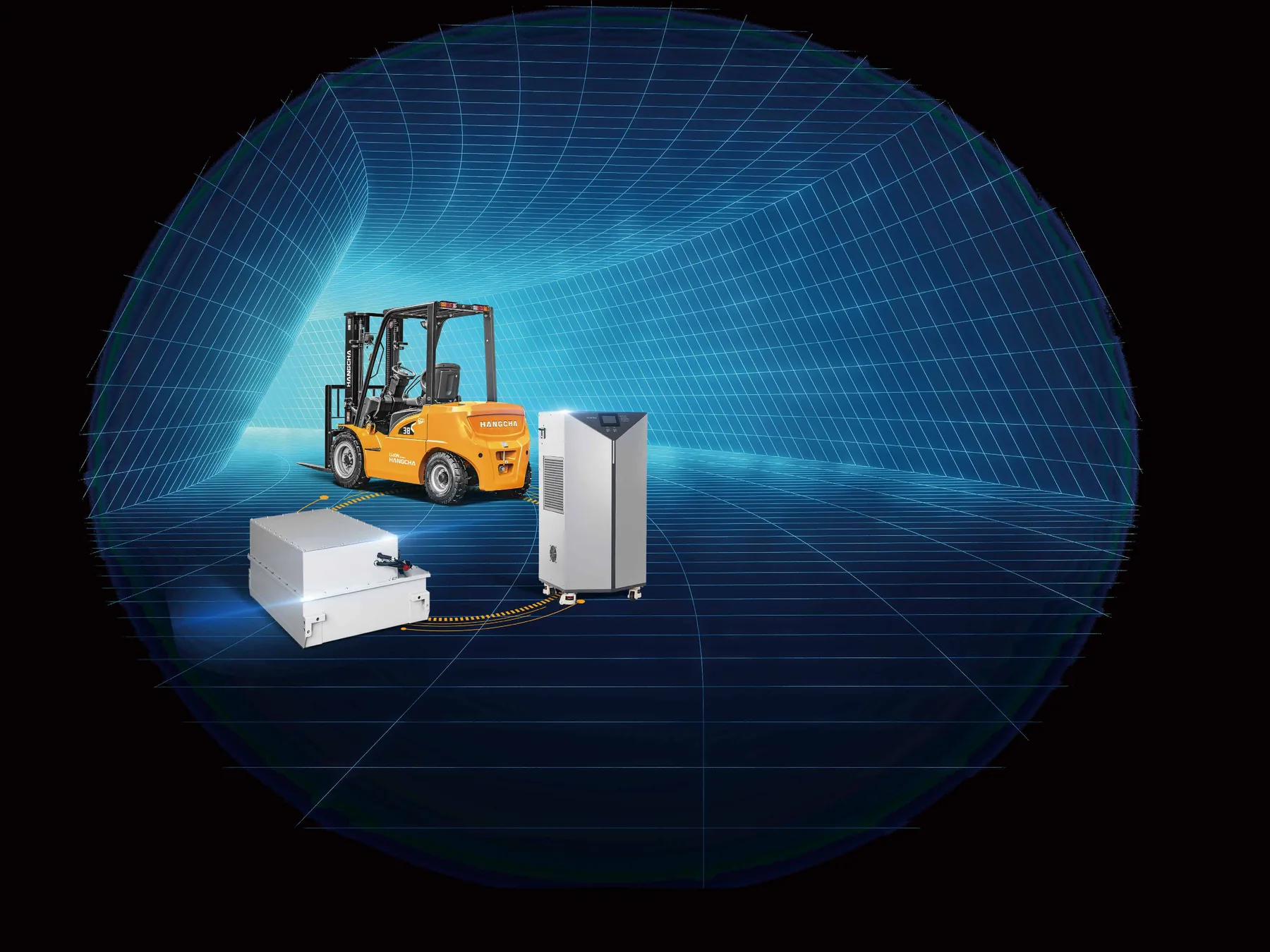
Hangcha lithium solutions combine LiFePO4 battery packs, chargers and BMS monitoring across counterbalance forklifts, warehouse trucks, tow tractors, rough-terrain trucks and aerial platforms. Battery capacity and charger output still have to match working hours, load, travel and lift demand.

What must be confirmed
- Daily energy consumption and shift pattern
- Available charging windows
- Site voltage and charger location
- Ambient temperature and storage conditions
- Truck model, battery space and communication protocol
High availability
Rapid charging and interim charging reduce battery-change time when the duty cycle is planned correctly.
Battery management
The BMS monitors key cell and pack conditions and communicates alarms through the truck display.
High-voltage route
Selected heavy electric forklifts use high-voltage systems to raise charging power and reduce heat losses.
Industry experience: do not size lithium only by ampere-hours
Travel distance, lift cycles, load, gradient, auxiliary hydraulics and ambient temperature decide the real energy demand. The charger also has to recover enough energy during the available break or shift window.
ForkFocus reviews the duty cycle, charger supply and expected opportunity-charging pattern with the truck configuration. This allows the battery and charger to be chosen as one system instead of paying for unused capacity or accepting insufficient runtime.
ForkFocus confirms the machine, options and delivery plan
Before release, we check the actual route, load, lift or working height, attachment or deck requirement, tyre choice, charger supply and daily duty. This is where two machines with similar catalogue ratings can become very different working solutions.
The same order can include forklift attachments, forklift spare parts and the required charging or safety equipment.
Forklifts and larger equipment normally move by LCL or full container according to cargo volume, delivery date and destination. Urgent parts can be arranged separately through our flexible shipping service.
Connect the lithium platform to the real operating schedule
A usable lithium configuration must cover the work while respecting charging windows, temperature limits, BMS communication and site-power constraints.
- Work profile
- Hours, load cycles, travel, lifting, grades, temperature and planned charging opportunities.
- Space and route
- Aisle, turning radius, doorway, floor and rack conditions for the selected Class 1, 2 or 3 platform.
- Capacity
- Use the exact model and mast load chart at the required height and actual load centre; battery technology does not remove derating.
- Energy
- Verify battery voltage, usable capacity, connector, compartment, weight, charger output and compatible BMS protocol.
- Site power
- Confirm supply voltage, phase, available power, plug, protective devices, cable route and charging-area controls.
- Support
- Identify manuals, inspection points, service access, connector parts and the technical escalation route.
Hangcha Class 1 electric forklift platforms
Counterbalance selection must still follow the load, height, route and working-point capacity.
The exact truck, battery and charger combination remains subject to model documentation and site confirmation.
Hangcha Product USP
The platform choice connects truck class, lithium integration and duty profile; it does not replace model, mast or working-point verification.
Performance in Real Work
Shift length, travel, lifting, grade, temperature and charging opportunities must be measured against the selected truck, battery and charger combination.
Series Comparison
Hangcha Class 1 electric forklift platforms and Hangcha Class 3 warehouse equipment serve different equipment and duty routes. Compare the exact model, mast, route geometry and energy package before choosing a series.
Why Hangcha
Use the applicable Hangcha series documentation to verify the truck, battery, charger and load-chart combination instead of transferring data between platforms.
Why ForkFocus
ForkFocus connects the operating task to truck selection, energy compatibility, working-point capacity, inspection, parts planning and a traceable technical enquiry.
Hangcha XE Series electric forklift operation
The manufacturer video provides platform context. Final configuration still depends on the exact application and technical documentation.