
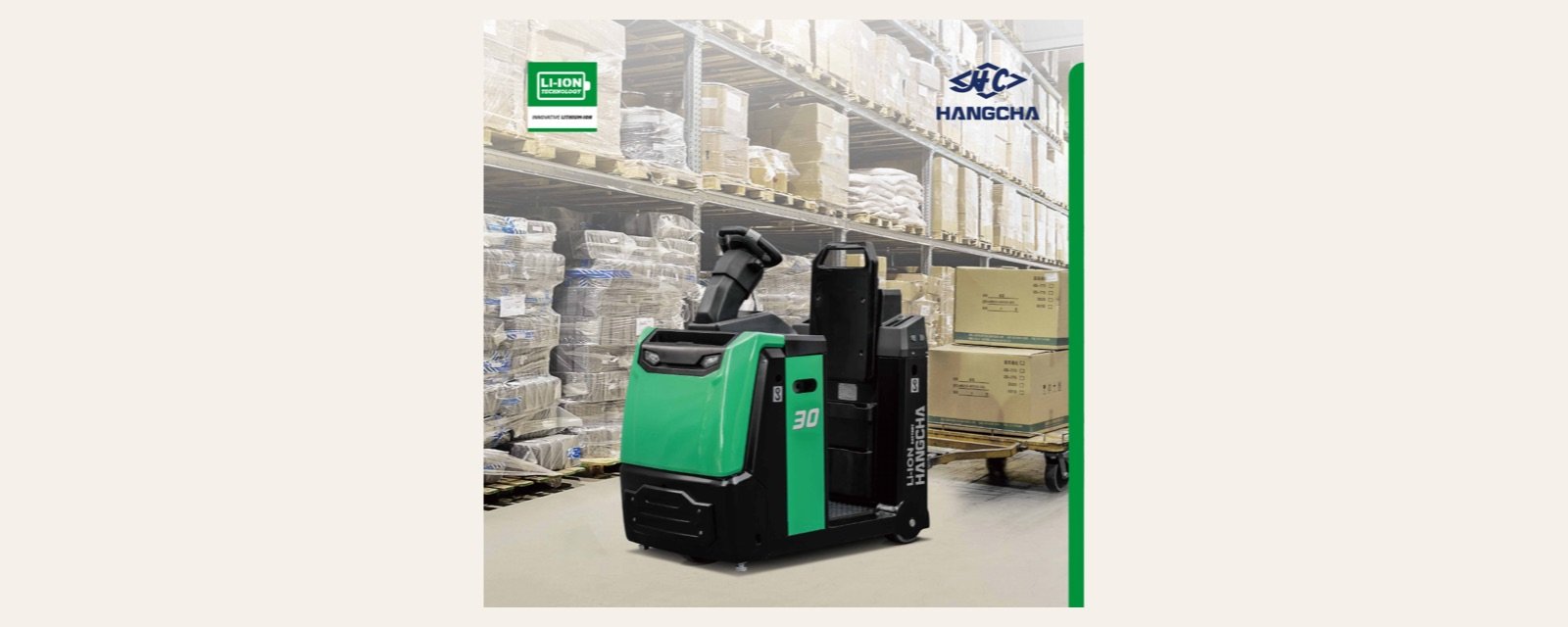
Electric Tow Tractors for Factory, Airport and Terminal Routes
Match the tractor to the route and drawbar demand
Small stand-on and seated tractors handle line-side logistics and tugger trains. Larger middle-control and high-voltage platforms suit airports, ports and long industrial routes where drawbar pull, braking and battery thermal management become decisive.
Available product families cover A Series 2.0–6.0 t, X Series 0.5–40.0 t and X Series high-voltage lithium platforms from 35.0–90.0 t.
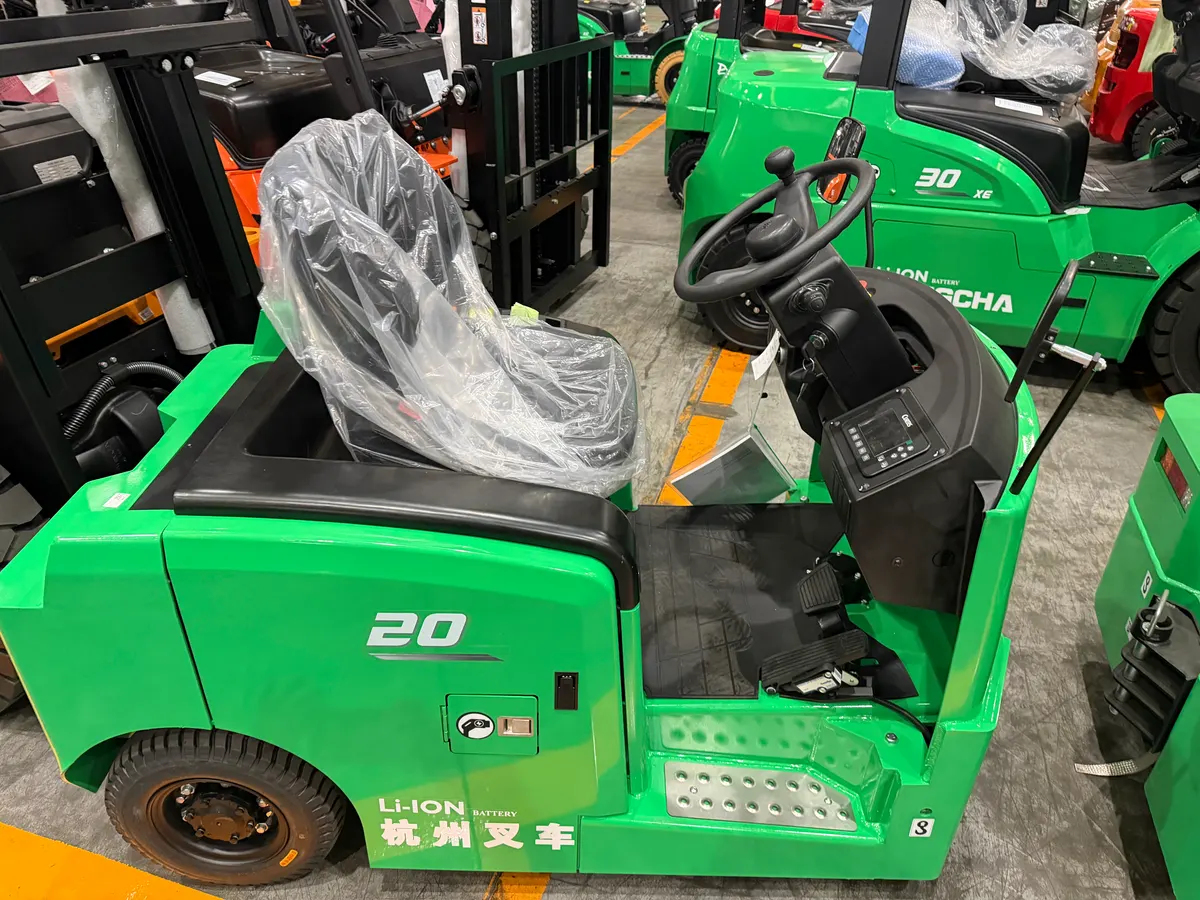
Choose the platform by working condition
| A Series 2.0–6.0 t | Cost-controlled factory logistics, shorter tugger routes and moderate cycle intensity. |
|---|---|
| X Series 0.5–10.0 t | Compact rider and seated configurations with stronger comfort, battery and duty options. |
| X Series 10.0–40.0 t | Airport, terminal and industrial towing where travel speed, braking and drawbar pull carry more weight. |
| High-voltage 35.0–90.0 t | Heavy towing where sustained drawbar demand, battery cooling and high-power charging must be engineered together. |
Performance figures that change the selection
Travel speed
X Series 10.0–32.0 t models reach up to 25 km/h. The 35.0–60.0 t high-voltage group reaches up to 32 km/h, while 70.0–90.0 t models reach up to 22 km/h.
Gradeability
Representative X Series middle-control and high-voltage specifications show up to 33% unladen gradeability. Loaded-route performance must be checked against trailer mass and rolling resistance.
Turning radius
Compact equipment can turn inside roughly 1.2–2.2 m, while heavy middle-control tractors require about 3.2–3.35 m. Trailer articulation adds more space.
A towing-capacity label does not guarantee route performance. Drawbar pull, gradient, rolling resistance and trailer brakes determine whether the tractor can move and stop the complete train safely.
Complete model-code reference
Model suffixes identify operator arrangement, battery package, wheelbase and market configuration. ForkFocus confirms the complete code before the order so the delivered tractor, charger, coupling and parts documents match.
A Series stand-on 3.0–5.0 t
QDD3-ASC2 · QDD3-ASC2-I · QDD5-ASC2 · QDD5-ASC2-I
A Series seated/stand-on 2.0–6.0 t
QDD20-AC2 · QDD20-AC2-I · QDD20-AC2S · QDD20-AC2S-I · QDD20-AD2 · QDD20-AD2S · QDD40-AC2 · QDD40-AC2-I · QDD40-AC2S · QDD40-AC2S-I · QDD40-AD2 · QDD40-AD2S · QDD60-AC2 · QDD60-AC2-I · QDD60-AC2S · QDD60-AC2S-I · QDD60-AD2 · QDD60-AD2S
X Series compact 0.5–6.0 t
BD05-XC1-IS · BD05-XC1-S · BD08-XC1-IS · BD08-XC1-S · QDD20-XC1 · QDD20-XC1-I · QDD20-XC1S · QDD20-XC1S-I · QDD20-XJ11 · QDD20-XJ11-I · QDD20-XJ11S · QDD20-XJ11S-I · QDD40-XC1 · QDD40-XC1-I · QDD40-XC1S · QDD40-XC1S-I · QDD40-XJ11 · QDD40-XJ11-I · QDD40-XJ11S · QDD40-XJ11S-I · QDD60-XXC1 · QDD60-XXC1-I · QDD60-XXC1S · QDD60-XXC1S-I · QDD60-XXJ12 · QDD60-XXJ12-I · QDD60-XXJ12S · QDD60-XXJ12S-I
X Series stand-on 3.0–5.0 t
QDD30-XT1S-I · QDD50-XT1S-I
X Series seated 6.0–10.0 t
QDD60-XD3 · QDD60-XD3-I · QDD70-XD3 · QDD70-XD3-I · QDD70-XD3-L · QDD80-XD3 · QDD80-XD3-I · QDD80-XD3-L · QDD90-XD3 · QDD90-XD3-I · QDD90-XD3-L · QDD100-XD3 · QDD100-XD3-I
X Series middle-control 6.0–18.0 t
QSD60-XD3-M(I) · QSD80-XD3-M(I) · QSD100-XXD3-M(I) · QSD120-XC1-M(I) · QSD120-XC1-MITS · QSD150-XC1-M(I) · QSD150-XC1-MITS · QSD180-XC1-M(I) · QSD180-XC1-MITS
X Series 10.0–32.0 t
QSD100-XC2-ISY · QSD150-XC2-ISY · QSD200-XD3 · QSD200-XD3-I · QSD250-XD3 · QSD250-XD3-L · QSD250-XD3-IL · QSD320-XD3 · QSD320-XD3-L · QSD320-XD3-IL
X Series middle-control 20.0–40.0 t
QSD200-XS1-MIH · QSD250-XS1-MIH · QSD320-XS1-MIH · QSD200-XD3-MI · QSD250-XD3-MI · QSD320-XD3-MI · QSD350-XC4-MI · QSD400-XC4-MI
X Series high-voltage 35.0–90.0 t
QSD350-XY2-MIH · QSD400-XY2-MIH · QSD450-XY2-MIH · QSD500-XY2-MIH · QSD500-XY2-MIHP · QSD600-XY2-MIH · QSD700-XL2-MIH · QSD800-XL2-MIH · QSD900-XL2-MIH
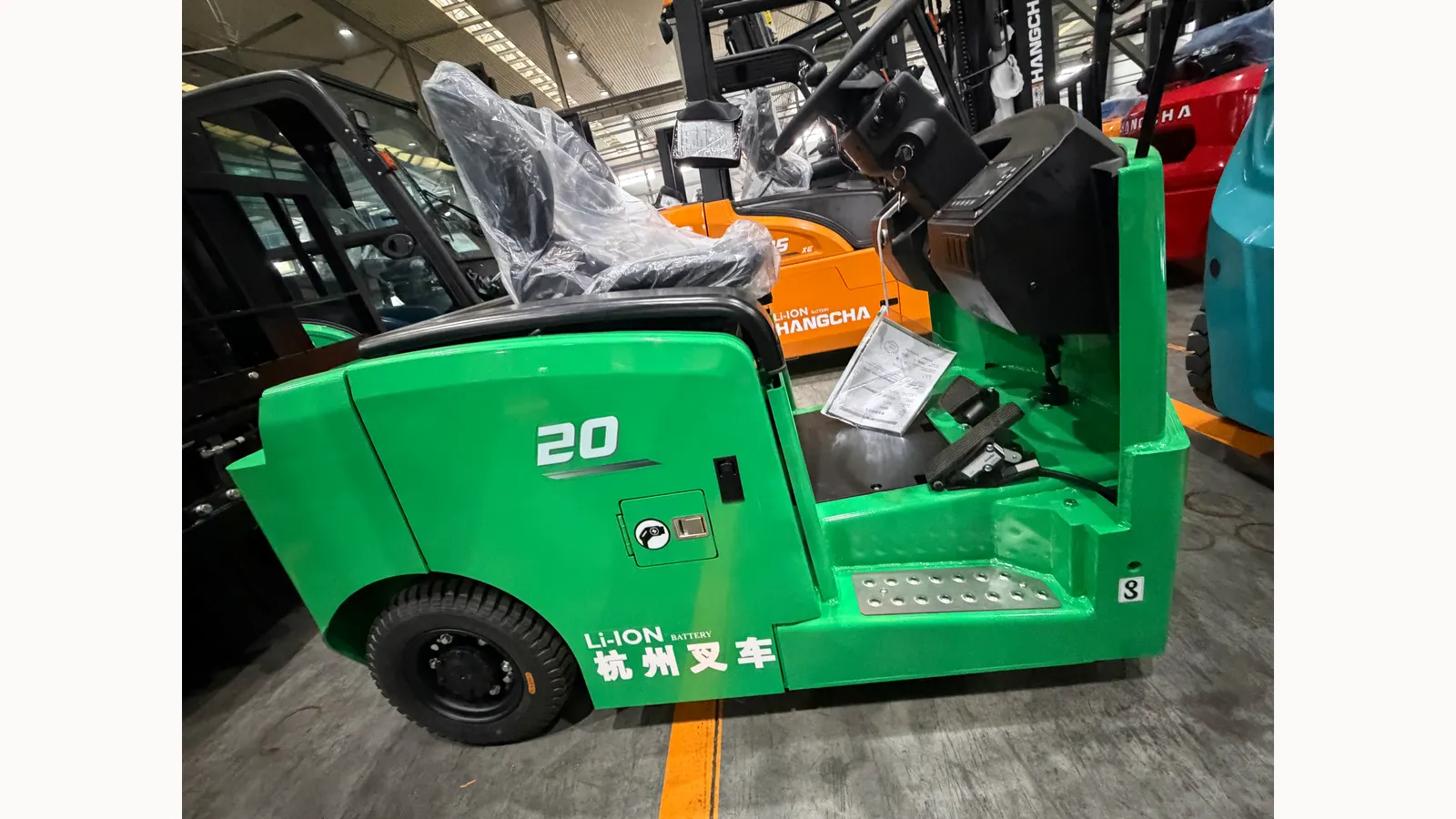
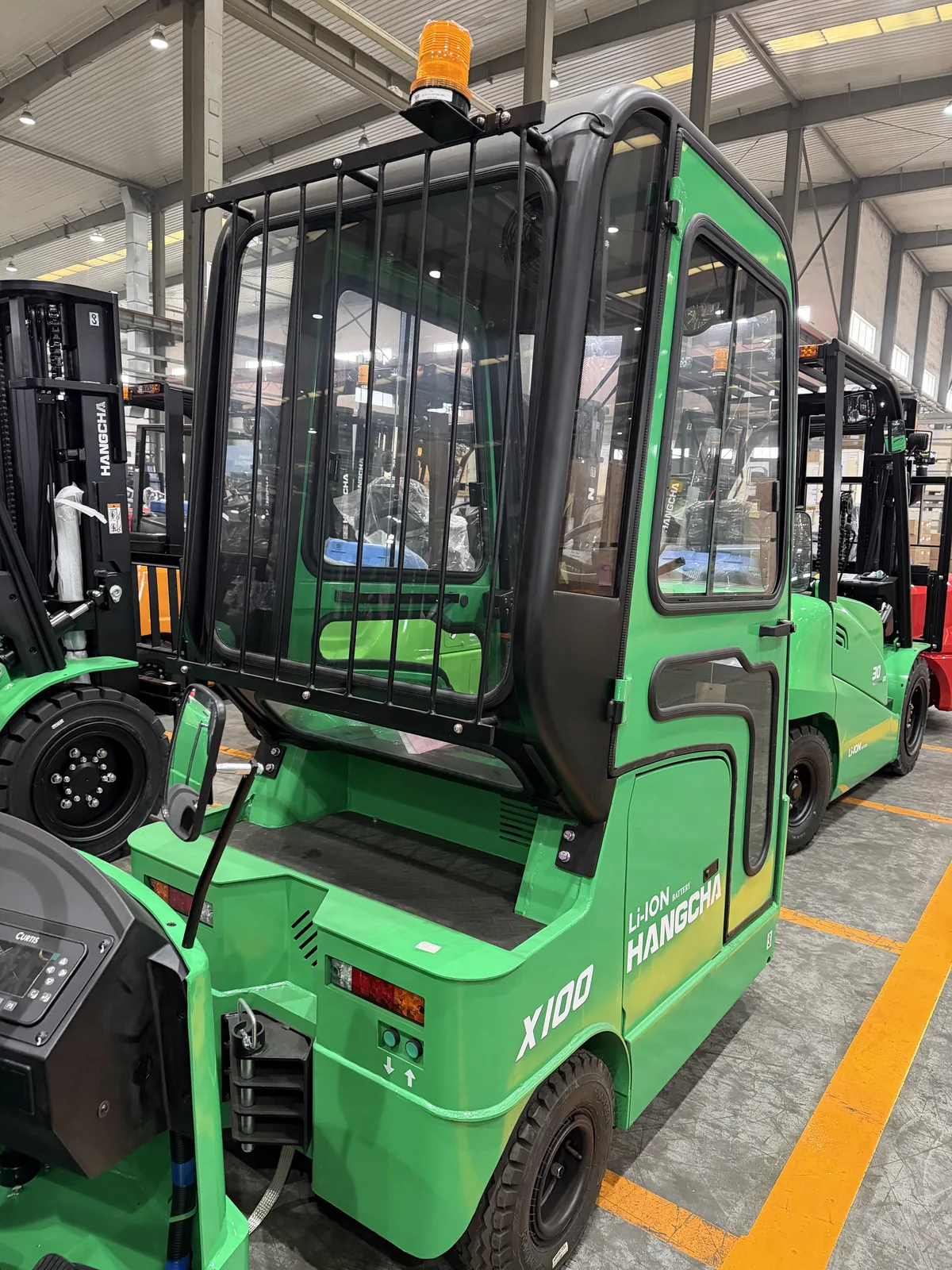
Real equipment and configuration details
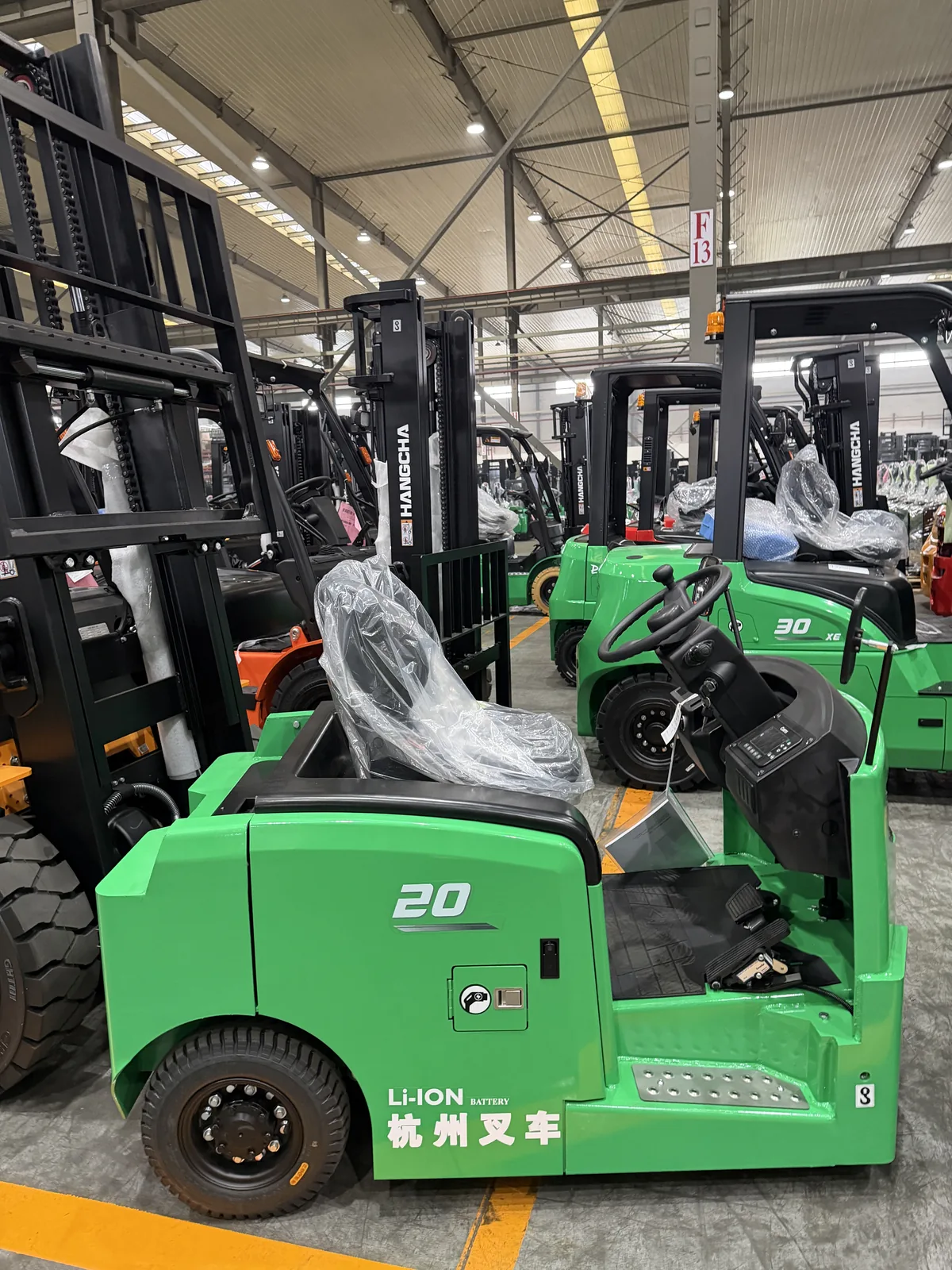
Airport and multi-shift planning
Airport work adds trailer-train length, wet apron conditions, frequent coupling and time-critical stopping zones. The charger, battery capacity, connector, cabin and lighting package need to be planned with the route.
Opportunity charging suits predictable breaks. Side-extraction batteries support scheduled battery handling, while high-voltage platforms reduce the gap between electric and traditional heavy towing.
Five checks before capacity is confirmed
Total trailer mass · maximum gradient · route length · coupling height · required stopping distance.
ForkFocus reviews these figures together instead of choosing the tractor from towing capacity alone.
X Series electric tow tractor in operation
This official working video shows the operator position, vehicle scale and movement of the X Series platform.
We then compare it with the customer’s real route, shift and trailer train.
Why Hangcha
Hangcha covers compact line-side tractors, airport-duty equipment and high-voltage heavy towing on separate platforms.
This range lets traction power, braking, operator position, battery or engine package and coupling arrangement follow the real route instead of one nominal towing figure.
Why ForkFocus
ForkFocus integrates forklifts, spare parts and Forklift Attachments into unified material handling solutions.
Our forklift team checks the trailer train, route, shift, coupling and stopping requirement, then coordinates inspection and after-sales support with shipment planning.
Frequently asked questions
Which figure matters more than towing capacity?
Drawbar pull and gradient performance determine whether the tractor can start and stop the complete trailer train on the real route.
Should the cabin be specified?
Use a cabin when weather exposure, long travel time or operator protection justifies it; ventilation and access are checked as part of the route review.
How is charging planned?
Battery capacity, opportunity charging, connector, charger voltage and shift pattern are confirmed together.
When should high-voltage lithium be considered?
High towing mass, long travel and sustained drawbar demand can justify the stronger power delivery and thermal management of a high-voltage platform.
Send the route and trailer details
Share total towed load, trailer count, route length, maximum gradient, surface, coupling height, indoor or outdoor use and daily shift pattern. Our forklift team will return a working configuration, not only a model list.