
1.2–2.0 Tonne A Series Premium Reach Trucks
CQD12, CQD14, CQD16 and CQD20 seated reach trucks for high-bay warehouses where mast height, residual capacity and operator control matter as much as rated tonnage.
Request a Configuration ReviewDiscuss It on WhatsAppHigh-bay performance without overspecifying the truck
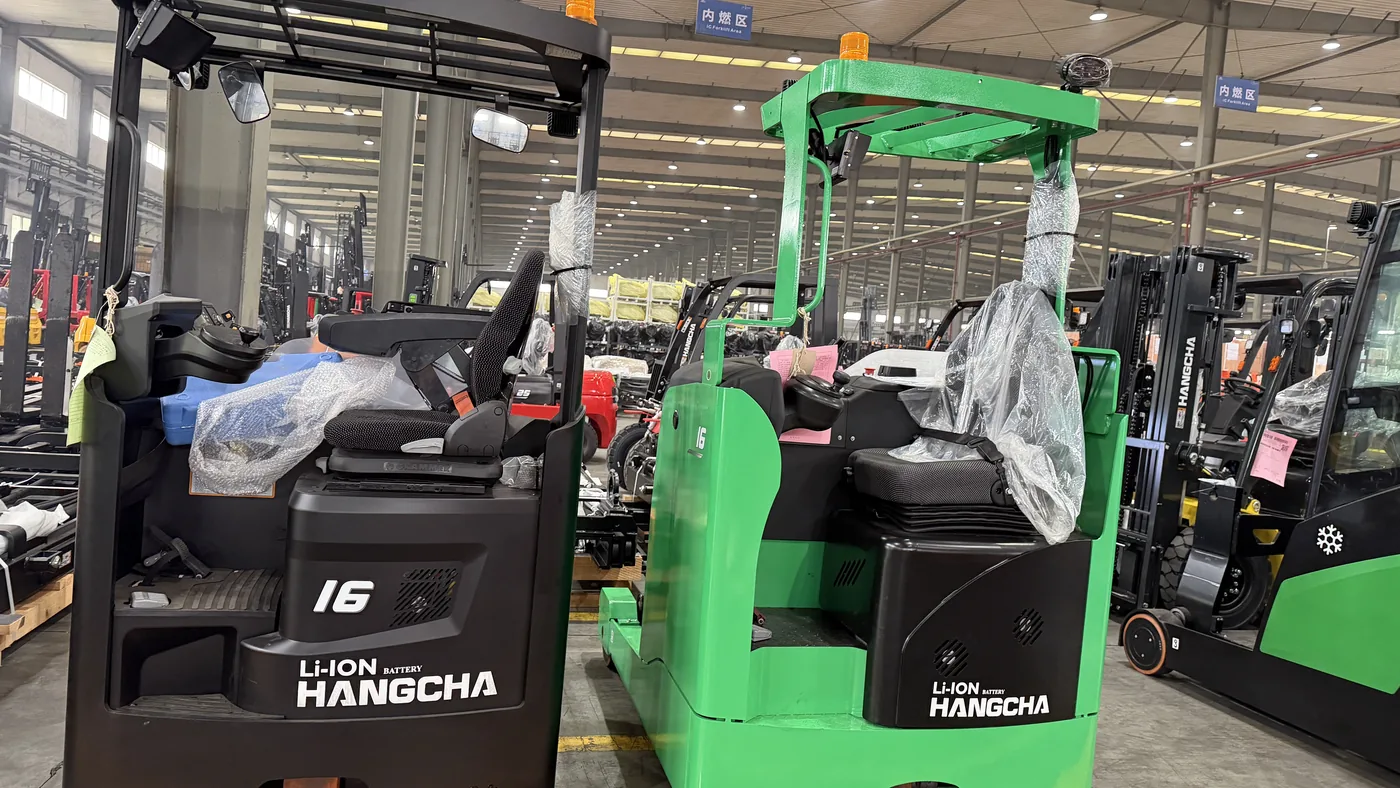
The A Series premium reach truck is built around a 600 mm load centre, a seated operator compartment and mast options extending to 12.5 m. At the top mast position, the CQD20 can retain up to 1,100 kg when the published configuration and load centre are respected.
A 14 km/h travel speed and 6.4 kW AC drive give this family stronger route performance than basic reach trucks. The final choice still depends on aisle width, rack beam height, pallet weight and residual capacity at the required mast height.
Models and published performance
| Model | Rated capacity | Travel speed laden/unladen | Lift speed laden/unladen | Battery |
|---|---|---|---|---|
| CQD12-AC5H | 1,200 kg at 600 mm | 14 / 14 km/h | 0.450 / 0.480 m/s | 48 V / 460 Ah |
| CQD14-AC5H | 1,400 kg at 600 mm | 14 / 14 km/h | 0.410 / 0.480 m/s | 48 V / 460 Ah |
| CQD16-AC5H | 1,600 kg at 600 mm | 14 / 14 km/h | 0.360 / 0.480 m/s | 48 V / 460 Ah |
| CQD20-AC5H | 2,000 kg at 600 mm | 14 / 14 km/h | 0.330 / 0.480 m/s | 48 V / 600 Ah |
All four models use a 6.4 kW AC drive motor and 12.8 kW AC lift motor. Standard reference data uses a 5,000 mm mast, while the mast programme extends to 12,500 mm.
The published aisle requirement for a 1,000 × 1,200 mm pallet is approximately 2,871–2,889 mm. Actual warehouse clearance must include pallet overhang, rack protection and steering tolerance.
Compare the long-load truck routes
| Selection point | This page | Alternative X Series route | Heavier or simpler route |
|---|---|---|---|
| Duty level | Premium high-bay and higher-throughput work | Standard warehouse reach work | Heavy pallet or longer route work |
| Travel speed | 14 km/h | Typically lower depending on model | Up to 10.5/10.5 km/h |
| Maximum mast route | Up to 12.5 m | Depends on selected standard model | Up to 7.0 m on published stand-on range |
| Battery route | 48 V / 460–600 Ah lead-acid; lithium configurations available | Model-specific | 48 V / 325 Ah on published models |
The comparison is a routing guide. The actual load centre, mast height, aisle and rack clearance decide the approved configuration.
Five checks before the truck is released
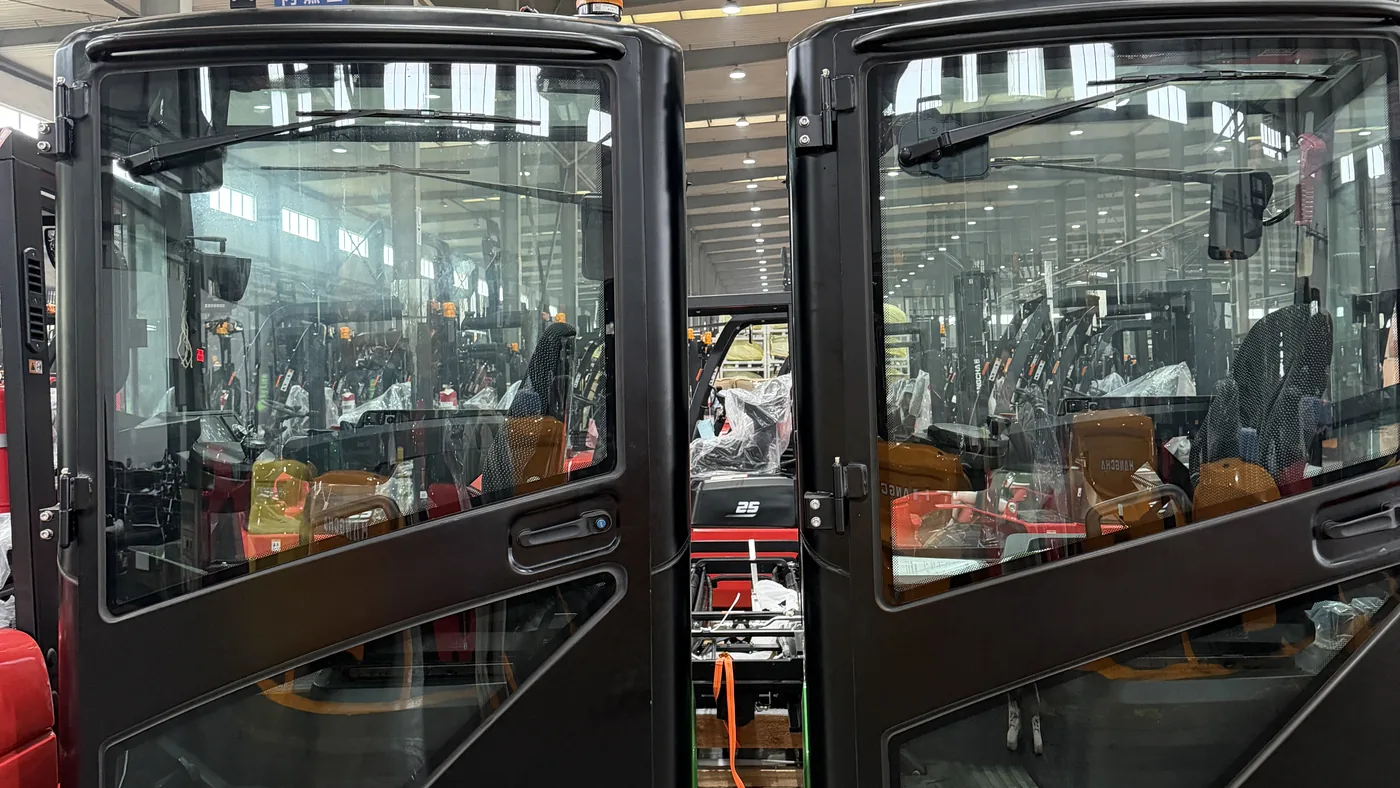
Video supports a visual review of mast movement and warehouse clearance. Final selection still depends on the real load and site drawing.
The truck, attachment, parts and delivery plan are confirmed together
ForkFocus integrates forklifts, spare parts and hydraulic attachments into unified material handling solutions. We confirm mast height, fork carriage, forks, battery, charger, safety equipment and planned service items before production.
Required hydraulic attachments, forklift spare parts, inspection records and packing can be coordinated through our 360 Service and flexible shipment planning.
Frequently asked questions
What makes the premium A Series different from a standard reach truck?
Its 14 km/h travel speed, higher mast programme, seated cab and residual-capacity focus suit higher-throughput and high-bay applications.
Can the CQD20 lift 2,000 kg to 12.5 m?
No. Residual capacity decreases with mast height; the published high-mast example retains up to 1,100 kg under the specified conditions.
Is lithium-ion available?
The brochure includes a CQD20-AC5H-I lithium configuration with a 51.52 V / 500 Ah battery. Battery choice must be matched to the charger supply and shift pattern.
What order information is required?
ForkFocus needs the pallet size and weight, rack beam height, aisle width, floor condition, shift pattern and charging supply before confirming the mast and battery.
What are the usual order terms?
Standard small-capacity forklifts normally require about 30 days after technical confirmation. Normal payment is 30% deposit and 70% balance before delivery; warranty is 1–2 years or 2,000 working hours, whichever comes first.