

Attachment selection depends on the load and required movement
Clamping, rotating, positioning, pushing and stabilising solve different handling problems. The attachment and forklift must be configured as one system.
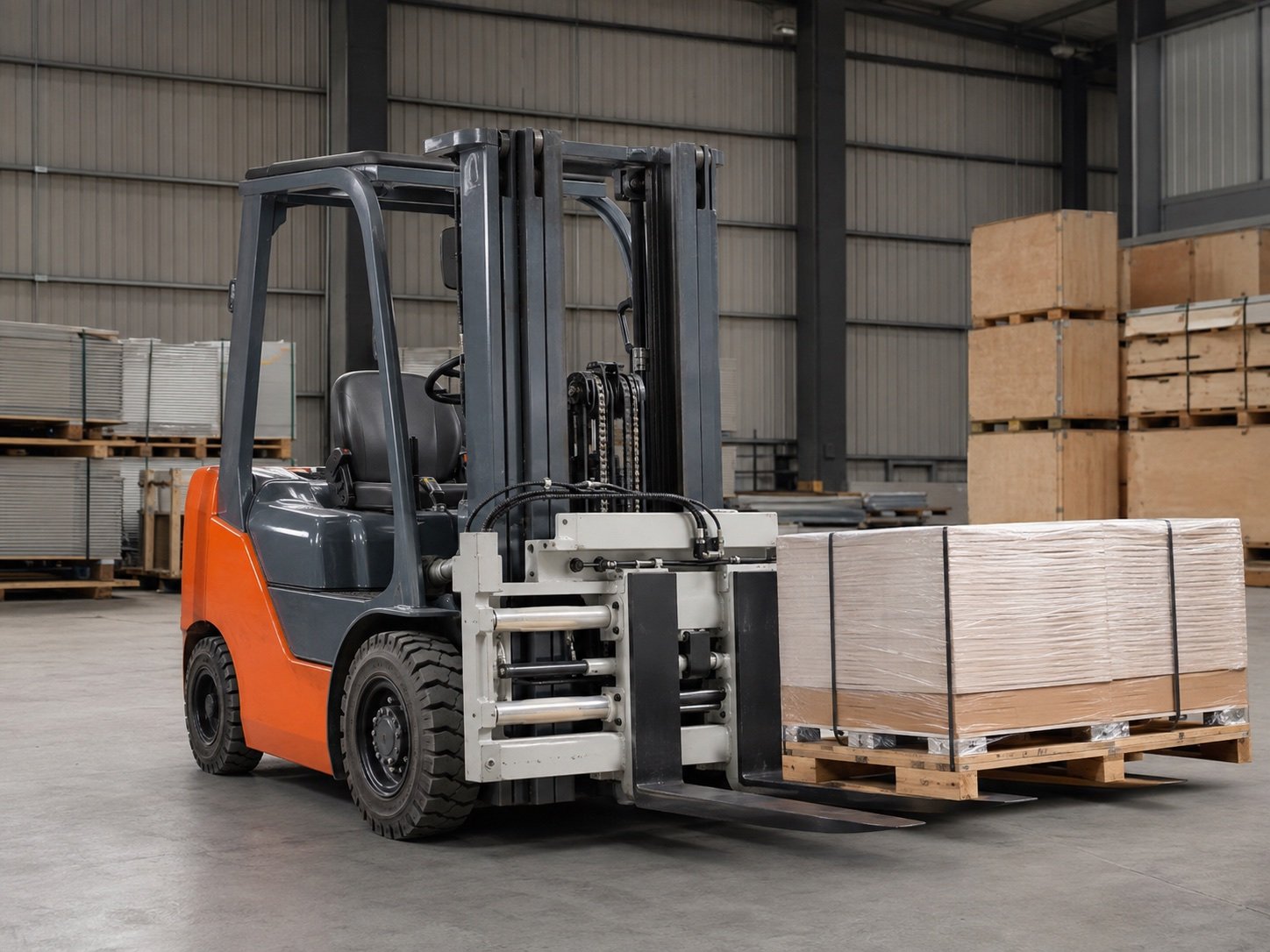
- Problem
- Define the load-control difficulty, damage risk or manual task.
- Load
- Weight, dimensions, packaging, surface and centre of gravity.
- Attachment
- Function, range, contact surface, rating and movement.
- Interface
- Carriage, hydraulic functions, pressure, flow and hose routing.
- Capacity
- Verify the forklift at lift height and adjusted load centre.
Suitable carrier-truck routes
- electric counterbalance forklifts: controlled indoor routes where emissions, floor and charging conditions fit.
- IC forklifts: outdoor, ventilated or high-intensity work where the site permits combustion equipment.
The final choice depends on route, lift height, duty, attachment and working-point residual capacity—not nominal capacity alone.
Forklift attachment range
A useful attachment solves a specific load-control problem without bypassing interface, visibility or capacity checks.
Load trials, attachment rating and working-point residual capacity require confirmation.
Select the attachment function and a conditional carrier-truck route, then verify hydraulics and working-point capacity.