
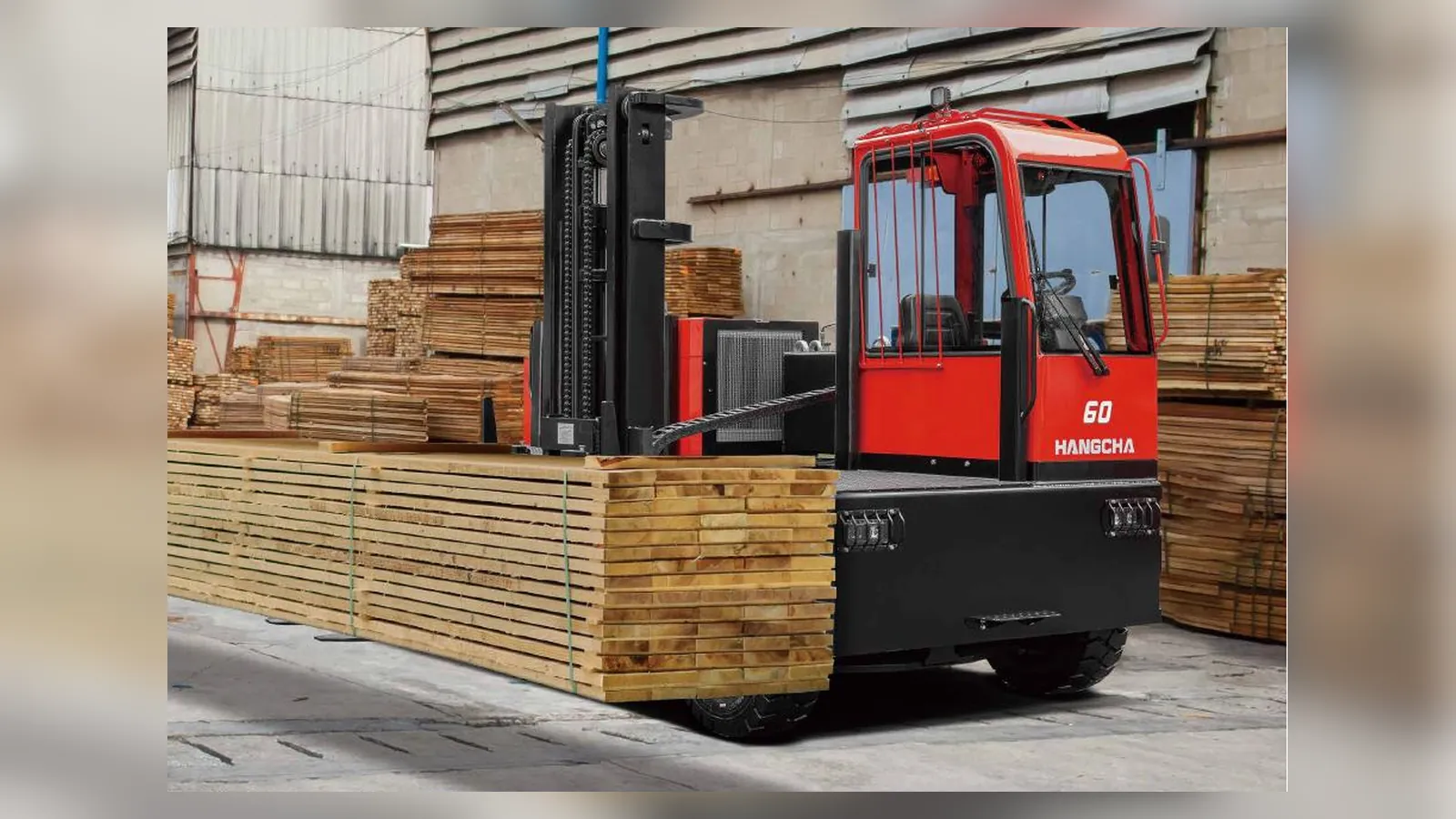
3.0, 5.0 and 6.0 t Side Loaders
3.0–6.0 tonnes for industrial work where load centre, mast height, travel route, heat load and attachment hydraulics must be confirmed as one specification.
What this product range is built to handle
The 3.0, 5.0 and 6.0 t Side Loaders range covers the listed models and configurations for its stated industrial duty. Selection is made from the load, load centre, mast height, route, shift intensity and local fuel or emission requirement.
3.0–6.0 tonnes
20/21, 23/25 km/h
Confirm for the selected model and configuration
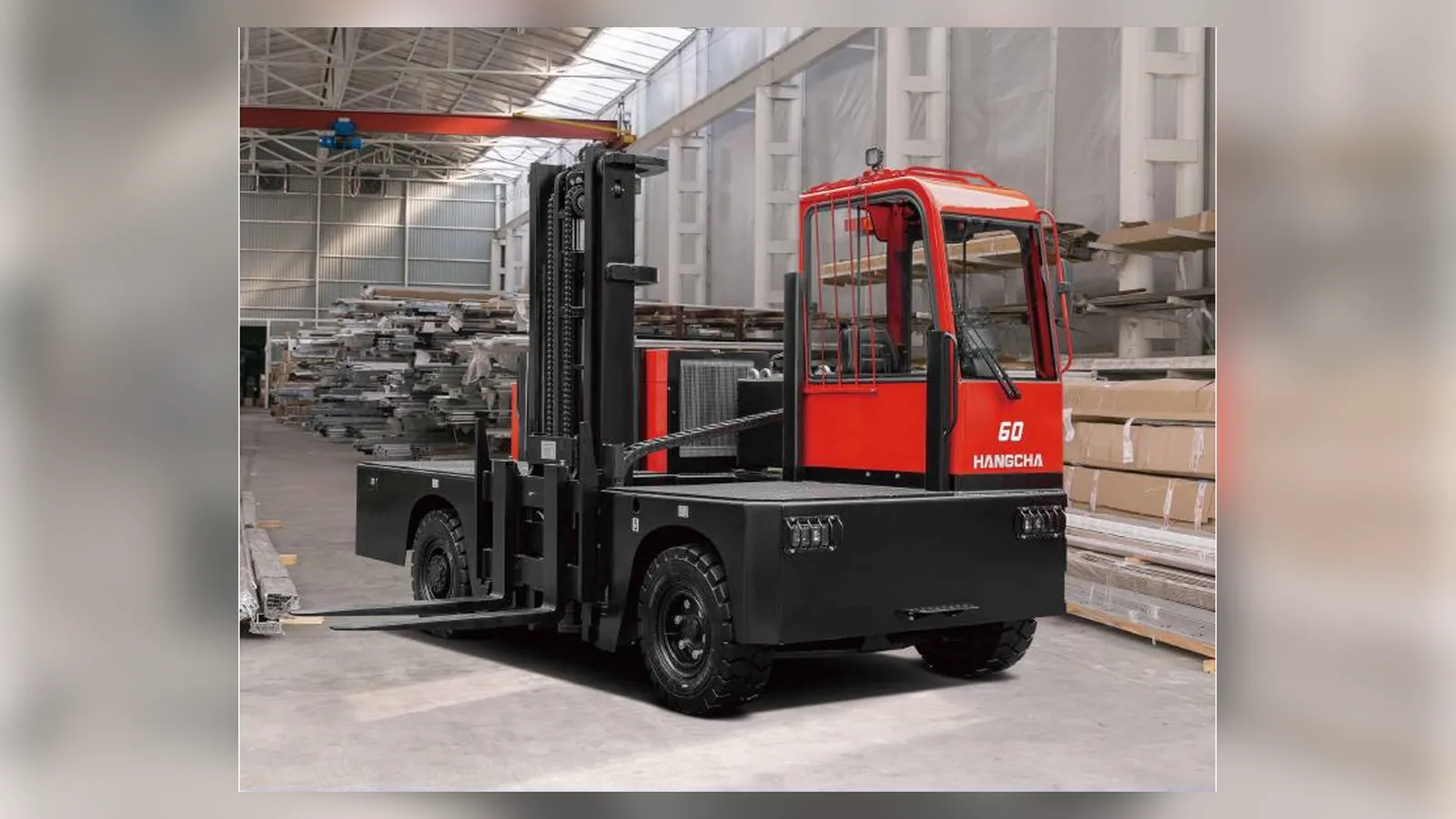
Available models and configurations
Suffixes can identify different engines, transmissions and market packages. ForkFocus checks the complete designation before quotation so the emission stage, parts list and service documents match the delivered truck.
Hangcha Product USP
Long-load travel stability
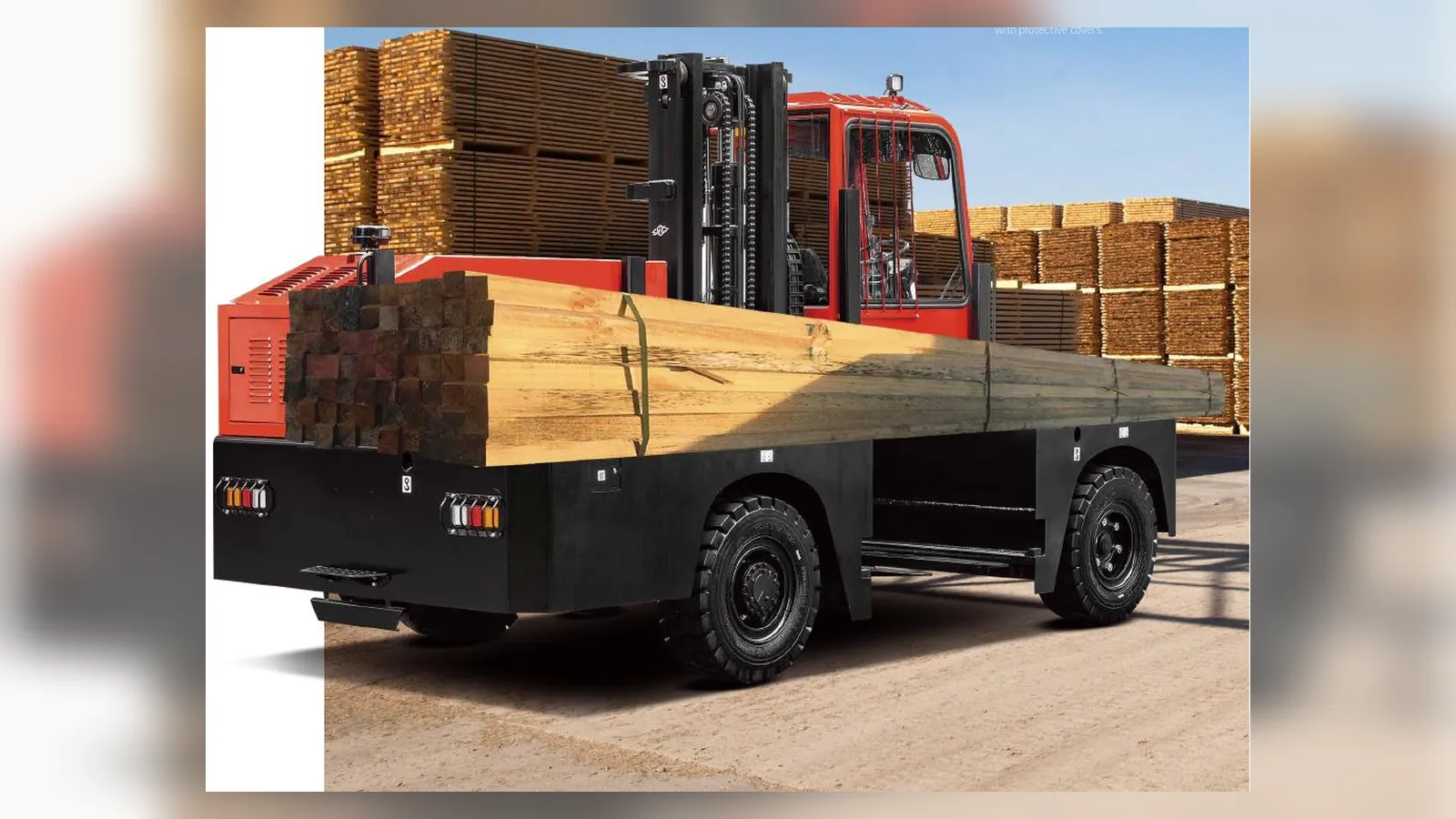
Platform width, load restraint, aisle width and turning route determine safe handling of timber, steel and profiles.
LED working lights
Lower electrical load and longer lamp life support night loading, warehouse entrances and container work.
Powertrain matched to the duty cycle
Engine, transmission and emission package are confirmed together for the fuel available and the actual shift pattern.
Mast and residual-capacity control
Lift height, load centre, fork length and attachment weight are calculated together before the mast is released.
Service access designed into the configuration
Daily checks and planned service points are reviewed so routine maintenance is practical at the customer site.
Performance in Real Work
Travel: 20/21, 23/25 km/h. Lift: Confirm for the selected model and configuration.
Gradeability: 25, 18 %. These figures are checked together with tyre type, engine package, load centre and attachment weight because the published speed figure alone does not prove shift productivity.
For repeated outdoor travel, heat rejection and transmission temperature are often more important than peak speed. For short-cycle loading, hydraulic response, visibility and brake control usually decide the real output.
Series Comparison
The correct series is the one that carries the load through the full route without paying for unused specification or overloading a lighter platform.
| Platform | Practical difference | Best fit |
|---|---|---|
| Counterbalance forklift | Fork carriage and conventional mast | Pallets and loads within a normal load-centre envelope |
| Heavy-duty forklift | High-capacity mast, axle and fork system | Dense industrial loads without container-row reach |
| Reach stacker / container handler | Boom or container mast with spreader | Loaded or empty ISO-container handling |
| Side loader | Side-facing platform for long loads | Timber, steel and profiles travelling lengthwise |
Why Hangcha
This is a purpose-built sideloader, not a counterbalance forklift carrying a long load sideways. The mast, tilting cargo platform and chassis are arranged around timber, steel, aluminium profiles and other loads that must travel lengthwise.
3.0, 5.0 and 6.0 t platforms
Three rated capacities let the truck be matched to load weight, load centre and platform loading without oversizing every application.
Long-load stability
The non-outrigger layout, tilting platform and mast movement are designed around narrow routes and supported long loads.
Industrial-duty package
Power options, full-hydraulic steering, sliding cab doors, LED lighting and service access support timber, steel and profile handling.
Why ForkFocus
We do not stop at quoting a model code. ForkFocus checks how the forklift, load, mast, tyres, Forklift Attachment, planned parts and shipment must work together before the order is released.
Working condition
Load weight and dimensions, load centre, mast height, route and shift intensity.
Truck configuration
Powertrain, cooling, tyres, brakes, fork carriage and hydraulic functions.
Forklift Attachment & parts
Residual capacity, auxiliary hydraulics, attachment weight and planned service parts.
Delivery control
One forklift project, one workable solution
ForkFocus integrates the forklift, planned service parts and the required Forklift Attachment into one material-handling solution.
Where hydraulic attachments are required, a paper roll clamp, carton clamp, sideshifter or fork positioner is checked against carriage class, auxiliary hydraulics and residual capacity.
360 service covers configuration confirmation, inspection and documents. Flexible shipment planning coordinates the forklift, parts and attachments when loading safety and dimensions allow.

Frequently asked questions
What information is required before the final model is confirmed?
Send the load weight and dimensions, load centre, mast height, indoor or outdoor route, ground condition, shift pattern, fuel preference and attachment requirement.
What is the normal delivery time?
Small-capacity forklifts normally require about 30 days after technical confirmation. Large-capacity and heavy-duty forklifts normally require about 45 days, while special masts, cabins and attachments can change the schedule.
What warranty applies?
The normal warranty is 1–2 years or 2,000 working hours, whichever comes first. The exact term depends on the agreed model and project conditions, with special arrangements available for special orders.
What are the normal payment terms?
Normally 30% deposit and 70% balance before delivery. Special terms can be discussed for special orders.
Why not select only by rated capacity?
Attachment weight, extended load centre and high mast height reduce residual capacity. The truck may need a higher nominal capacity or a different chassis even when the load weight does not change.
Confirm the working condition before fixing the model
Send the load, mast height, route, ground and duty cycle. Our forklift team will return the suitable model, configuration, attachment preparation and delivery plan.