
For an Ethiopian oil pipeline steel-pipe handling project, we designed a 6,500 kg steel pipe clamp to match the pipe operation, a HELI CPCD150 forklift, Class IV mounting and the customer’s hydraulic requirement.
This case is useful for any buyer who needs a customized forklift attachment for long steel pipes, round loads or project-based material handling.
Set the project load requirement for the clamp design.
Defined how the clamp had to open and close around the pipe range.
Gave our engineers the hydraulic design condition.
Supported the required pipe-handling geometry.
Matched the attachment interface to the forklift carriage.
Provided the truck basis for compatibility review.
How ForkFocus Manages a Custom Attachment Project
For customized pipe clamps, the real value is not only the finished attachment. The value is the controlled process that turns site information into a design the customer can review before production.
Pipe diameter, length, weight, surface condition, forklift model and operation photos.
We check the load, working conditions, carriage class, hydraulics and possible risks.
Our engineers turn the requirement into a visible clamp layout for review.
The team checks opening range, mounting, cylinder layout and pipe-support geometry.
The customer reviews the drawing before production starts, reducing misunderstanding.
Production follows the confirmed design instead of a vague verbal requirement.
If the review shows a better detail, we adjust before final confirmation.
The goal is one clear solution the customer, engineers and production team understand.
The Operation Defined the Attachment
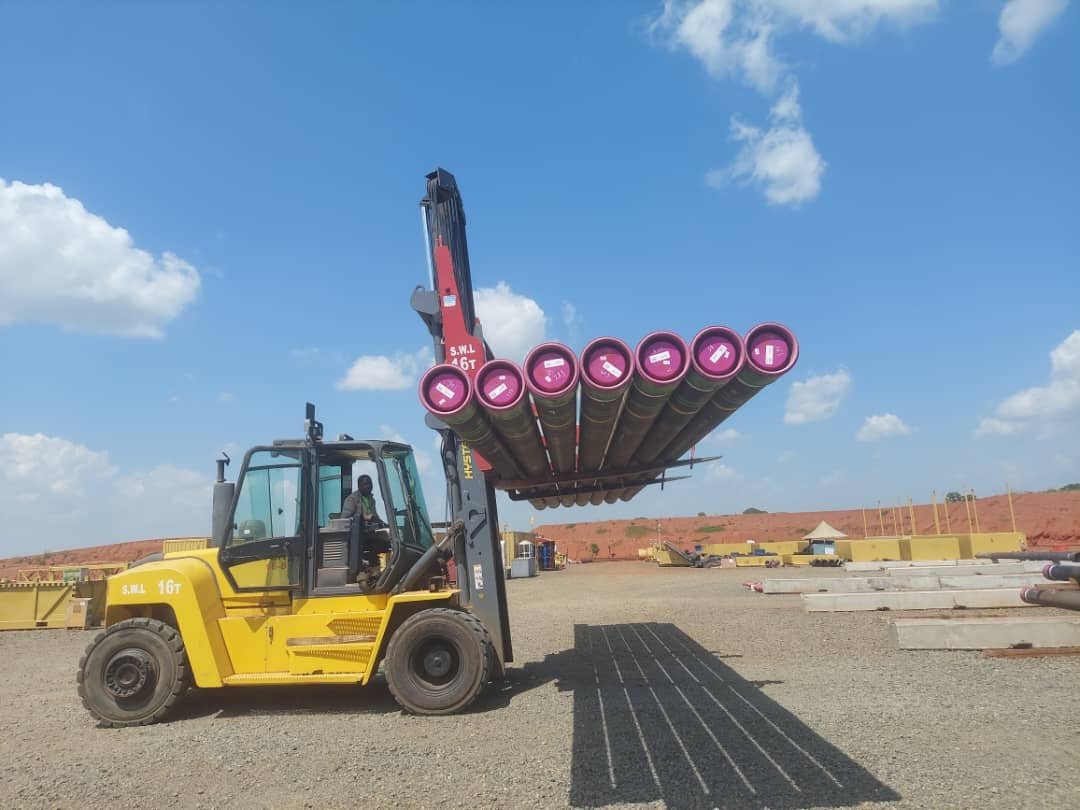
The customer’s reference photo showed long steel pipes handled in a pipeline working area. We used the operation, not a catalogue picture, as the starting point.
The clamp had to support round steel-pipe loads, not palletized goods.
The design had to fit the HELI CPCD150 and Class IV mounting interface.
The attachment was specified for 16 MPa input pressure.
3D renderings gave the customer, our engineers and our production team one shared reference before production.
We did not begin by asking which standard clamp was available. We began by confirming what the pipes, forklift and working conditions required.
Final Steel Pipe Clamp Specification
The confirmed values became the technical boundary for our custom attachment engineering.
| Confirmed parameter | Project specification | Why it mattered |
|---|---|---|
| Load capacity | 6,500 kg | Established the required attachment capacity for the load. |
| Opening range | 40–1,050 mm | Defined the working opening envelope of the clamp. |
| Input pressure | 16 MPa | Matched the specified hydraulic input for the attachment. |
| Length | 2,000 mm | Defined the required attachment geometry for the operation. |
| Mounting class | Class IV | Matched the attachment mounting interface to the truck. |
| Forklift model | HELI CPCD150 | Provided the truck basis for the compatibility review. |
Matching the Clamp to the HELI CPCD150
A clamp cannot be selected by attachment capacity alone. We treated the forklift and clamp as one working system.
Confirmed the required connection between the clamp and truck carriage.
Defined the hydraulic condition for the attachment.
Kept the design aligned with the required pipe-support geometry.
Kept the engineering review focused on the actual load requirement.
This is why our attachment selection guide begins with the load, truck and working conditions.
Our 3D Design Review Before Production
Our engineers prepared 3D renderings so the customer, engineering team and production team could review the proposed arrangement before manufacturing.
This is one of the main advantages of working with ForkFocus on customized forklift attachment customization: the solution is not hidden inside internal production notes. It becomes a visual design that can be checked and confirmed.
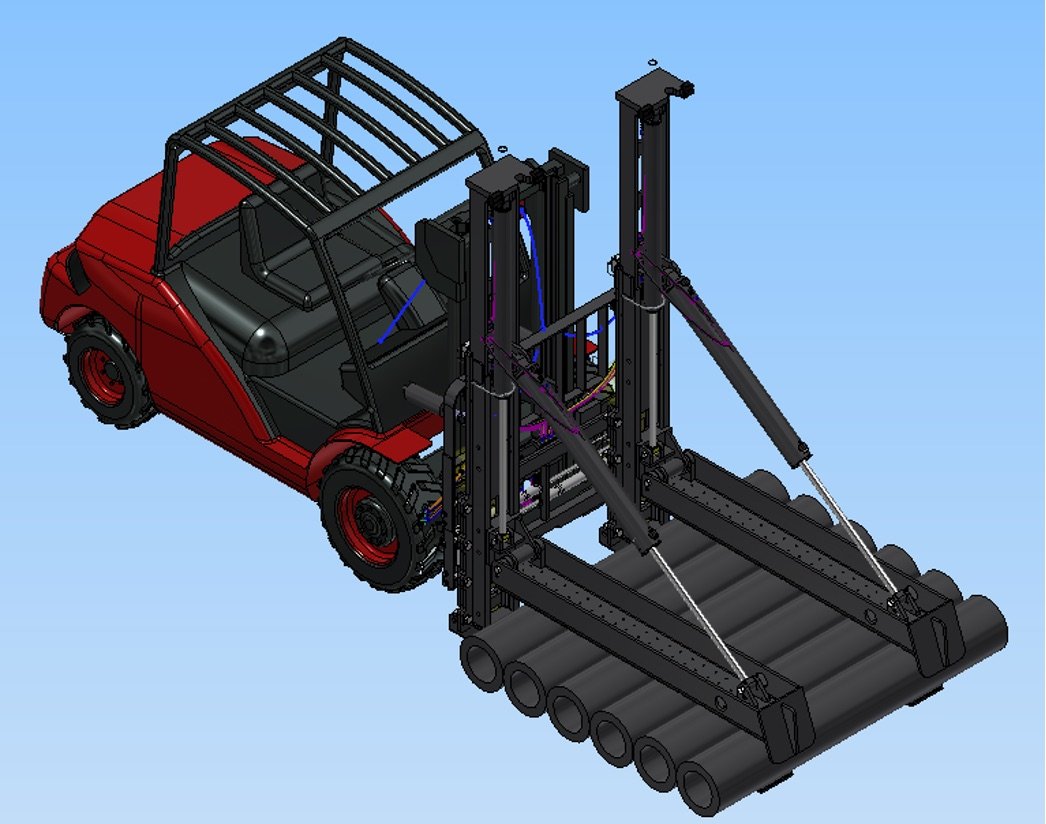
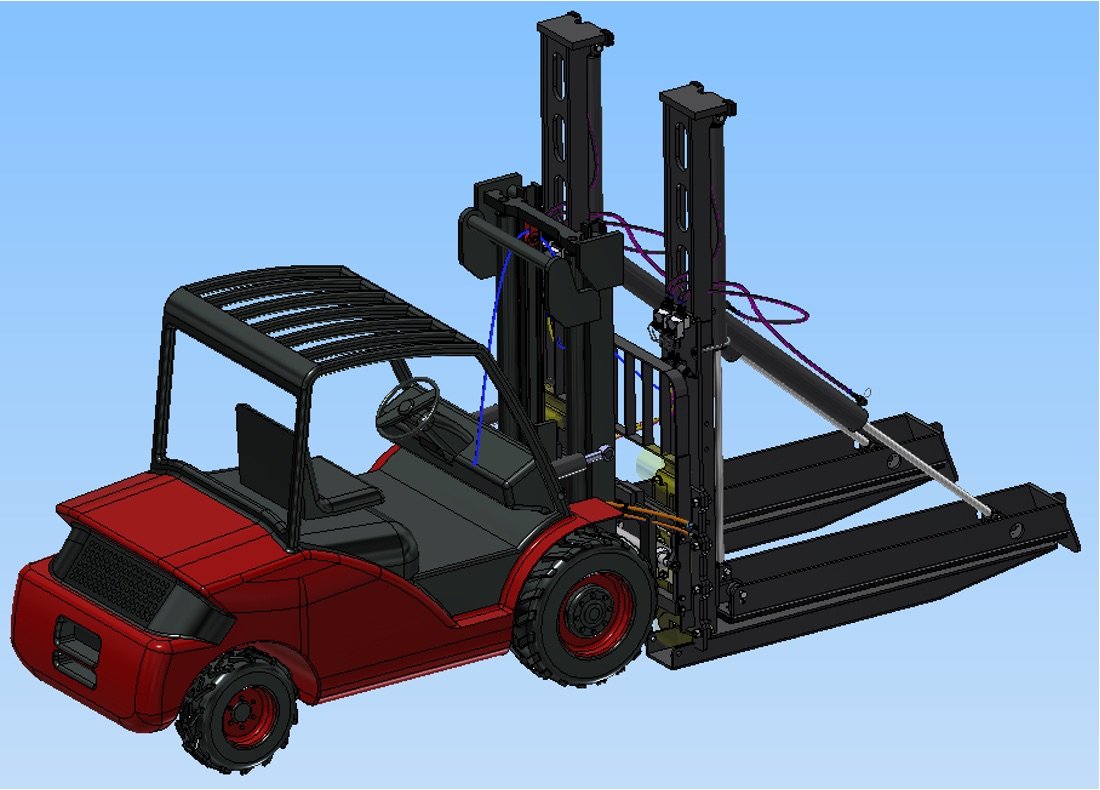
The rendering made the Class IV mounting arrangement visible.
The design could be reviewed against the specified 40–1,050 mm opening range.
The team could check the arrangement before production.
The visual review reduced misunderstanding before manufacturing.
What This Project Taught Us
The lesson from this case is simple: for a steel pipe clamp, the right question is not only “How many kilograms can it lift?”
Diameter range, length and maximum weight decide the working envelope.
Forklift model, carriage class and hydraulics can change the attachment design.
Renderings help technical and purchasing teams confirm the same solution.
Custom work often improves through review, adjustment and final confirmation.
What We Need for a Similar Pipe Clamp Project
For a similar pipe handling project, the fastest useful enquiry includes photos or video plus the basic pipe and forklift data.
| Information | Decision it supports |
|---|---|
| Pipe diameter range | Opening range and contact geometry |
| Pipe length and maximum load weight | Attachment capacity and support geometry |
| Pipe surface or coating | Contact-surface and damage-control requirements |
| Forklift brand, model and carriage | Mounting and truck compatibility |
| Available hydraulic pressure and functions | Hydraulic circuit and installation requirements |
| Photos or video of the operation | Working conditions, pipe position and handling method |
The clearer this information is, the sooner we can determine whether a standard design is sufficient or whether the application needs another customized steel pipe clamp design.
In Conclusion
This Ethiopian pipeline project required more than a high-capacity clamp. It required a 6,500 kg attachment with a 40–1,050 mm opening range, 16 MPa input pressure, 2,000 mm length and Class IV mounting for a HELI CPCD150.
The more important lesson is how a custom attachment project should be managed. A supplier must confirm the load, check the forklift, prepare a visible design, review it internally, let the customer confirm it, follow production and adjust details before final confirmation.
This is where ForkFocus creates value for custom projects: we combine application review, truck-and-attachment matching, drawing-based confirmation, production follow-up and practical fine-tuning. The result is not only a product, but a clearer path from customer requirement to a solution that can be built and checked.
If you are planning a similar steel-pipe operation, send us the pipe range, maximum weight, surface condition, truck information, hydraulic requirements and operation photos. For broader equipment planning, see our forklift buying guide.