
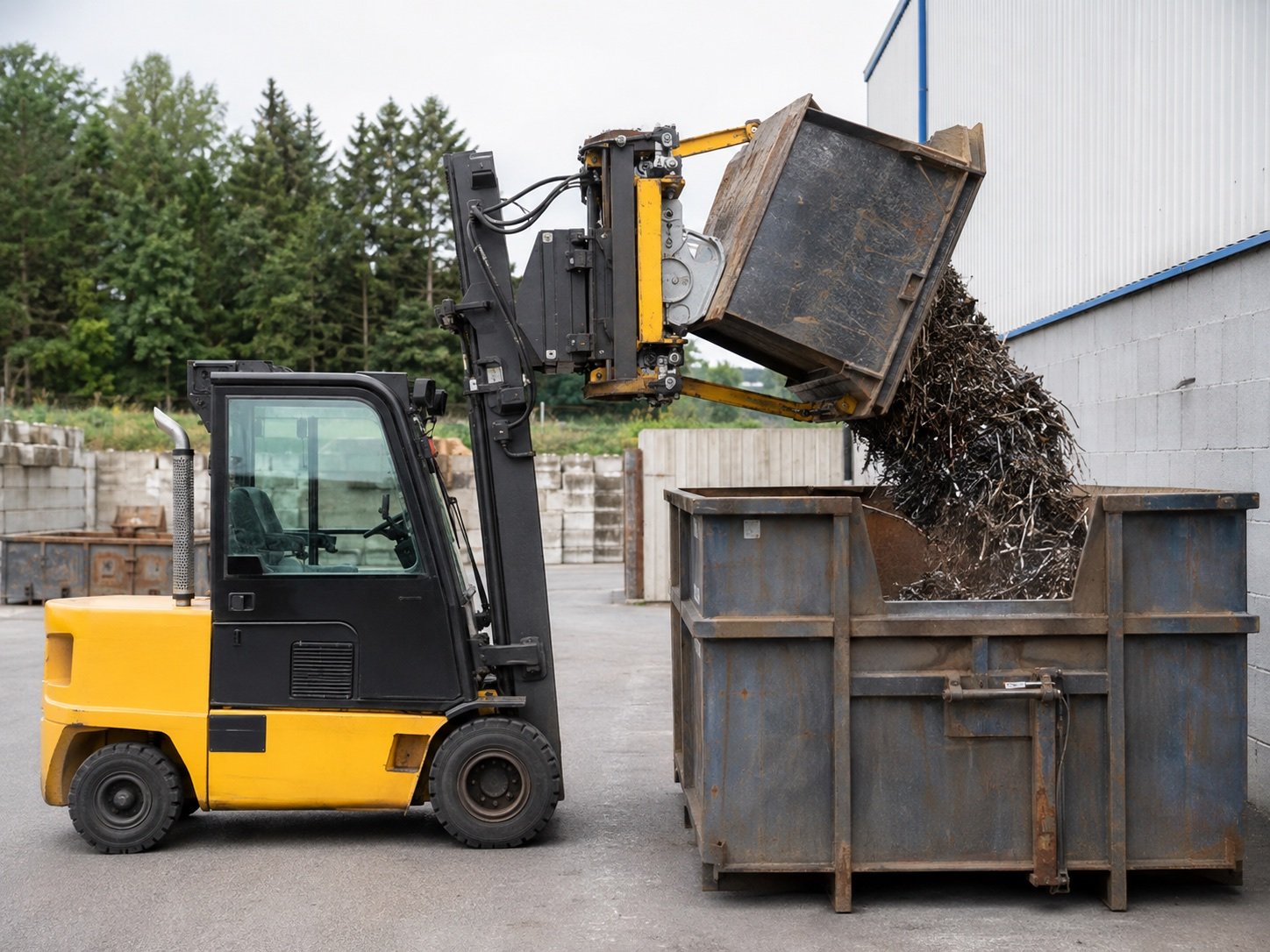
Construction attachments must fit the material and the site
Blocks, pipes, bins, panels and bulk materials create different clamping, rotating and load-support requirements. The carrier truck must also suit the surface and grade.
See the attachment in operation
This ForkFocus project video shows a pipe clamp applied to long cylindrical material. It helps explain attachment movement; the demonstrated project does not establish another load’s dimensions, path or truck capacity.
Construction loads need different attachment and truck combinations
Concrete products, bins, pipe, panels and long fabricated materials do not share one handling interface. The load shape and the site determine whether the task needs clamping, rotation, fork positioning or specialist support.
Truck, attachment and working-point verification
Ground and path
Record surface bearing strength, loose material, potholes, slopes, transitions, turning space and traffic. Tyres alone do not convert an industrial forklift into a rough-terrain truck.
Hydraulic interface
Confirm the required auxiliary functions, pressure, flow, carriage class, hose layout and control method. Rotation or clamping speed must suit the load and the operator task.
Working-point capacity
Verify the truck with the exact attachment at the required lift height and actual load centre. Attachment mass and forward centre of gravity can materially reduce available capacity.
Wear and support
Define pads, forks, hoses, seals, pins and other application-specific wear items. Dust, impact and outdoor exposure should influence inspection and spare-parts planning.
Construction attachment and carrier truck
The attachment solves the load-control problem; the truck supplies the verified capacity, traction, mast and hydraulic interface.
Load trials, attachment rating and residual truck capacity remain separate approval checks.
Review the forklift attachment range, then confirm the remaining application and configuration data.
IC forklift range
Outdoor construction paths commonly favour IC or rough-terrain equipment, while firm indoor paths may allow electric alternatives.
Application information for a technical review
For a construction-handling quotation, provide load photos and dimensions, maximum weight, handling movement, pickup and placement height, site photos, path measurements, ground condition, gradients, duty cycle and any existing truck or attachment data.