
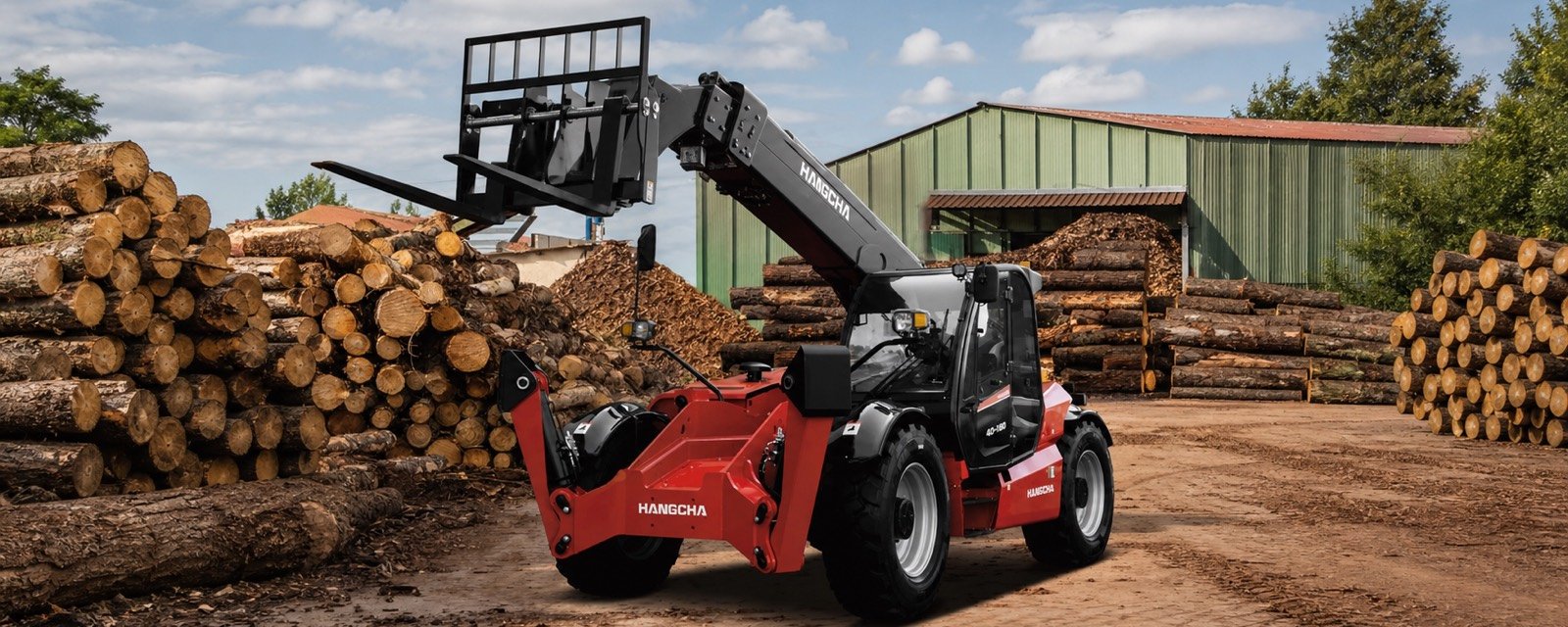
X and XH Series Telehandlers: Diesel or High-Voltage Lithium
A telehandler is selected by the load it can hold at the required lift height and forward reach—not by nominal capacity alone. This page compares Hangcha X Series diesel and XH Series high-voltage lithium telehandlers so customers can choose the correct platform without opening separate product pages.
Two powertrains for different working patterns
Both platforms use all-wheel steering, quick-change work tools and load-monitoring systems. The practical difference is the working envelope, power supply and shift pattern each machine is built to handle.
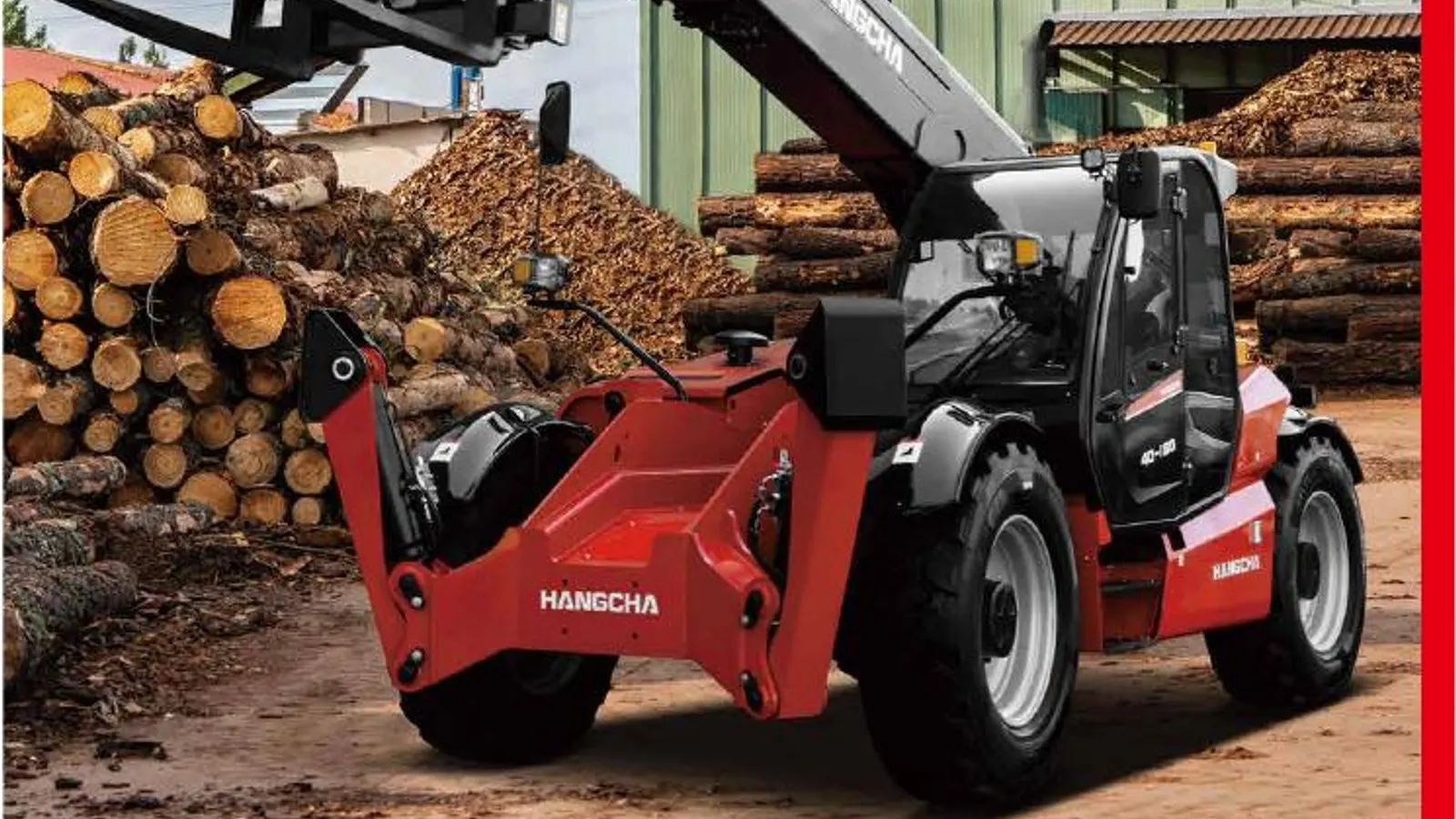
X Series 4.0 T Diesel Telehandler
This is the long-reach choice for construction, timber, industrial yards and continuous outdoor work. It lifts to 17.7 m, reaches forward 13.02 m and retains 2,500 kg capacity at maximum lift height.
Cummins engine choices, a 160 L fuel tank and fast refuelling suit operations where the machine must stay in service through long outdoor shifts. Stabilisers and a load-moment limiter support controlled work at height and reach.
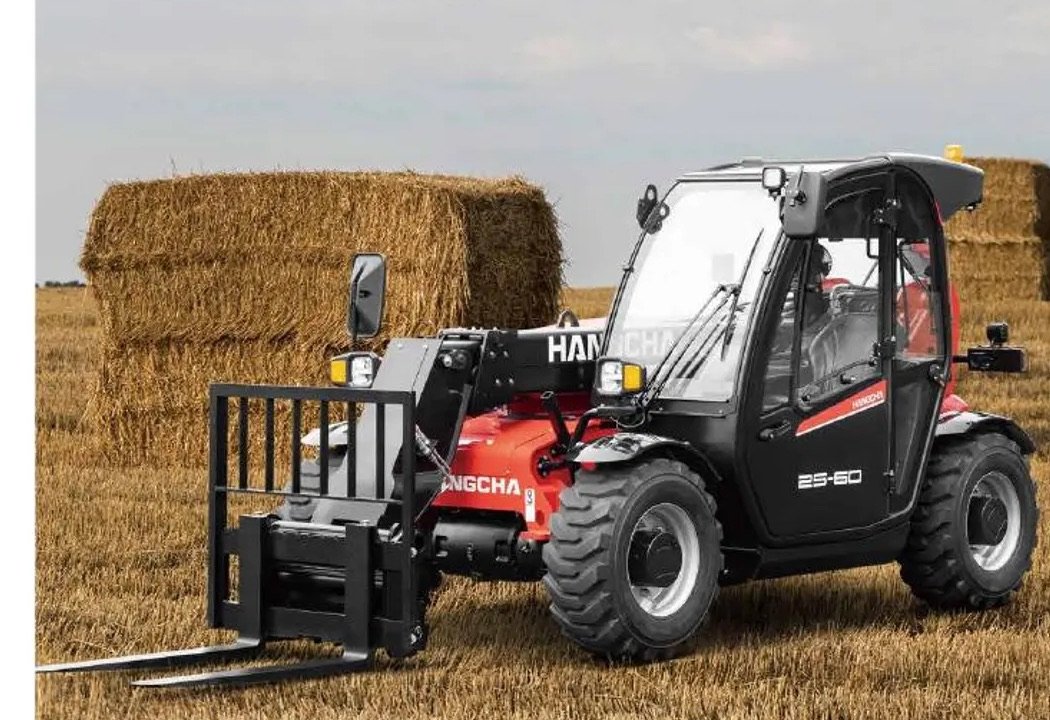
XH Series 2.5–3.5 T High-Voltage Lithium Telehandlers
This range suits lower-noise, zero-local-emission work where charging can be planned around the shift. Three lift envelopes cover 5.8 m, 7.3 m and 9.8 m maximum lift heights.
The 310 V permanent-magnet drive system uses LiFePO4 batteries with water cooling. DC fast charging can raise the battery from 30% to 80% in about 30 minutes under suitable charging conditions.
Diesel and lithium telehandler comparison
| Selection point | X Series diesel | XH Series high-voltage lithium |
|---|---|---|
| Models | T40-180XH16D; T40-180XW70D | T25-60XHYG; T35-70XHYG; T35-100XHYG |
| Rated capacity | 4,000 kg | 2,500 kg or 3,500 kg |
| Maximum lift height | 17,700 mm | 5,800 / 7,300 / 9,800 mm |
| Maximum forward reach | 13,020 mm | 3,310 / 4,170 / 7,000 mm |
| Capacity at maximum height | 2,500 kg | 2,000 kg or 2,500 kg, depending on model |
| Capacity at maximum reach | 850 kg | 800 kg on T25-60; 500 kg on T35-70 and T35-100 |
| Travel speed | 35 km/h | 25 km/h |
| Gradeability | 40% | 45% |
| Energy routine | Fast refuelling and long conventional outdoor shifts | Planned charging, lower noise and zero local emissions |
| Best fit | Long reach, construction, timber, industrial yards and remote outdoor work | Agriculture, greenhouses, food yards, municipal work and indoor–outdoor transition |
Do not compare these machines by rated tonnage alone. A 4.0 T telehandler may carry far less when the boom is fully extended, while a smaller lithium model may be the better fit when the real task stays inside its load chart.
How to read the load chart
The load chart shows usable capacity at each boom angle, lift height and forward-reach position. The correct selection point is the customer’s actual load position—not the capacity printed on the machine nameplate.
Confirm the load weight, load centre and attachment weight together. A bucket, bale clamp, crane arm or working platform changes the centre of gravity and may reduce residual capacity.
Stabiliser position, tyre condition, gradient and ground bearing also affect safe operation. ForkFocus checks these conditions before confirming the machine and work-tool combination.
Application comparison in real work
Choose X Series diesel when
The job needs up to 17.7 m lift height, 13.02 m forward reach or fast travel between outdoor work zones. It is the stronger match for long shifts where refuelling is easier than charging.
Typical work includes timber yards, construction sites, industrial storage, machinery handling and material placement over obstacles.
Choose XH Series lithium when
The work requires lower noise, zero local emissions and predictable charging windows. The 2.5–3.5 T range is particularly relevant to farms, greenhouses, food-handling yards and mixed indoor–outdoor routes.
The 45% gradeability and three steering modes retain useful rough-ground mobility without the exhaust and engine-noise profile of a diesel machine.
One carrier, several work tools
Both platforms can work with quick-change tools such as forks, buckets, soft bale clamps, crane arms and working platforms. The coupler, hydraulic requirement and load chart must be confirmed for every tool rather than treated as a universal fit.
Fork carriage
Confirm fork length, load centre and carriage width.
Bucket
Check material density, bucket volume and crowd force.
Forklift Attachment
Verify hydraulic flow, pressure, weight and residual capacity.
Crane arm
Use the approved hook position and load chart.
Work platform
Confirm local rules, interlocks and approved personnel-use configuration.
See ForkFocus Forklift Attachments and application options →
Watch a telehandler at work
Video makes boom movement, stabiliser use and operating visibility easier to judge than text alone. Compare the operating route and work-tool change with your own job before fixing the final configuration.
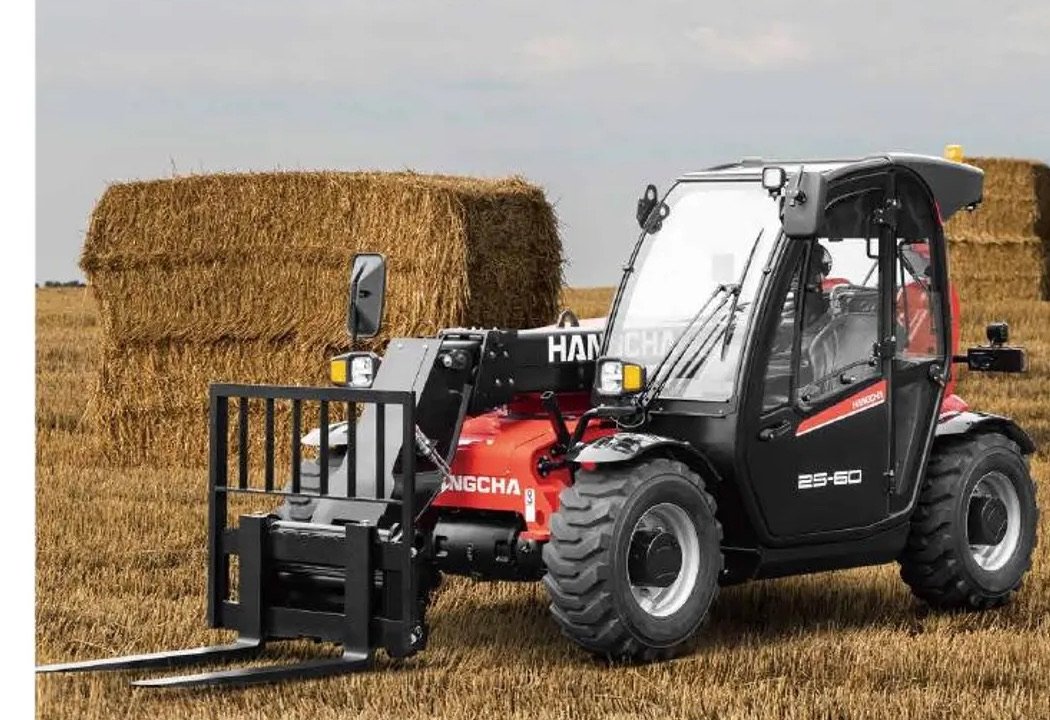
Five checks from practical telehandler selection
1. Real load position
Measure the furthest forward reach and highest placement point.
2. Ground and tyres
Confirm surface, gradient, mud, turning area and ground bearing.
3. Stabiliser use
Check whether the work zone allows stabilisers to deploy fully.
4. Steering clearance
Compare two-wheel, four-wheel and crab steering with the route.
5. Duty cycle
Match refuelling or charging to the real shift, not an ideal schedule.
Why Hangcha
The diesel and lithium platforms cover two clearly different operating patterns instead of forcing one powertrain into every job. Three steering modes, proportional control, overload monitoring and quick work-tool changes support practical multi-purpose use.
The X diesel platform supplies the longer working envelope. The XH lithium range adds high-voltage drive, water-cooled battery management and fast-charging capability for lower-emission operations.
Why ForkFocus
ForkFocus integrates forklifts, spare parts and Forklift Attachments into unified material handling solutions. We match load chart, terrain, energy routine and work tool before confirming the model.
Our 360 service coordinates configuration, inspection, documentation and after-sales planning. Flexible shipment planning brings the truck, parts and approved work tools into one delivery plan where dimensions and loading safety permit.
Telehandler selection FAQ
Should I choose diesel or high-voltage lithium?
Choose diesel for the 17.7 m working envelope, fast refuelling and long remote outdoor shifts. Choose XH lithium for 5.8–9.8 m work where lower noise, zero local emissions and planned charging are priorities.
Can a 4.0 T telehandler lift 4,000 kg at maximum reach?
No. The X Series is rated at 850 kg at maximum forward reach, so the real load position must be checked against the load chart.
Which XH model reaches highest?
The T35-100XHYG reaches 9,800 mm with a maximum forward reach of 7,000 mm. Its capacity at maximum reach is 500 kg.
Can the same machine use forks, a bucket and a bale clamp?
Yes, when each work tool is approved for the coupler and hydraulic circuit. Residual capacity must be recalculated with the tool’s weight and load centre.
How quickly can the XH battery charge?
With a suitable DC fast charger, the stated 30% to 80% charging time is about 30 minutes. Site power supply and charger specification must be confirmed before order.
What information is required for a recommendation?
Provide load dimensions and weight, maximum lift height, forward reach, terrain, gradient, work-tool type, shift length, available charging supply and destination market.
Send the load, height and forward reach
Our forklift team will compare the X diesel and XH lithium working envelopes against your real application. You receive a practical machine and work-tool recommendation rather than a generic tonnage quote.