

Warehouse efficiency is the movement of the correct load, in the correct condition, with the fewest safe handling steps.
For concrete blocks, bricks and pavers, a block clamp can redesign that flow by handling the complete pack directly instead of managing both product and pallet.
In warehouse planning, the forklift attachment should be specified together with staging rules, travel routes and product families.
The improvement is strongest when the clamp is treated as part of the operating system rather than an isolated forklift accessory.
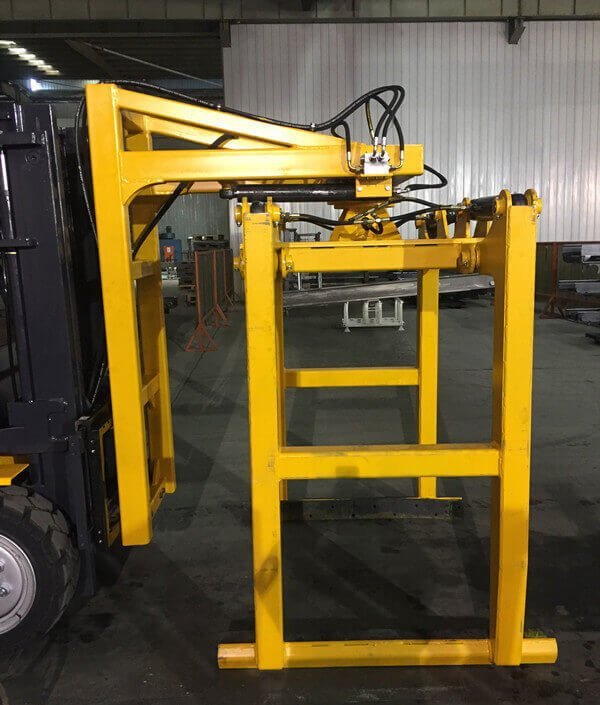
Watch a ForkFocus Block Clamp in Operation
See how a purpose-built block clamp controls masonry loads in a real ForkFocus operating demonstration.
Maximum efficiency does not mean making every block clamp move as fast as possible.
It means completing the required handling task with fewer movements, less waiting and less product damage.
The selection process should begin with the workflow and load—not with a block clamp catalogue.
Define the Warehouse Load Families
For a broader specification checklist, review our forklift attachment buying guide.
Build a matrix for every block, brick, paver and kerbstone pack handled in the facility.
Record minimum, typical and maximum dimensions and weight, layer pattern, contact face, surface condition, banding and allowable marks.
The clamp’s opening range and pad position must serve the full approved matrix, not just the largest pack.
Separate products that cannot accept side pressure or do not present a stable contact face.
Keeping an alternative pallet process for exceptions is more efficient than interrupting the main clamp flow with improvised handling.
Verify Forklift Capacity and Interface
Nonstandard packs may require custom forklift attachment engineering before production.
Confirm forklift model, rated capacity, standard load center, mast, carriage class, available hydraulic functions, pressure and flow.
The block clamp adds weight and moves the pack forward; the resulting configuration needs a formal capacity review and updated capacity information in accordance with the truck manufacturer’s requirements and local rules.
Mounting, lower hooks, hose routing and mast clearance should be checked on the drawing.
Installation work discovered after delivery creates downtime before the first productivity gain can begin.
Match Contact Force to the Pack Surface
Demanding masonry packs should also be compared with our heavy-load attachment solutions.
Dry rough blocks, sealed pavers, dusty packs and wet outdoor products provide different friction.
Too little force permits creep; too much can chip edges, crack outer units or mark architectural surfaces.
Pad texture, area and pressure must be selected together.
Where product families need different settings, use a controlled recipe or selector and show the approved value at the point of use.
Operators should never compensate for damaged or irregular packs by raising pressure without authorization.
Establish Efficiency KPIs Before Commissioning
Several avoidable specification errors are covered in our forklift attachment mistakes guide.
Measure packs per truck hour, touches per pack, staging time, trailer loading time, product damage, pallet movements, queue time and clamp downtime.
Use the same route and comparable product mix for the before-and-after study.
| Warehouse measure | What it reveals | Practical target direction |
|---|---|---|
| Touches per pack | Unnecessary set-downs and re-picks | Lower |
| Placement time | Alignment and visibility loss | Lower and more consistent |
| Damage by SKU | Pad, pressure or pack-quality issues | Lower |
| Pallet movements | Remaining pallet dependency | Lower for approved products |
| Clamp availability | Maintenance and spare-parts performance | Higher |
Plan Installation, Training and Maintenance
Use our attachment efficiency guide when measuring cycle-time and fleet results.
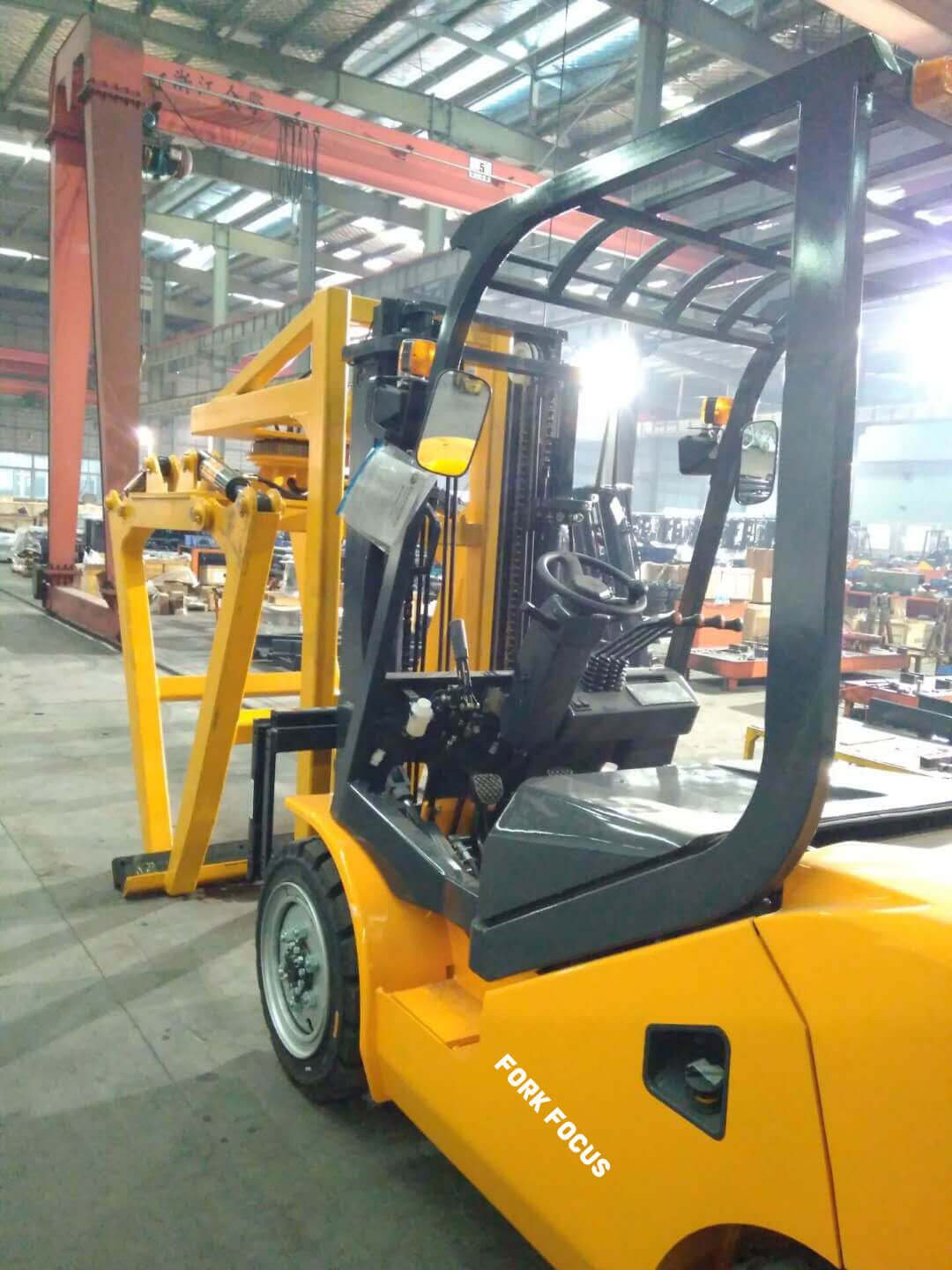
Prepare mounting checks, hose connections, pressure verification and representative-load testing before the clamp arrives.
Train operators on accepted packs, contact height, pressure selection, travel rules and rejection criteria.
Maintenance needs pad limits, inspection points, part numbers and an initial uptime kit based on the expected cycle rate.
Map the Current Flow Before Changing Equipment
Warehouse teams can apply these warehouse attachment tips during route and staging reviews.
Follow one pack from production receipt to its final vehicle position.
Record every wait, set-down, re-pick, pallet exchange, quality hold and travel leg.
Identify where operators spend time finding pallets, correcting alignment or moving empty equipment.
Then design the future flow around direct pack handling.
The ideal route may connect curing release, storage, order staging and truck loading with fewer intermediate placements.
The clamp specification should support that route’s smallest aisle, highest stack and tightest trailer position.
Standardize Staging by Load Family
Operator training should also follow these attachment safety practices.
Group products by pack dimensions, surface condition and approved pressure setting.
Mark staging lanes and, where practical, show the correct contact height.
This reduces repeated measurement and makes abnormal packs easier to identify.
Mixed-SKU areas need clear rules.
A clamp that can open wide enough for every pack may still require different pad position or pressure.
Store the approved settings where operators can use them, not only in a maintenance manual.
Use Sideshift to Remove Alignment Waste
In close stacking, small lateral errors cause repeated reversing and steering.
Integrated sideshift allows a controlled final correction while the truck remains square to the stack.
This can improve cycle consistency and reduce tire scrub or contact with adjacent packs.
Sideshift is not a substitute for a poor approach path.
Layout, visibility, floor markings and operator technique still determine whether the load can be placed efficiently.
Coordinate Warehouse and Yard Conditions
Many masonry operations cross indoor and outdoor zones.
A pack may be dry at staging but wet at pickup, or clean after production but dusty after storage.
The approved clamp setting and pad choice must account for the lowest credible friction condition.
Route inspections should cover potholes, drainage, gradients, doorway clearance and lighting.
Dynamic forces generated during travel can be more demanding than a static lift in the warehouse.
The Application Data That Prevents a Wrong Specification
A reliable recommendation starts with the complete pack range, not one convenient sample.
ForkFocus asks for minimum, typical and maximum pack length, width, height and weight; the block or brick type; the layer pattern; banding or wrapping; and clear photographs from several sides.
We also need to know whether the contact faces are smooth, ribbed, dusty, wet, sealed or easily marked.
These details determine opening range, arm height, pad texture, usable contact area and the force window needed to hold the pack without crushing corners.
The forklift data is equally important.
Make, model, rated capacity, standard load center, mast, carriage class, available hydraulic functions, pressure, flow and hose arrangement should be confirmed before production.
A block clamp adds weight and moves the load forward, so the truck manufacturer or other authorized party must verify the final capacity configuration and update the capacity information as required by local rules.
Finally, describe the real route: pickup position, stacking height, aisle width, floor condition, trailer loading, gradients, outdoor exposure, cycles per hour and shifts per day.
A short handling video often reveals alignment, visibility or pack-consistency issues that dimensions alone cannot show.
Track the KPIs That Reveal Real Improvement
Useful measures include packs per truck hour, total touches per pack, trailer loading time, product damage, pallet movements, queue time, energy per pack and clamp downtime.
Segment results by product family and shift so one high-volume SKU does not hide problems elsewhere.
Review the first weeks after commissioning with operators and maintenance.
Small changes to staging marks, pressure controls, hose routing or inspection frequency can protect the expected gain.
How ForkFocus Turns the Data into a Working Solution
ForkFocus treats a block clamp order as an application-matching project.
Our team reviews the load and truck data, resolves missing information and prepares a general arrangement drawing showing the mounting interface, opening range, arm and pad geometry, overall dimensions and attachment weight.
The drawing gives procurement, operations and maintenance one technical reference before production begins.
Engineering review continues through production and testing.
Mounting, hydraulic movement, synchronization, dimensional range, hose routing and agreed functional requirements are checked before shipment.
This approach cannot replace correct installation or operator training at the destination, but it removes many avoidable errors before the equipment leaves the factory.
In Conclusion
A block clamp improves warehouse efficiency by reducing pallet-related work, eliminating unnecessary handoffs and creating a direct flow from receipt or production to storage and dispatch.
The equipment delivers that result only when load families, routes, settings and KPIs are defined.
ForkFocus matches the clamp to the complete workflow and supplies the technical information needed for installation, operation and continuous improvement.