

A forklift provides lifting power, but the forklift attachment determines how the machine contacts, holds, rotates, pushes or positions the load.
This is why different industries often need very different handling solutions.
The most effective attachment is not necessarily the one with the most functions. It is the one that matches the cargo, packaging, forklift and working process.
The following examples show how application-specific design can turn a standard forklift into a more capable handling system.
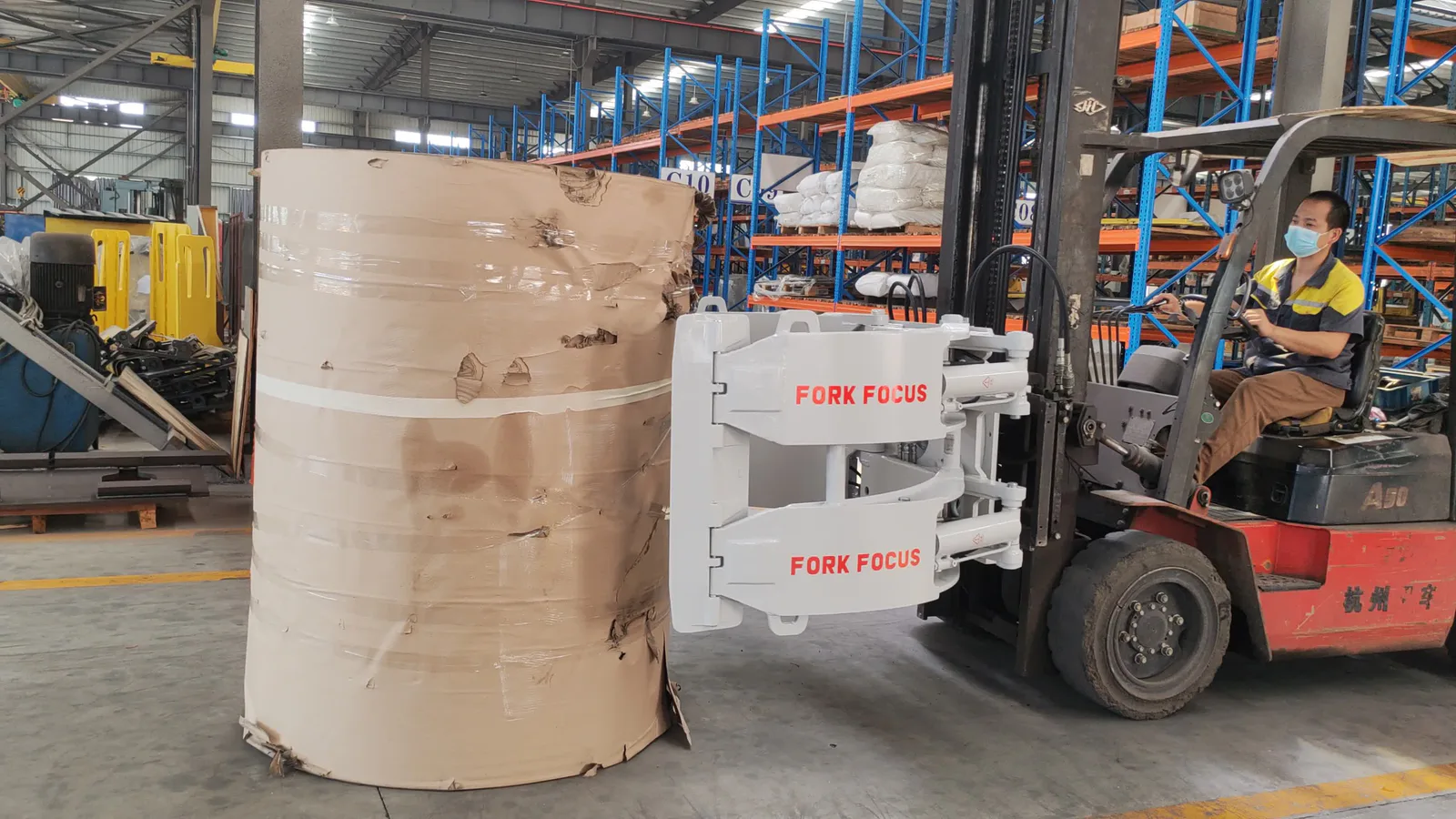
1. Paper Roll Clamps for Paper and Packaging Operations
Paper roll clamps allow rolls to be lifted, transported, stacked and rotated without pallets. The correct clamp depends on:
- roll weight,
- minimum and maximum diameter,
- width,
- wrapping material, surface sensitivity
- and the required rotation or stacking method.
Contact-pad selection is particularly important. Standard pads may suit robust industrial paper rolls, while soft or easily marked tissue rolls may need a larger, more flexible contact surface and carefully controlled pressure distribution. Film-wrapped, coated or unwrapped rolls may require different friction and surface-protection strategies.
The aim is to hold the roll securely without slipping, marking or deforming it.
2. Bale and Soft-Pack Clamps for Compressible Loads
Bale clamps and soft-pack clamps are used for materials such as cotton, textiles, recycled fibre, pulp, bagged goods and other compressible products.
These loads may vary in density, shape and packaging, so the opening range, arm design and pressure distribution must match the actual cargo.
A well-matched clamp can reduce dependence on pallets and improve loading density. However, insufficient friction can allow the load to slip, while excessive or uneven force can damage packaging or deform the product.
Load dimensions, weight, packaging material and allowable compression should therefore be confirmed before selection.
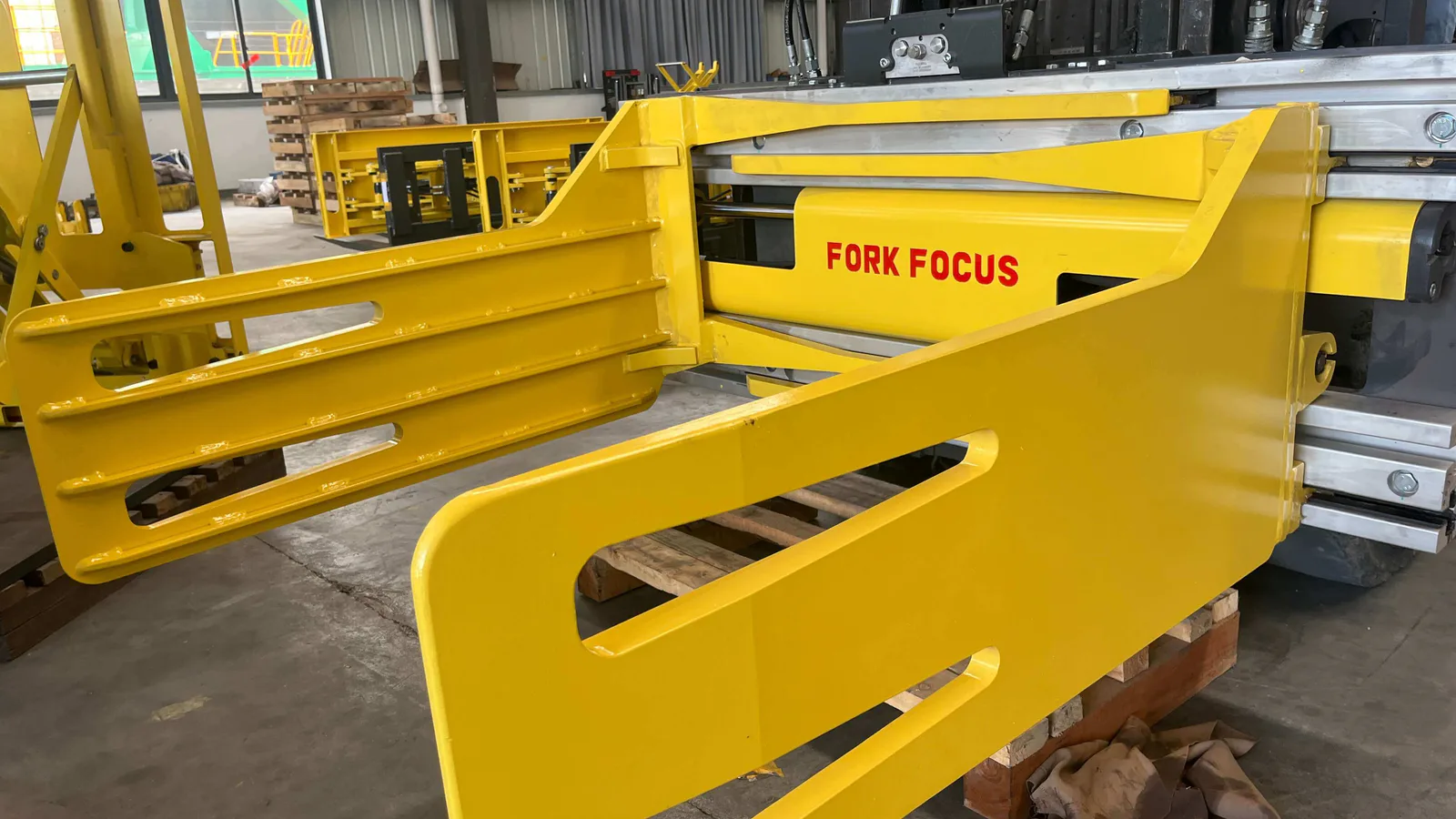
3. Block Clamps for Construction Materials
Concrete blocks, bricks and similar products are often handled without pallets. A block clamp can grip the load directly, while a dual-purpose design can retain conventional fork handling when the application and forklift permit it.
This can reduce attachment changes and allow one forklift to perform more than one task.
The load pattern, block strength, pack dimensions, required clamping range and daily workflow must still be reviewed to determine whether a combined solution is appropriate.
4. Purpose-Built Equipment for Demanding Industrial Work
Forging and metal-processing operations expose equipment to heat, scale, impact and demanding duty cycles.
A purpose-built forging manipulator or handling attachment can help position hot workpieces while increasing the distance between the operator and the load.
This type of equipment requires application-specific engineering. Workpiece dimensions and weight, temperature range, handling sequence, gripping method, duty cycle and environmental exposure must be confirmed.
Temperature capability and material selection should be stated only for the approved design; they should never be assumed from a general catalogue description.
5. Added Functions for More Complex Workflows
Side shift,
rotation,
push-pull movement,
fork positioning,
and other functions.
Can be integrated when the operation requires them.
The widely used forklift attachment list and our attachment applications guide show how different functions support specific industries.
Additional functions also affect attachment weight, effective thickness, hydraulic requirements and residual capacity.
The benefit must therefore be evaluated together with compatibility and operating risk. Our guide to forklift load capacity explains why the truck and attachment must be considered as one system.
6. The Same Selection Logic Applies to Every Industry
Although the examples are different, the selection logic is consistent. The supplier must understand the cargo dimensions and weight, packaging or contact surface, required movement, duty cycle, environment and forklift configuration.
Our forklift attachment buying guide and attachment FAQ provide additional guidance.
When a standard attachment matches these conditions, it is normally the simplest choice.
When it does not, ForkFocus can use a controlled forklift attachment customization process to adjust the range, arms, pads, mounting interface or functions.
Watch ForkFocus Forklift Attachments In Operation
This ForkFocus overview shows how standard and customized attachments support different material handling tasks.
In Conclusion
Forklift attachments create purpose-built solutions by changing how the forklift interacts with the load:
- Paper roll clamps protect and rotate rolls,
- bale clamps handle compressible products,
- block clamps support palletless construction materials,
- and special manipulators address demanding industrial environments.
The right result comes from matching the attachment to the cargo, packaging, workflow and forklift.
ForkFocus helps customers evaluate standard and customized options so each attachment is selected for a defined operational purpose.
Purpose-built handling connects the load to a defined attachment function
Fork extensions and generic forks cannot solve every load-control problem. Clamps, rotators, positioners and push-pulls create specific interfaces.
- Handling objective
- Clamp, rotate, position, push, pull or stabilise.
- Load
- Weight, dimensions, surface and acceptable contact pressure.
- Attachment
- Rating, range, movement and visibility.
- Truck interface
- Carriage, hydraulics, mast, tyres and route.
- Capacity
- Verify the installed combination at height and load centre.
Rotator product route
The attachment should replace a defined manual or unstable task while retaining a verifiable truck configuration.
Load trials, hydraulic settings and residual capacity require confirmation.
Link each required movement to a verified attachment product and a carrier truck that fits the operating route.
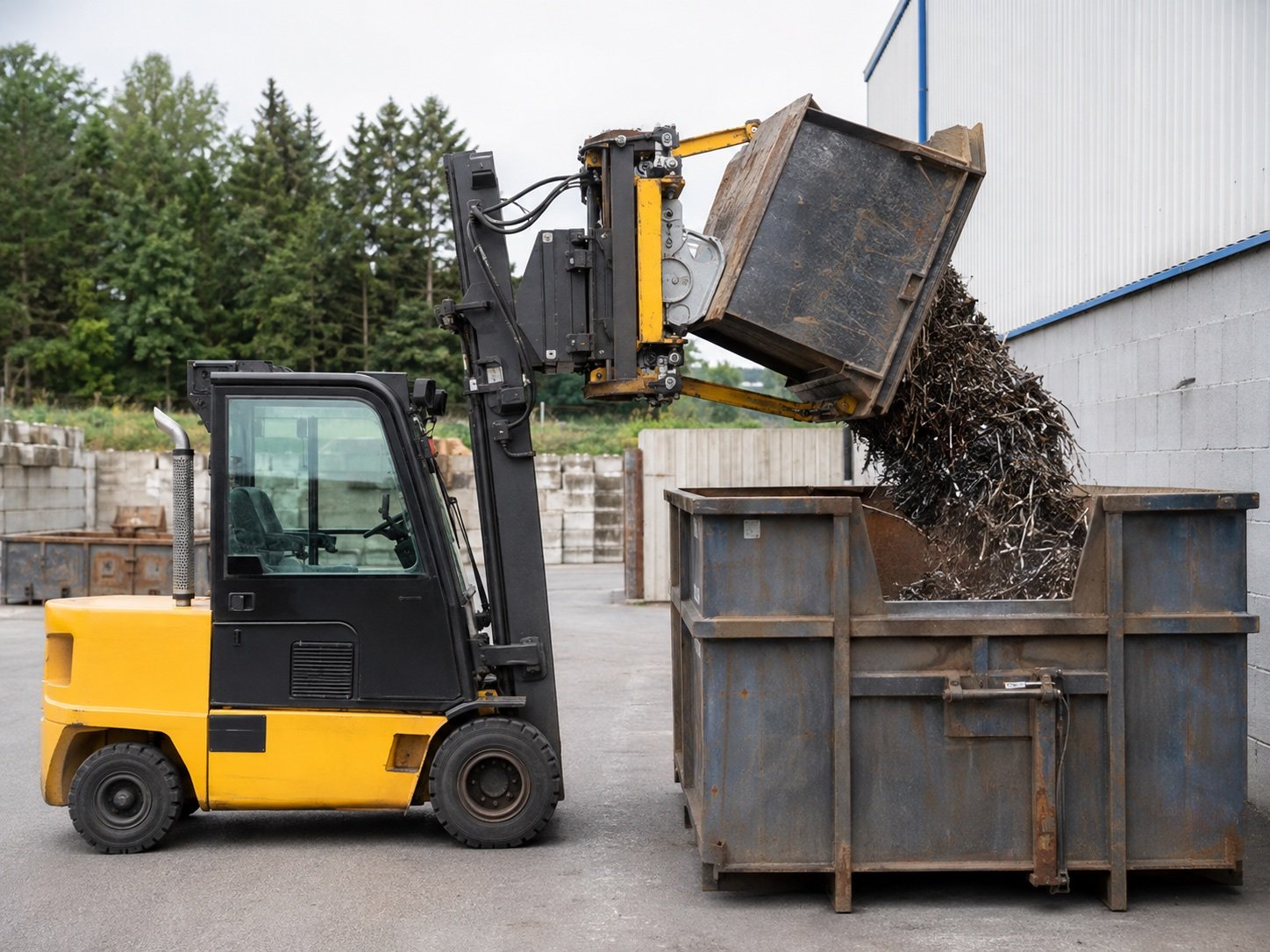
Suitable carrier-truck routes
- electric counterbalance forklifts: controlled indoor rotation, clamping or positioning tasks.
- IC forklifts: outdoor or ventilated duties with appropriate ground, cooling and emissions conditions.
The final choice depends on route, lift height, duty, attachment and working-point residual capacity—not nominal capacity alone.