

A practical purchasing guide to matching the load, contact surface, clamp opening range and forklift before production.
Buying a bale clamp is not simply a matter of choosing a capacity from a catalogue. Soft, wrapped and compressible loads behave differently under pressure. A clamp that looks suitable on paper may still tear packaging, leave marks, allow the load to slip or fail to fit the intended forklift.
The correct question is not only “Which clamp can lift this weight?” It is:
Which clamp can hold this particular load securely, protect its packaging and work correctly with our forklift?
This is the same principle used when selecting any forklift attachment: start with the load and the actual operating conditions, then match the attachment and truck as one system.
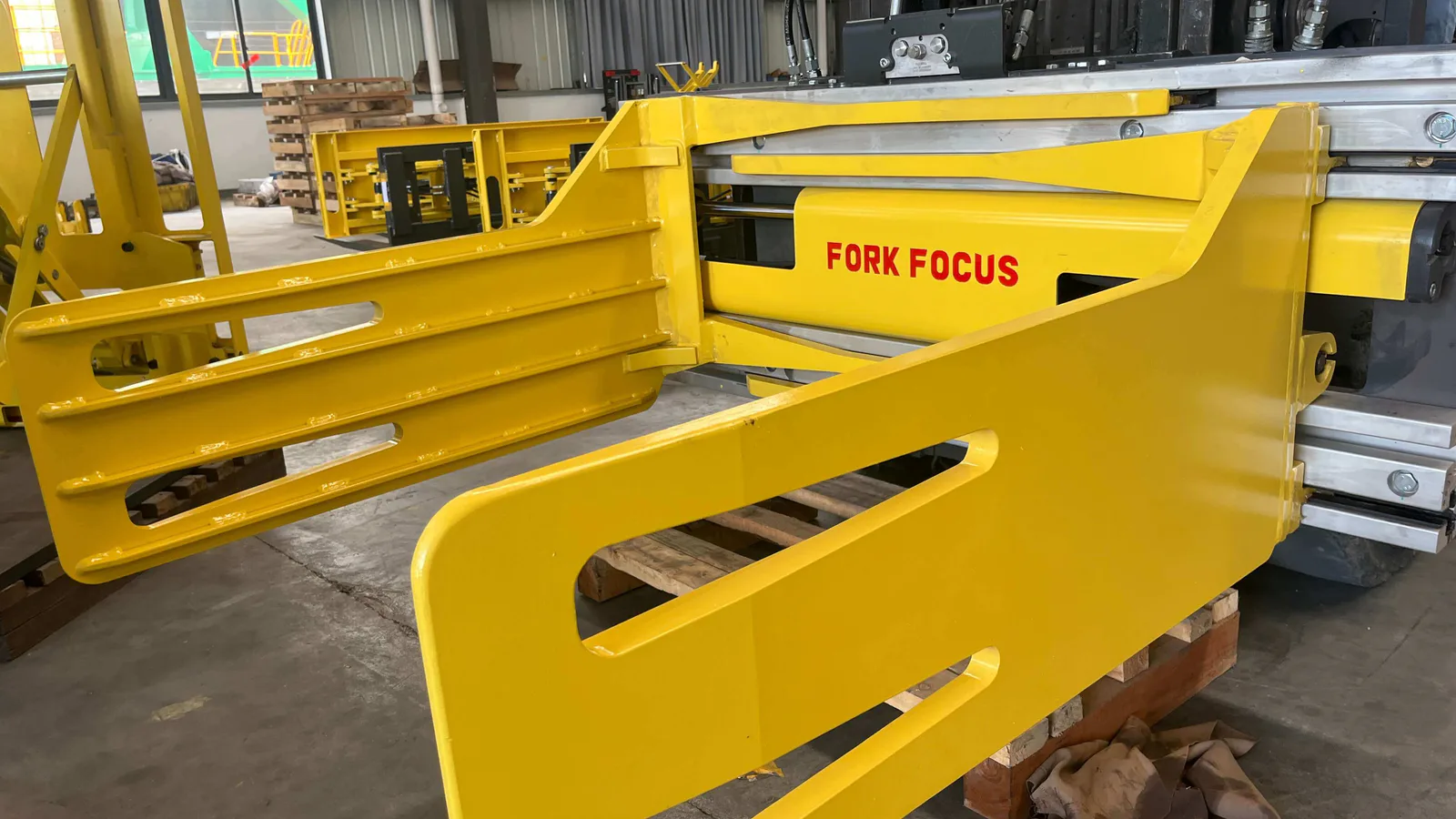
Where Are Bale Clamps Used?
Bale clamps are designed for handling compressed, wrapped or bundled loads without pallets. Their wide clamp arms hold the sides of the load, allowing a forklift to pick up, transport and stack goods that are difficult or inefficient to handle with standard forks.
Typical applications include:
- Textile and cotton operations: handling compressed cotton bales, textile-fibre bales, fabric bundles and other soft, springy loads.
- Recycling and waste-processing facilities: moving baled paper, cardboard, plastic film, textile waste and other compressed recyclable materials.
- Pulp, paper and packaging plants: handling wrapped waste-paper bales, pulp bales and bundled packaging materials.
- Agricultural and natural-fibre operations: handling compressed wool, hemp, straw and similar fibrous products where the bale shape and wrapping vary.
- Warehouses and export-loading operations: loading palletless soft packs or compressed bundles into containers and storage areas.
Although these loads may all be called “bales,” they are not interchangeable applications. A dense recycled-paper bale can require different arm dimensions, pressure and surface treatment from a soft cotton bale. Plastic-film wrapping behaves differently from woven fabric or steel-wire-bound recyclable material. The clamp must therefore be selected for the specific industry, load and packaging—not only for a general product category.
Important: a bale clamp is not automatically suitable for every soft package. Loose sacks, boxed goods, foam blocks and delicate finished products may require a different attachment or a specially designed contact surface. The load must be reviewed before the attachment is confirmed.
1. Start With the Load, Not the Forklift Tonnage
Two loads of the same weight may require very different clamp configurations. Cotton bales, textile bundles, recycled-paper bales, foam packs and goods wrapped in plastic film can differ in shape, compressibility, surface friction and resistance to damage.
Before recommending a clamp, a responsible supplier should understand:
- The load type and how it is packed
- Minimum and maximum length, width and height
- Maximum weight per load
- Whether one or several units are clamped at a time
- Whether the load is rigid, soft, springy or easily deformed
- How it will be picked up, transported and stacked
- Daily working cycles and the operating environment
These details determine the required opening and closing range, arm size, attachment capacity and contact position. They also help identify whether a standard model or a customized forklift attachment is the safer choice.
2. Match the Clamp Arms to the Packaging and Contact Surface
The outer packaging is not a minor detail. It is the surface that transfers the clamp force to the load, so it directly affects friction, pressure distribution and the risk of damage.
For example, a rough woven surface may provide good friction but can be vulnerable to snagging. Smooth plastic film may slip or tear. Paper wrapping may show pressure marks. Cotton, tissue, foam and other compressible products can deform when a narrow or overly rigid arm concentrates the force in one area.
The supplier should therefore ask:
- Is the load covered by woven fabric, kraft paper, plastic film, cardboard or another material?
- Will the clamp touch the finished product directly?
- Can the surface accept light marks?
- Is the packaging loose, tightly wrapped or easily torn?
- Has the current operation experienced slipping, broken packaging or deformation?
The objective is to balance three things: enough friction to prevent slipping, enough contact area to distribute force, and an arm surface that protects the packaging. Wider arms, a different surface pattern or a load-specific contact material may be needed. The correct solution depends on evidence from the actual load—not on a universal “standard pad.”
Why we ask for a close-up packaging photo
We ask about the load and its packaging so we can match the clamp opening range, contact arms and clamping force—not to make the inquiry more complicated. A full-load photo shows the overall geometry; a close-up photo helps us understand the surface that the clamp will actually touch.
For buyers comparing other no-pallet handling options, our widely used forklift attachments overview explains how different attachment types solve different handling problems.
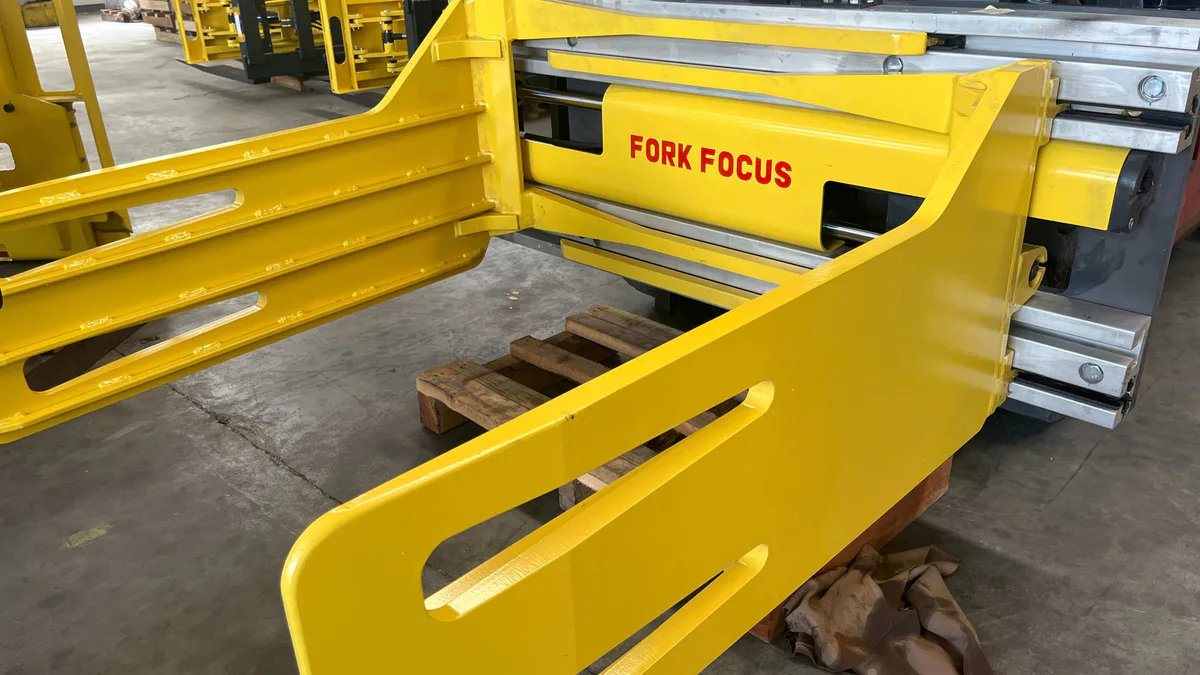
3. Confirm the Complete Opening and Closing Range
A bale clamp must handle the smallest and largest loads in the operation—not only the most common size. If the clamp does not close far enough, it may not hold a small or compressed load securely. If it does not open wide enough, the operator may be unable to enter or release a larger bale without damaging its edges.
Load dimensions also influence where the clamp arms make contact. The supplier should check that the arm height, arm length and usable opening range keep the pressure in a stable area instead of concentrating it near a weak edge or loose section of packaging.
If several bale sizes are handled, provide both the minimum and maximum dimensions and explain whether the bales are compressed differently. This is a core part of any reliable forklift attachment buying process.
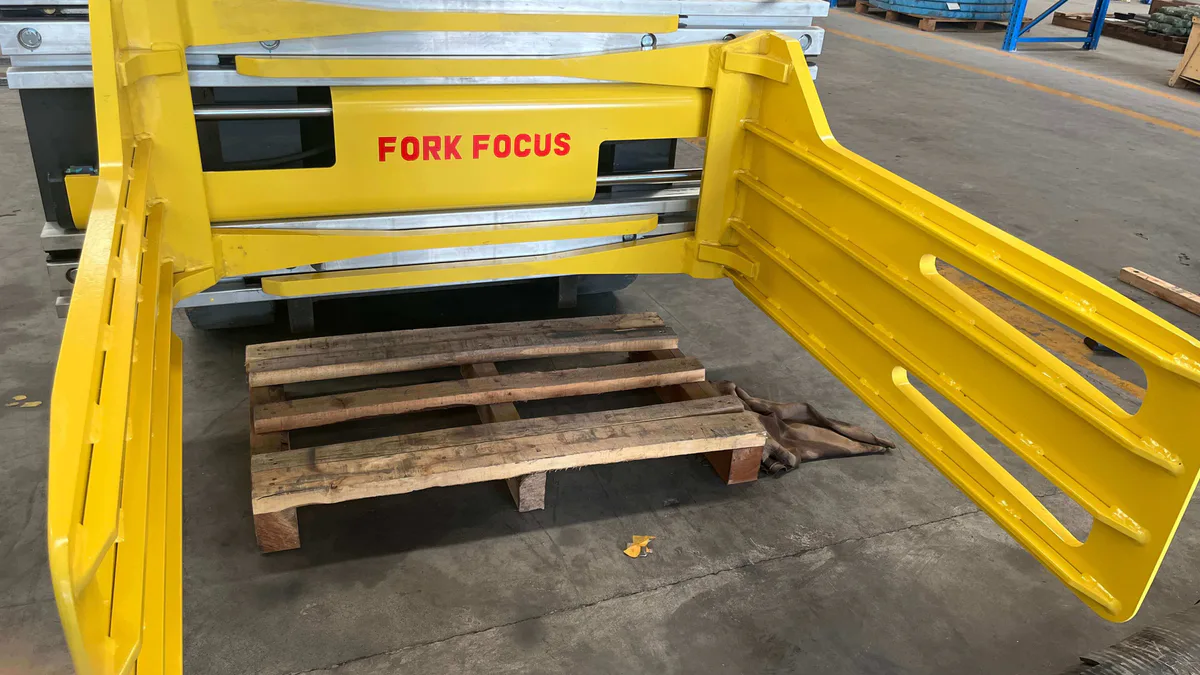
4. Use the Right Clamping Force—More Is Not Always Safer
Too little force can allow a smooth or heavy bale to slip. Too much force can crush the product, distort the bale, tear the wrapping or leave permanent marks. Compressible loads make this balance especially important because their shape and contact pressure can change while they are being clamped.
The appropriate pressure depends on load weight, packaging friction, arm area, compressibility and the motion of the truck. A supplier should review these factors, set an application-appropriate pressure range and check clamp movement and pressure retention before shipment.
The buyer benefits from secure load retention without treating maximum hydraulic pressure as the default solution.
5. Make Sure the Clamp Fits the Forklift and Hydraulic System
Even the correct clamp for the load becomes the wrong purchase if it cannot be installed or operated correctly on the intended truck. Forklifts vary in carriage class, mounting dimensions, hydraulic pressure, flow, functions and hose connections.
For an initial compatibility check, the buyer can normally send:
- A clear forklift nameplate photo
- A front photo of the carriage
- Photos of the existing hydraulic connections
- The required clamp, sideshift or other functions
This applies whether the attachment will be installed on a diesel forklift or a four-wheel electric forklift. The quotation should clearly state which mounting parts, hoses, fittings, valves and controls are included.
Explore the broader ForkFocus forklift and material-handling range when the project also requires a matched truck.
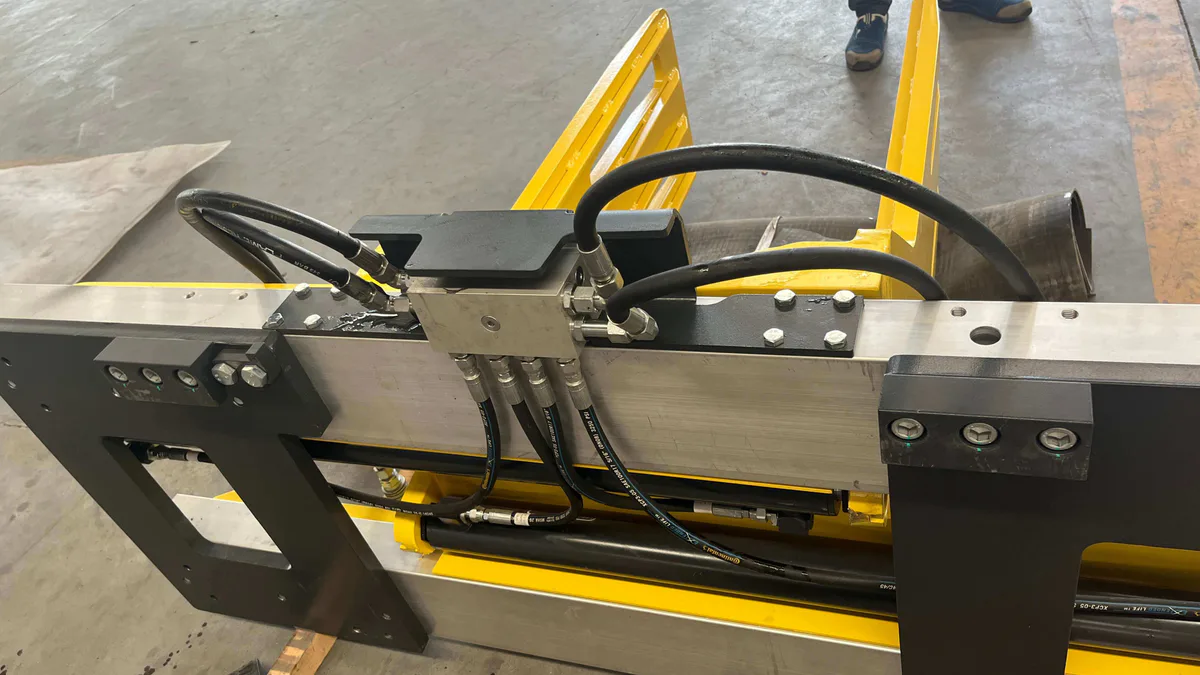
6. Check Residual Capacity and Long-Term Support
A clamp adds weight and moves the load forward. This can reduce the forklift’s residual capacity, especially at greater lift heights. The supplier should provide attachment weight, effective thickness and relevant dimensional data so the complete truck-and-attachment application can be reviewed.
Final residual capacity and any required data-plate change should be confirmed by the forklift manufacturer or another qualified authority in accordance with applicable requirements.
Long-term uptime also matters. Ask how replacement seals, hoses, pins, bushings, arm components and other wear parts will be identified. Keeping the attachment configuration linked to its serial number can make future parts support much faster. Our forklift attachment applications page provides further context for matching equipment to real working conditions.
Watch the Bale Clamp in Operation
This video shows the bale clamp and helps buyers understand the attachment structure and working movement. Actual arm size, opening range and pressure settings must still be matched to the specific load and forklift.
The Three Conditions of a Correct Bale Clamp
- It matches the dimensions, weight, packaging and compressibility of the load.
- It can be correctly installed and operated on the intended forklift.
- It can be maintained and supported throughout its working life.
The lowest initial price cannot compensate for a clamp that slips, damages packaging, cannot close on the smallest load or requires emergency modification after delivery.
Request a Bale Clamp Compatibility Review
You do not need to prepare a complex technical specification. Start with:
- A photo of the complete load
- A close-up photo of the packaging or contact surface
- Minimum and maximum load dimensions
- Maximum load weight
- Whether the load is rigid, soft or compressible
- A forklift nameplate photo
- A front photo of the carriage
- A short operating video, if available
We will explain what each item is used for, identify any missing information and help determine a suitable configuration. Review the ForkFocus bale clamp; then use the inquiry button below to send the application details directly to our attachment team.