

Choosing a block clamp becomes much easier when the enquiry answers three questions: what pack must be held, what forklift must carry it and what movement must happen in the real workplace.
A clear buying process turns a general forklift attachment enquiry into a specification that procurement and operations can verify.
A supplier can then calculate opening range, contact area, force, mounting and hydraulic requirements instead of guessing from capacity alone.
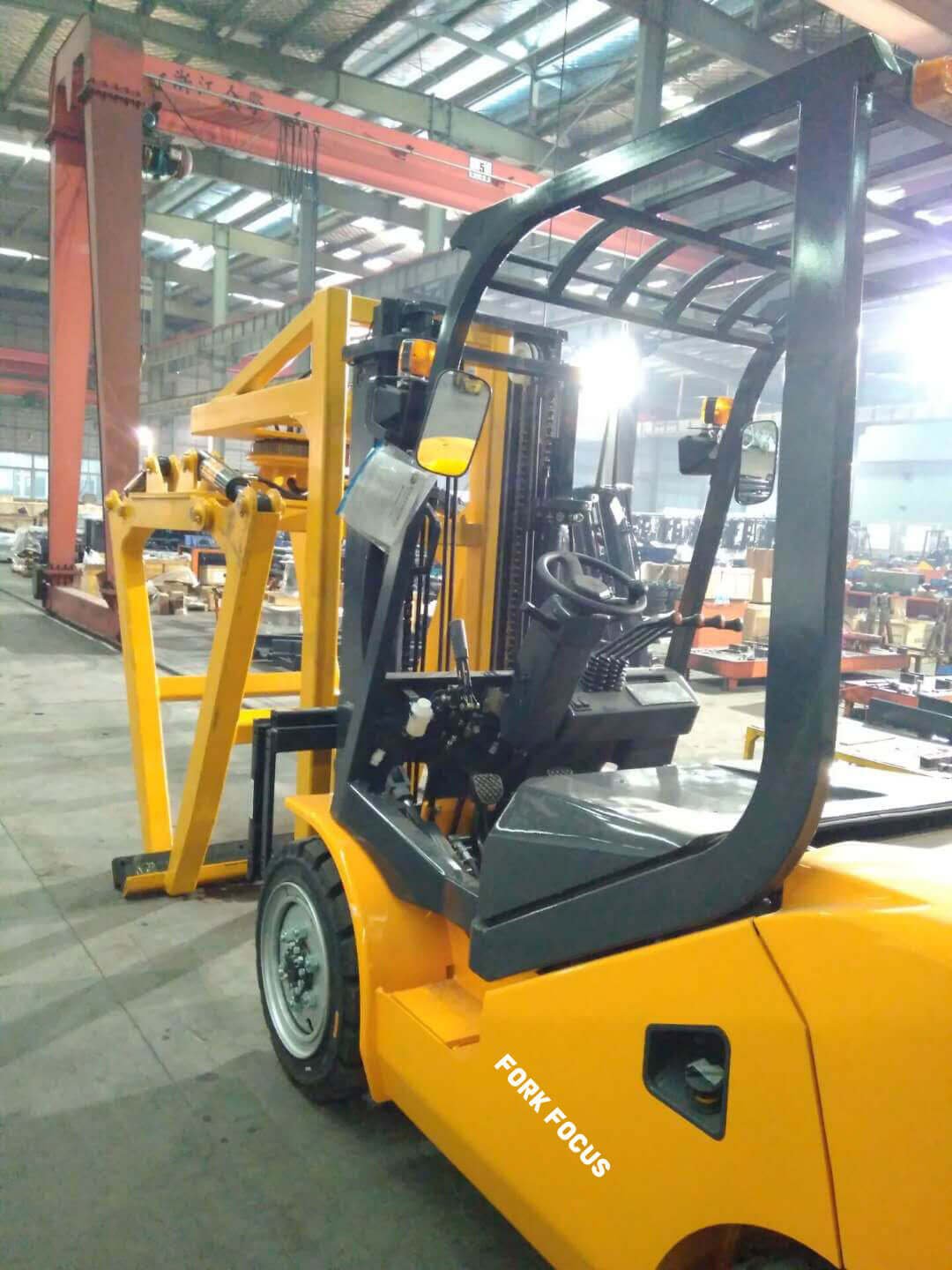
Watch a ForkFocus Block Clamp in Operation
See how a purpose-built block clamp controls masonry loads in a real ForkFocus operating demonstration.
Smart block clamp buyers do not begin by asking, “What is your price for a 2-ton clamp?”
They begin by defining the load, truck, process and result the block clamp must deliver.
This approach produces comparable quotations and reduces the risk of receiving equipment that cannot be installed or cannot handle the real load correctly.
Build a Complete RFQ Package
For a broader specification checklist, review our forklift attachment buying guide.
The request for quotation should contain four information groups.
### 1.
Load Information
- Minimum, typical and maximum dimensions
- Minimum and maximum weight
- Load center and any offset center of gravity
- Packaging and outer-contact material
- Surface softness, friction and marking limits
- Pallet, banding, wrapping, layer pattern and contact-zone details
- Photos and a short handling video
### 2.
Forklift Information
- Make, model and serial number
- Rated capacity and standard load center
- Mast type and carriage class
- Fork dimensions where relevant
- Hydraulic pressure, flow and available functions
- Existing hose arrangement and connector type
### 3.
Operating Information
- Required movement: clamp, rotate, push, pull, position or extend
- Loads per hour and shifts per day
- Travel distance, aisle width and stacking height
- Temperature, dust, moisture, salt or corrosive conditions
- Current handling problem and target improvement
### 4.
Commercial Information
- Delivery location and required date
- Preferred shipping method
- Documentation and certification requirements
- Spare-parts expectations
- Installation and training responsibility
Compare Quotations on the Same Technical Basis
Nonstandard packs may require custom forklift attachment engineering before production.
| Item to compare | Why it matters |
|---|---|
| Rated capacity at stated load center | Capacity without a reference point can be misleading |
| block clamp weight | Directly affects residual forklift capacity |
| Lost load center or effective thickness | Moves the load farther forward |
| Opening range and arm dimensions | Determines whether all load sizes fit |
| Contact-pad material and area | Affects grip, pressure and product marks |
| Carriage class and mounting | Determines installation compatibility |
| Hydraulic functions, pressure and flow | Determines movement, speed and force |
| Visibility and overall dimensions | Affects operation in racks, trailers and aisles |
| Drawings and test scope | Confirms what will actually be supplied |
| Manuals, warranty and parts support | Affects long-term uptime |
A cheaper quotation may omit a required valve, custom pad, hose group or mounting change.
Those omissions become extra cost and delay after arrival.
Request a General Arrangement Drawing
Demanding masonry packs should also be compared with our heavy-load attachment solutions.
The drawing should show overall dimensions, opening range, arm or fork dimensions, mounting interface, block clamp weight and key hydraulic information.
Review it with both operations and maintenance.
Operations can confirm load clearance and visibility, while maintenance can confirm mounting, hose routing and service access.
Verify Residual Capacity Before Approval
Several avoidable specification errors are covered in our forklift attachment mistakes guide.
The block clamp changes the forklift’s load-carrying configuration.
Its weight and forward thickness can reduce available capacity.
Use block clamp data and the actual load center to complete the required capacity review.
Follow the forklift manufacturer’s approval and nameplate requirements that apply to the truck and local regulations.
Never approve a block clamp only because its nominal capacity exceeds the load weight.
Ask How the Load Will Be Protected
Use our attachment efficiency guide when measuring cycle-time and fleet results.

For clamps, the buyer should understand how contact area, pad material and pressure will suit the package.
Ask what information the supplier used to select the contact surface.
Hollow blocks, sealed pavers, architectural units and wet outdoor packs may require different pad textures, contact areas or pressure settings.
The supplier should be able to explain how the design prevents both slipping and excessive force.
Define Inspection and Testing Before Production
Warehouse teams can apply these warehouse attachment tips during route and staging reviews.
Testing should reflect the agreed function.
Depending on the block clamp, this may include dimensional inspection, mounting checks, hydraulic leak and pressure testing, synchronized movement, opening-range verification, rotation or sideshift function and load-holding checks.
Agree on required records, photos or video before placing the order.
A vague request for “full testing” creates different expectations.
Review Lifetime Cost, Not Only Landed Price
Operator training should also follow these attachment safety practices.
Include the cost of installation, hydraulic changes, capacity loss, product damage, cycle time, wear parts, service access and downtime.
A durable block clamp that reduces one recurring damage problem or saves seconds on thousands of daily cycles may have a lower total cost than a cheaper unit that merely meets a basic specification.
Why Buyers Work with ForkFocus
ForkFocus approaches block clamp supply as an application-matching project.
Our team reviews cargo and forklift data, clarifies uncertainties, prepares drawings and checks the design before production.
Our experience with forklifts, block clamps and parts helps us understand both the machine interface and the customer’s operating problem.
This reduces communication gaps between procurement, engineering, installation and use.
Add a Block-Pack Size Matrix
List every regular product family in rows and record pack length, width, height, weight, contact face, surface finish, banding and acceptable contact zone.
Mark the minimum, typical and maximum values.
This matrix prevents a design based on one sales drawing from missing a smaller or less stable pack.
Also record tolerances.
Wrapping, production variation and displaced layers can change the actual width seen by the clamp.
The selected opening range should include realistic variation without forcing the cylinders to work continuously at their limits.
Describe the Outer Contact Surface
Concrete may be rough, sealed, split-faced, wet, dusty or protected by cardboard or film.
That outer material directly affects friction, pressure distribution and visible marking.
Close-up photographs are often more useful than a general product name.
Tell the supplier whether decorative faces can be contacted, whether banding crosses the pad area and which defects are unacceptable.
The correct pad is selected for the surface that the clamp actually touches.
Check the Quote with Five Questions
- Which load dimensions and surface condition were used for the design?
- What is the usable opening range and where are the approved contact zones?
- What attachment weight and forward thickness must be used for the forklift capacity review?
- What hydraulic pressure, flow and number of functions are required?
- Which dimensions and functions will be verified before shipment?
If a quotation cannot answer these questions, its price is not yet comparable with a complete offer.
The Application Data That Prevents a Wrong Specification
A reliable recommendation starts with the complete pack range, not one convenient sample.
ForkFocus asks for minimum, typical and maximum pack length, width, height and weight; the block or brick type; the layer pattern; banding or wrapping; and clear photographs from several sides.
We also need to know whether the contact faces are smooth, ribbed, dusty, wet, sealed or easily marked.
These details determine opening range, arm height, pad texture, usable contact area and the force window needed to hold the pack without crushing corners.
The forklift data is equally important.
Make, model, rated capacity, standard load center, mast, carriage class, available hydraulic functions, pressure, flow and hose arrangement should be confirmed before production.
A block clamp adds weight and moves the load forward, so the truck manufacturer or other authorized party must verify the final capacity configuration and update the capacity information as required by local rules.
Finally, describe the real route: pickup position, stacking height, aisle width, floor condition, trailer loading, gradients, outdoor exposure, cycles per hour and shifts per day.
A short handling video often reveals alignment, visibility or pack-consistency issues that dimensions alone cannot show.
How ForkFocus Turns the Data into a Working Solution
ForkFocus treats a block clamp order as an application-matching project.
Our team reviews the load and truck data, resolves missing information and prepares a general arrangement drawing showing the mounting interface, opening range, arm and pad geometry, overall dimensions and attachment weight.
The drawing gives procurement, operations and maintenance one technical reference before production begins.
Engineering review continues through production and testing.
Mounting, hydraulic movement, synchronization, dimensional range, hose routing and agreed functional requirements are checked before shipment.
This approach cannot replace correct installation or operator training at the destination, but it removes many avoidable errors before the equipment leaves the factory.
In Conclusion
The right block clamp is selected from a complete pack matrix, contact-surface information, verified forklift data, hydraulic requirements and an agreed operating route.
Drawings and acceptance checks turn those inputs into a specification both parties can verify.
ForkFocus guides buyers through that process so the delivered clamp is correct for the load and can be installed correctly on the intended forklift.