

Productivity features are valuable only when they remove a specific delay or recurring risk.
On a block clamp, the most useful options improve alignment, keep force consistent, protect the masonry pack and reduce maintenance time.
The right forklift attachment features earn their place by reducing a verified delay, damage mode or maintenance task.
Use this feature guide to separate application-critical design choices from attractive extras that may not repay their cost.
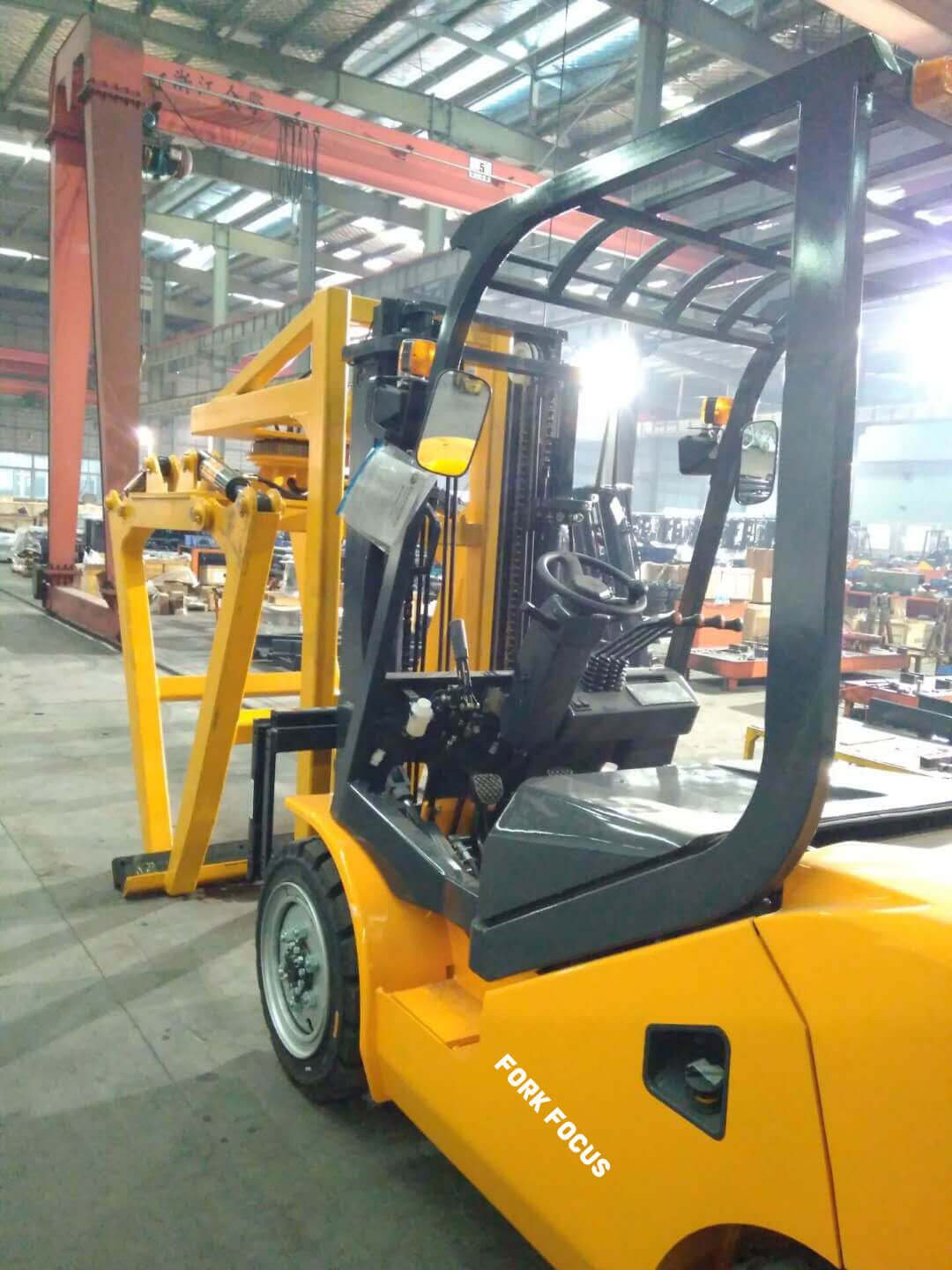
Watch a ForkFocus Block Clamp in Operation
See how a purpose-built block clamp controls masonry loads in a real ForkFocus operating demonstration.
1. Integrated Sideshift
For a broader specification checklist, review our forklift attachment buying guide.
Sideshift lets the operator make a final lateral correction without steering the complete forklift.
It is especially useful for close yard stacks and vehicle loading, where repeated repositioning adds time and increases the chance of contacting adjacent packs.
Confirm sideshift stroke, capacity through the full travel and hydraulic-control method.
The feature must remain compatible with the truck’s available auxiliary functions.
2. Replaceable Wear Components
Nonstandard packs may require custom forklift attachment engineering before production.
Replaceable wear pads, bearings, contact surfaces and protected hose sections can reduce repair time and prevent wear from spreading into the main structure.
Ask for part numbers and access requirements before purchase.
A replaceable part is only useful if it can be obtained and serviced efficiently.
**Worth considering when:** the attachment operates across multiple shifts or in abrasive conditions.
3. Pressure Control and Load-Dependent Clamping
Demanding masonry packs should also be compared with our heavy-load attachment solutions.
Pressure relief, force control or intelligent clamping can reduce load damage and inconsistent operator adjustment.
The correct system depends on load variability.
A simple verified setting may be enough for one uniform product, while mixed fragile loads may justify automatic control.
**Worth considering when:** damage or slipping changes with load weight, size or packaging.
| Feature | Productivity effect | Data needed before purchase |
|---|---|---|
| Integrated sideshift | Fewer steering corrections | Placement tolerance and route clearance |
| Replaceable contact pads | Shorter planned maintenance | Surface condition and annual cycles |
| Pressure control | Consistent grip with less damage | Pack weight, surface and product strength |
| High-visibility frame | Faster contact and placement | Mast, seat position and stack height |
| Compact frame | Better residual-capacity potential | Truck, mast and actual load center |
4. High-Visibility Frame and Arm Design
Several avoidable specification errors are covered in our forklift attachment mistakes guide.
Open frame geometry, optimized hose routing and suitable arm profiles can improve the operator’s view of forks, load and rack entry.
Better visibility may reduce alignment time and handling damage, but structural strength and load contact must remain appropriate.
**Worth considering when:** the current attachment hides fork tips or critical load-contact points.
5. Compact Frame and Low Lost Load Center
Use our attachment efficiency guide when measuring cycle-time and fleet results.
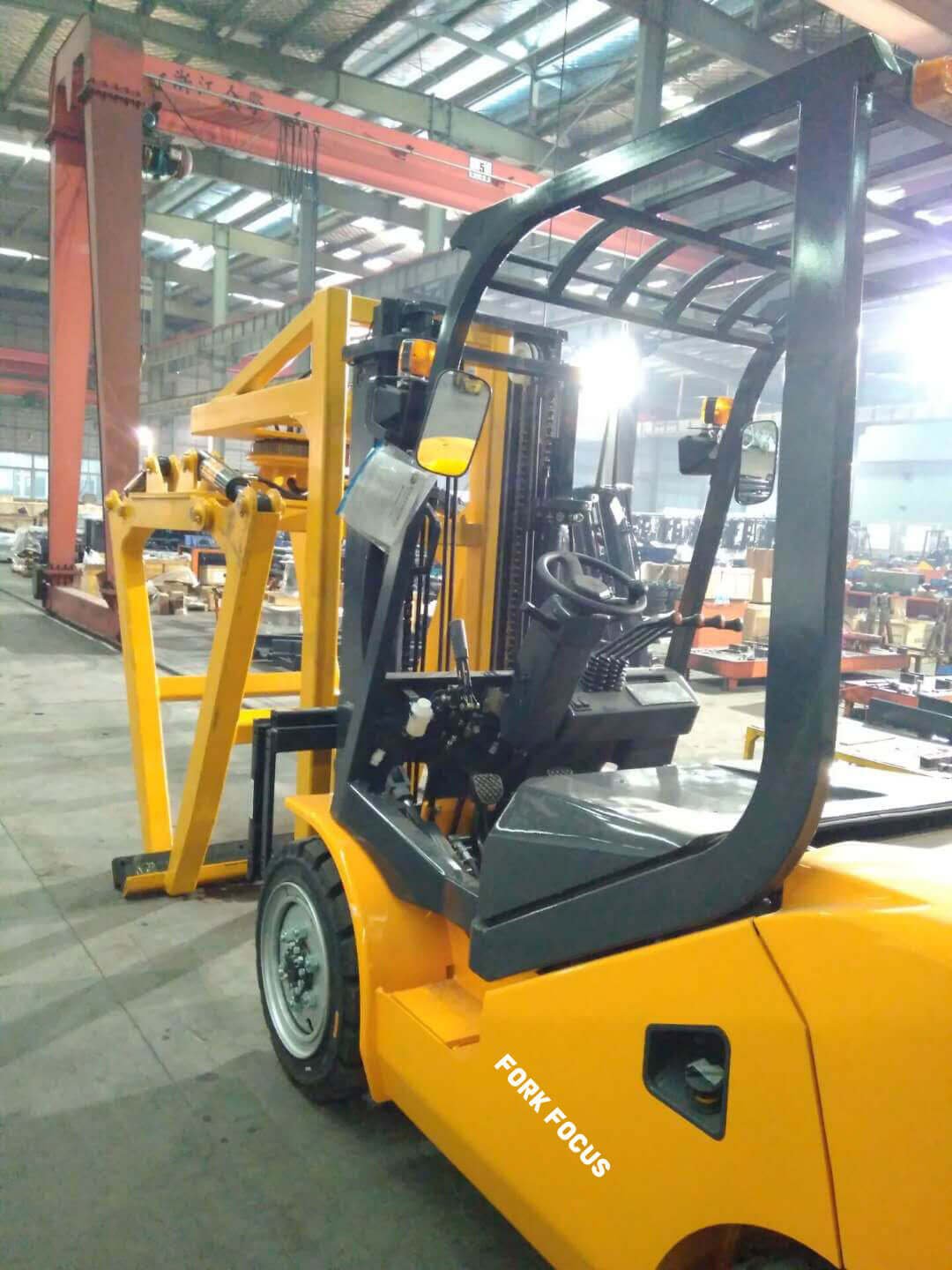
A thinner attachment keeps the load closer to the forklift and can help protect residual capacity.
Compactness is particularly valuable for heavy loads and trucks already working near their capacity limit.
Compare actual attachment weight and effective thickness, not general claims such as “lightweight design.”
**Worth considering when:** load moment or aisle clearance limits the operation.
6. Pad Geometry Designed for the Pack
Warehouse teams can apply these warehouse attachment tips during route and staging reviews.
Pad height, length, surface pattern and stiffness determine where force enters the load.
A larger pad is not automatically better: if it crosses voids, profiles or uneven layers, only part of its area may work.
Product-specific pad geometry can distribute pressure through stable blocks and reduce edge loading.
Replaceable contact plates allow a worn surface to be renewed without replacing the arm.
Where one forklift handles different product families, interchangeable pads may be practical, but changeover time and the risk of using the wrong pad must be managed.
7. Predictable Arm Synchronization
Operator training should also follow these attachment safety practices.
The arms should close smoothly and keep the pack centered as intended by the design.
Uncontrolled movement makes alignment harder and can strike an edge before the opposite pad has contacted the load.
Ask how synchronization is achieved and tested across the opening range.
The answer should include the effect of unequal initial contact and the procedure for diagnosing drift.
8. Protected, Serviceable Hydraulics
Masonry dust and outdoor impacts are demanding on hoses and fittings.
Routing should protect components from pinch points while keeping inspection and replacement practical.
Clearly identified test points and accessible valves shorten troubleshooting.
Smooth flow control is also a productivity feature.
A clamp that is too fast to position accurately may create more correction time than it saves.
9. Opening Range with Working Reserve
The minimum and maximum openings should cover the approved pack family without depending on the final millimeters of cylinder stroke.
Working reserve allows consistent movement and avoids frequent contact with mechanical limits.
Request a size matrix showing each pack within the usable range.
Include tolerances caused by production variation, wrapping or banding.
10. Maintenance Information and Uptime Kit
Parts identification, service instructions and a sensible first-year wear kit reduce avoidable downtime.
The kit should reflect actual cycles and environment rather than a generic list.
Pads, seals, hose assemblies, wear strips and retainers are common items to review.
The Application Data That Prevents a Wrong Specification
A reliable recommendation starts with the complete pack range, not one convenient sample.
ForkFocus asks for minimum, typical and maximum pack length, width, height and weight; the block or brick type; the layer pattern; banding or wrapping; and clear photographs from several sides.
We also need to know whether the contact faces are smooth, ribbed, dusty, wet, sealed or easily marked.
These details determine opening range, arm height, pad texture, usable contact area and the force window needed to hold the pack without crushing corners.
The forklift data is equally important.
Make, model, rated capacity, standard load center, mast, carriage class, available hydraulic functions, pressure, flow and hose arrangement should be confirmed before production.
A block clamp adds weight and moves the load forward, so the truck manufacturer or other authorized party must verify the final capacity configuration and update the capacity information as required by local rules.
Finally, describe the real route: pickup position, stacking height, aisle width, floor condition, trailer loading, gradients, outdoor exposure, cycles per hour and shifts per day.
A short handling video often reveals alignment, visibility or pack-consistency issues that dimensions alone cannot show.
Calculate Feature Payback
For each proposed feature, state the delay, damage or maintenance task it is intended to reduce.
Multiply a verified saving by annual cycles, then subtract purchase and maintenance cost.
Features tied to a measured bottleneck usually produce a more defensible return than features selected from a catalogue.
How ForkFocus Turns the Data into a Working Solution
ForkFocus treats a block clamp order as an application-matching project.
Our team reviews the load and truck data, resolves missing information and prepares a general arrangement drawing showing the mounting interface, opening range, arm and pad geometry, overall dimensions and attachment weight.
The drawing gives procurement, operations and maintenance one technical reference before production begins.
Engineering review continues through production and testing.
Mounting, hydraulic movement, synchronization, dimensional range, hose routing and agreed functional requirements are checked before shipment.
This approach cannot replace correct installation or operator training at the destination, but it removes many avoidable errors before the equipment leaves the factory.
Separate Standard Features from Application Options
Ask the supplier to identify what is included in the base design and what is optional: sideshift, alternative pads, pressure selection, guards, special coatings or extra hose groups.
This makes quotations comparable and prevents a required productivity feature from appearing later as an installation surprise.
In Conclusion
The block clamp features that boost productivity are controlled sideshift, suitable pads, stable pressure, good visibility, compact geometry, predictable synchronization and easy service.
Their value comes from solving a defined operating problem.
ForkFocus uses load data, forklift information and drawings to select the features the application needs without adding complexity that the customer will not use.